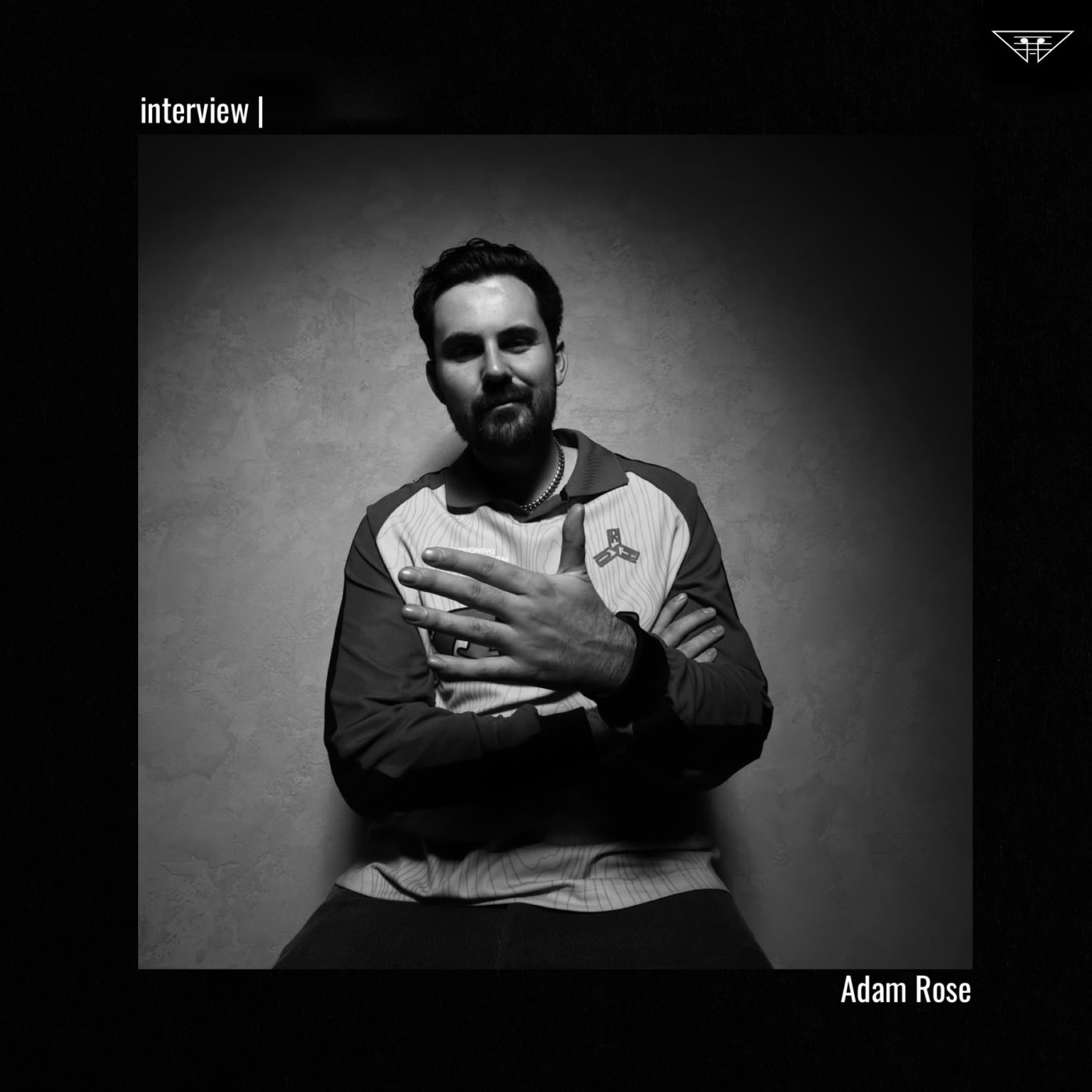
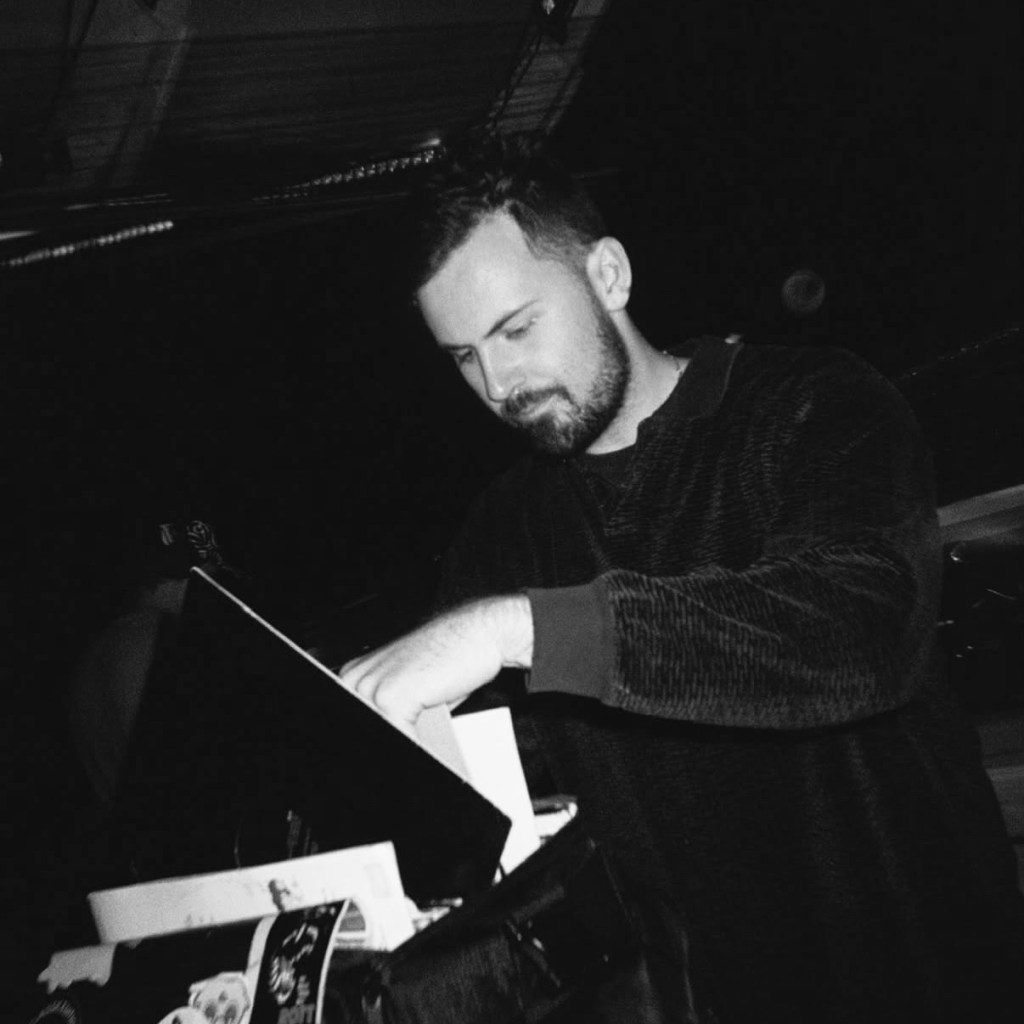
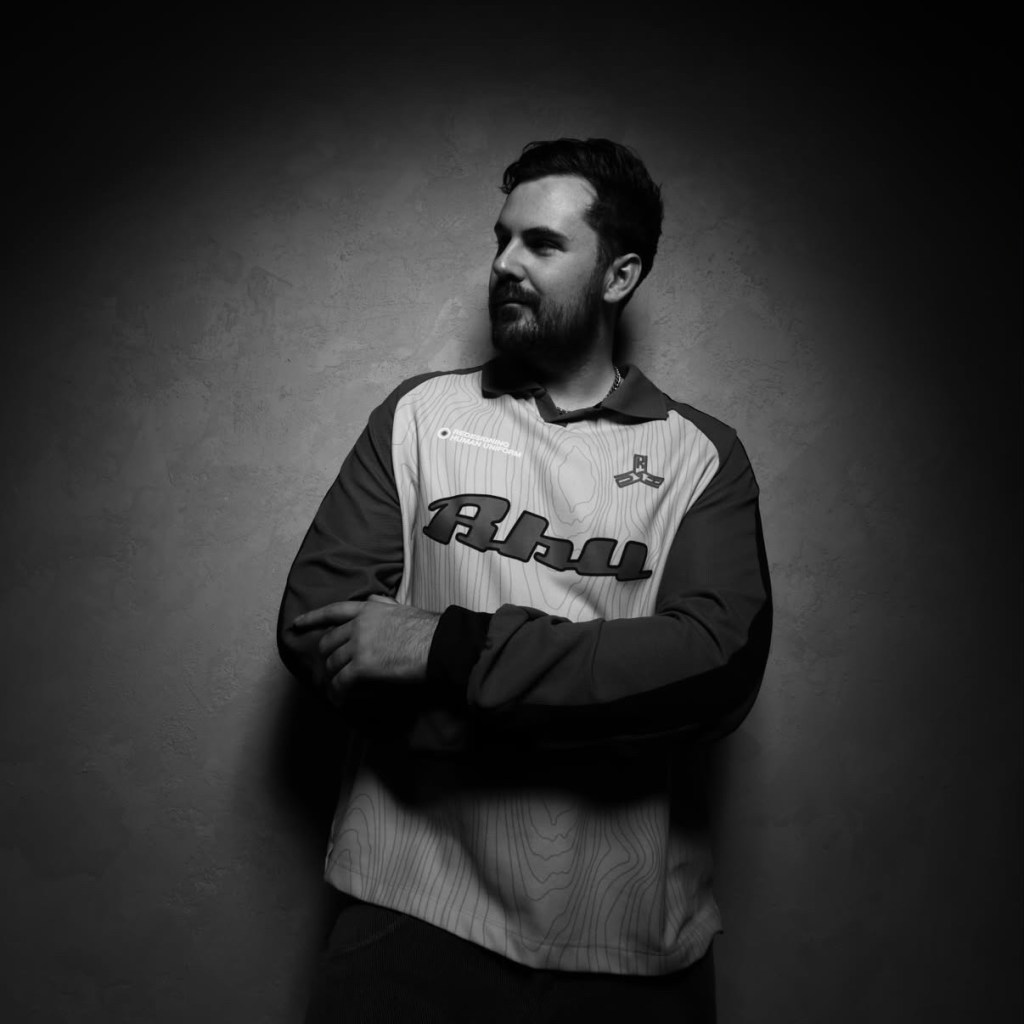
Los Angeles has always done House music a little differently. Away from the genre’s traditional centres, the West Coast developed its own language over the years—deep, funky, patient and built around groove rather than spectacle. It is a lineage that continues to echo through a new generation of producers, and Adam Rose is increasingly becoming one of its most interesting voices.
Based in Los Angeles, Rose’s relationship with music reaches well beyond his own productions. He is the founder of Deep Steppe, a label conceived as a home for music with depth regardless of tempo or subgenre; one half of Big Red Button alongside Sydka; and the co-founder and driving creative force behind California’s YOON Fest. His solo work, meanwhile, has found a home on labels including Raw Cuts, while collaborations have become an important part of the Deep Steppe catalogue. Rather than simply recreating the sound of an earlier West Coast era, Rose absorbs its patience, looseness and dedication to the dancefloor and allows those ideas to find their own place in the present.
Perhaps more importantly, all of these projects seem to originate from the same place. Whether releasing somebody else’s music, building a festival, collaborating with friends or spending hours alone in the studio, Rose approaches House music as something inherently communal—a way of creating spaces in which people can escape everyday life, discover something new and connect with one another.
We caught up with Adam at his newly built home studio in Los Angeles to talk about his path from Southern California’s surf, Punk and psychedelic scenes into House music, the lasting influence of West Coast pioneers such as Halo, why the records of the mid-2000s still matter, and what contemporary producers might learn from their approach to groove. Along the way, we dive into Deep Steppe, the perfectionism that has so far kept a full Adam Rose EP off his own label, the collaborative freedom of Big Red Button, the story behind YOON Fest, digging while traveling, and why sometimes the most important thing a producer can do is simply leave something out.
My goal is to incorporate many elements of House music into my sound.
Torture the Artist: Hey Adam, tell us something about your day. Where are you answering us from right now—studio, coffee shop, record store, or somewhere completely unexpected?
Adam Rose: Hey, answering these from my freshly built studio at my home in Valley Village, Los Angeles. Very happy to say that because I’ve actually never had my own studio space before. I’ve always been fortunate enough to be welcomed into friends’ studios over the years to be creative, so having my own is a big accomplishment for me.
Torture the Artist: Los Angeles has always had its own rhythm. How has growing up and living on the West Coast shaped not only your taste in music but also the person you’ve become?
Adam Rose: In my middle and high school years I was shaped by the surf, Punk, Indie, and Grunge scene that exploded here in SoCal after labels like Burger Records and bands like The Growlers, The Garden, and Ty Segall gained massive popularity from 2013 to 2018. It wasn’t until after graduating in 2017 that I really began to explore electronic music. As I started that journey I naturally gravitated towards House and Techno. Even in the early Insomniac rave days, I couldn’t understand the appeal of the other stages and genres. I’d say seeing MCDE and Horse Meat Disco play records on a side stage at FYF Fest in LA in 2018 really made me start to appreciate what House music had to offer. Those early influences of Punk and funky psychedelic music will stay with me forever.
Torture the Artist: Your music feels deeply connected to the West Coast, but perhaps not in the way people immediately expect. Rather than looking back to the early days of House music, I often hear echoes of what many consider the golden era of West Coast House around the mid-2000s. Does that resonate with you, or am I hearing something that isn’t there?
Adam Rose: It 100% resonates with me. I think some of the best music has come from that era. That said, I also think you can find great music in every year from 1990 to now, and people shouldn’t limit themselves to just that period, especially because so many people are already looking there. My goal is to incorporate many elements of House music into my sound.
Torture the Artist: Looking back at that period—roughly between 2003 and 2008—what made it so special? Why do you think so much timeless music emerged from the West Coast during those years?
Adam Rose: From what I know, in that time period across California there were many outdoor, renegade, or illegal parties happening. And these kinds of events create really special moments so I think the producers were catering to making these moments.
I finished my set feeling pretty happy with it, and as I played my last tune, Brian came up and gifted me 30 records.
Torture the Artist: It’s impossible to talk about that era without mentioning artists like Mark Farina, Hipp-E, Halo, Lance DeSardi, Brett Johnson, David Alvarado or Johnny Fiasco. Which artists, records or labels from that time continue to inspire you every time you step into the studio or behind the decks?
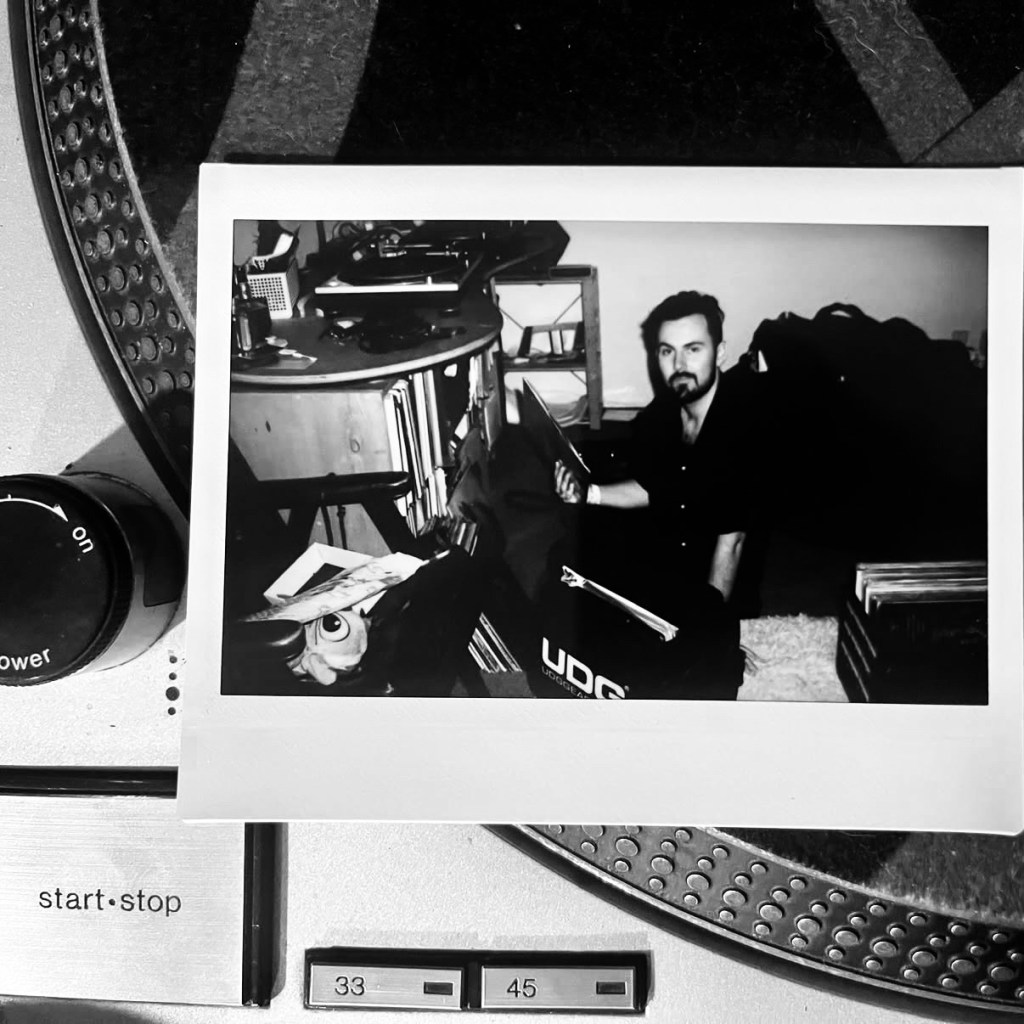
Adam Rose: All legends, but for me especially Halo. I spent my early 20s in San Diego, where Halo still lives, working as the booker at a club called Bang Bang. I was eager to bring better music to the club, and one of my first bookings was Halo Varga. I was set to open that night, and I was mustering up the courage to play records in public for the first time. The club had never even tried to set up turntables. When Brian (Halo) heard this, he was so hyped to play and help. He gave me all the guidance I needed to make it happen and even brought in his own Rane mixer for the night. I finished my set feeling pretty happy with it, and as I played my last tune, Brian came up and gifted me 30 records.
It’s still one of my favorite memories. We’ve become good friends since, and he’s offered plenty of feedback and advice over the years. Very stoked to see him and Hipp-E getting the recognition they deserve playing Houghton this year.
Torture the Artist: Many of those records still sound remarkably fresh today. What do you think producers from that era understood about groove that perhaps gets overlooked in contemporary club music?
Adam Rose: Ultimately trying to make people dance, not trying to get a reaction.
I’m influenced by stuff coming out now too, and I think if you honor that intention, the record ends up belonging to today.
Torture the Artist: Your productions never feel like nostalgia for nostalgia’s sake. Instead, they seem to carry the philosophy of that era into the present. How consciously do you try to preserve that musical language while still making records that belong to today?
Adam Rose: Honestly it’s not that conscious. I’m not sitting down thinking ‘how do I make this sound like 2002.’ Those records are just part of me at this point, from digging over the years, and years of playing them out. When I’m in the studio I’m mostly chasing a feeling when I start playing the keys, usually imagining it on the dancefloor and working backwards from there. I try to keep that philosophy and let the sound be whatever it wants to be. I’m using old and modern tools, I’m influenced by stuff coming out now too, and I think if you honor that intention, the record ends up belonging to today.
Torture the Artist: Deep Steppe has quietly established itself as one of the most exciting new labels for groove-led House music. What was the original idea behind the label, and what kind of musical home did you want to create?
Adam Rose: The steppe is an ancient, vast grassland, and ‘deep’ can mean a lot of things. I meant for it to be that way. Deep Steppe is the home for anything with depth to it, regardless of tempo or subgenre.
Torture the Artist: Interestingly, despite founding Deep Steppe, you’ve never released a full Adam Rose EP on your own imprint. Instead, you’ve contributed collaborative tracks to both Glendale Dub and Between Tides. Was that always the plan—to build a community first and yourself second—or has the right solo record simply not arrived yet?
Adam Rose: A bit of both. I’ve been receiving so much great music from friends and producers I believe in, and it just felt right to give those people a home first. As for my own stuff, I’m sitting on a lot of music, but I’m a bit of a perfectionist when it comes to my solo music. My first full EP, the record on Raw Cutz, almost needed to come out through somebody else because it was difficult for me to let it go. So a full Adam Rose EP on Deep Steppe is going to take some time, but maybe it’ll happen next year.
Collaboration is one of my favorite things about music.
Torture the Artist: Both Deep Steppe compilations feature collaborations—first with Krane and Miro on Glendale Dub, and most recently with JJ Selects and Miro on “Indecision”. What is it about collaboration that keeps drawing you back?
Adam Rose: Collaboration is one of my favorite things about music. It feels like a bit of a lost element in modern music sometimes. Earlier on, the band was the common thing, and now the solo act is the ideal. When I collaborate with friends I tend to have a lot more fun making music. You can really feel how the other person feels about what you’re working on, you can give each other constructive criticism in the moment, and a lot of the time you reach a really cool product from the combination of your ideas and skills together.
Torture the Artist: Do collaborations reveal parts of your musical personality that wouldn’t naturally appear in a solo Adam Rose production?
Adam Rose: I touched on it a bit in the last question, but yes. There’s a looser side of me that comes out. When you collaborate it feels more like a jam. You’re bouncing off other people in the moment rather than patiently sitting alone with your own ideas. A piece of you still comes through in the track, but you’re shaping it together, and that sometimes pulls things out of me that probably wouldn’t surface in a solo tune.
Torture the Artist: Outside your own label, Gravitation of the Past on Raw Cuts remains your most complete solo statement to date. Looking back now, where does that EP sit in your artistic journey?
Adam Rose: That record means a lot to me. Like I mentioned, it was hard for me to let it go, and in a way it needed to come out on someone else’s label for that exact reason. Raw Cutz gave it a push out of the nest. Looking back, it feels like a snapshot of where I was at that time, and I’m proud that it still holds up when I hear it out. It also taught me a lot about finishing music.
Listening to many demos has made me a better listener overall.
Torture the Artist: Running a label inevitably changes the way you listen to music. Has curating Deep Steppe influenced the way you judge your own productions?
Adam Rose: Definitely. Listening to many demos has made me a better listener overall. As for judging my own productions, I don’t know that it’s changed too much.
Torture the Artist: Big Red Button has quietly become another important outlet for your creativity alongside Sydka. The project already appeared on the very first Deep Steppe release and has now resurfaced on Gene On Earth’s Limousine Dream compilation with “Life Spiral.” How did Big Red Button first come to life?
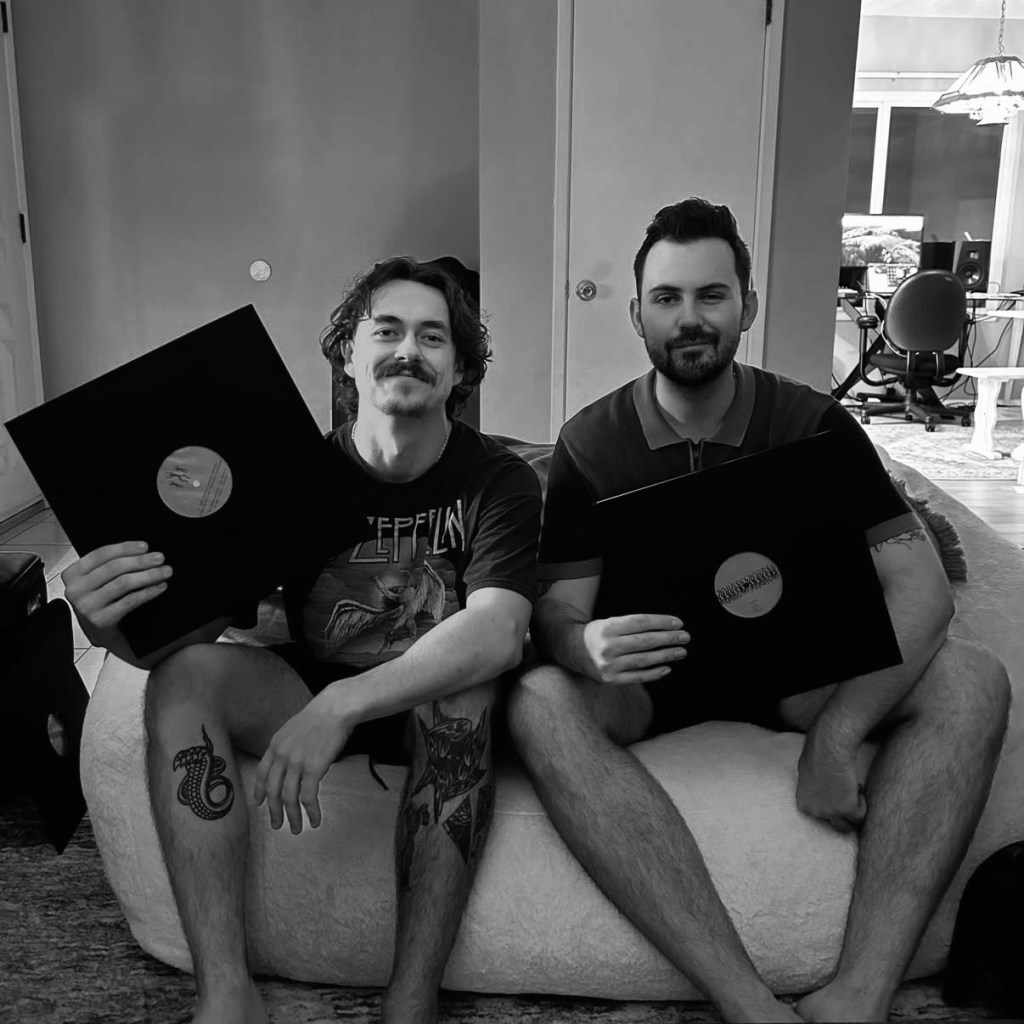
Adam Rose: Big Red Button came to life around 2022. I booked Danny, Sydka, for YOON Fest off a recommendation, and we barely knew each other. At some point at the festival he came up to me and told me my demos were cool but my mixdowns needed help. I was a little surprised by how forthcoming he was, but I really appreciated it, and we started making music together shortly after. He was making mostly downtempo at the time, around 100 to 115 BPM, but he’s an incredible producer and we clicked instantly. We taught each other a lot. Honestly I owe him a big piece of the production skills I bring to everything now, and our tastes have shaped each other ever since. The name came from an idea we had early on: one day we’d play a live set with a big red button on stage that makes ridiculous noises when you hit it. We’ve made a lot of music together but Danny has taught me the power of patience and not having to release all your music.
I think my best music comes when I find the right vibe or texture first.
Torture the Artist: Your productions always seem remarkably patient. Rather than chasing instant impact, they slowly pull listeners into their world through groove and atmosphere. When you’re in the studio, what usually comes first—a rhythm, a bassline, a sample, or simply a feeling you want to preserve?
Adam Rose: I think my best music comes when I find the right vibe or texture first. Once that’s there, everything else just falls into place. It’s never really one element on its own. It’s the culmination of all of them hitting in the right place at the right time
Torture the Artist: Your records often feel beautifully understated. Is knowing what to leave out just as important as knowing what to put in?
Adam Rose: Knowing what to leave out might be the harder skill of the two. Less elements can make things more clear or punch harder.
Community building is one of the most important parts of our culture in House music.
Torture the Artist: Alongside making music and running a label, you’re also the co-founder and primary creative force behind YOON Fest. What inspired you to build a festival instead of simply playing at them?
Adam Rose: Community building is one of the most important parts of our culture in House music, and that’s really what YOON is about: unity, and bringing together the best music our community in California has to offer. Now that I’m getting more connected with New York, I plan to bring that scene into the festival more next year.
Torture the Artist: Looking across Deep Steppe, YOON Fest and your own productions, one thing seems to connect everything you do: community. Is creating spaces for other artists just as rewarding as creating your own music?
Adam Rose: Just as rewarding, sometimes more. Giving people a home for their music, whether it’s on Deep Steppe or a stage at YOON, is the thing I’m probably proudest of.
Torture the Artist: Los Angeles remains one of House music’s spiritual homes, yet its underground continues to evolve. Through your eyes, what makes the city’s current scene unique?
Adam Rose: LA is massive. There isn’t one scene here, there are dozens running at the same time. The city is a real melting pot too. A lot of my friends now are people who came here as refugees from Ukraine and Russia, and they’ve brought their culture with them, into the parties, into the music. That’s added something you can really feel in the scene. And the DIY spirit never left LA. Warehouse parties, outdoor park parties, crews building their own nights all over the city. The community is ever growing, and that openness is what makes it feel special.
Torture the Artist: Outside of music, where do you continue finding inspiration? Are you still digging for records as obsessively as ever, or do books, films, travel and everyday life increasingly shape your creativity?
Adam Rose: Traveling and digging never get old for me. They’re kind of the same thing in my mind. Every trip is a chance to hit record stores I’ve never been to, meet people, and hear what’s moving a dancefloor in another city.
Torture the Artist: Looking ahead, could we eventually see a full Adam Rose EP on Deep Steppe, or does the label work best when it remains a platform for many different voices?
Adam Rose: A Big Red Button or Adam Rose and Friends EP will likely come first, but a full solo EP will happen eventually too. <smiles>
Torture the Artist: Finally, if someone knew absolutely nothing about Adam Rose before discovering your records, Deep Steppe, Big Red Button or YOON Fest, what would you hope they understand about you by the end of that journey?
Adam Rose: I’d hope they know that all of it comes from the same place. A love for this music and the people around it. Whether it’s a record or a party, the goal is to give people an escape from their daily lives and a chance to truly connect, with the music and with each other. If someone walks away feeling like there’s care in the music, in the artists we platform, in the stages we build, then they understand me.