
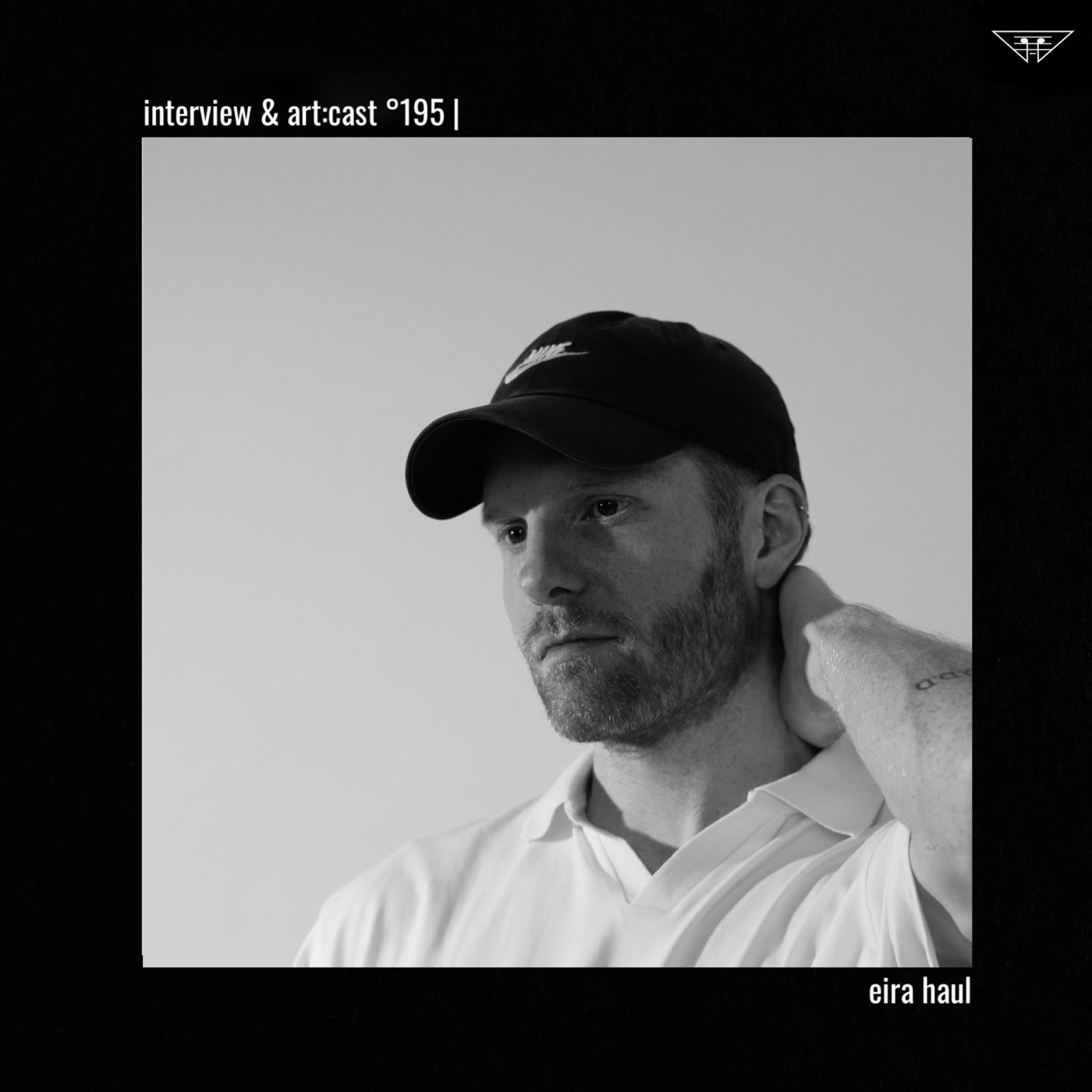
Between Berlin’s dimly lit basements, long stretches of travel, and quiet moments spent somewhere between nature and machines, eira haul has developed a sound that feels deeply connected to atmosphere, movement, and emotional restraint. His productions rarely rely on obvious climaxes or oversized gestures; instead, they unfold patiently through hypnotic grooves, warm textures, and finely detailed rhythms that slowly pull listeners deeper into their orbit. Somewhere between deep House, Minimal, and early 2000s-inspired club functionality, his music carries a sense of spaciousness that feels equally suited for intimate dancefloors and solitary late-night listening sessions.
Having spent years moving through Berlin’s underground — from the intimate energy of the Lustgarten era to becoming a resident at Akasha Festival — eira haul has quietly built a reputation as an artist guided less by trends and more by instinct, patience, and sonic depth. While many producers chase immediacy, his approach feels deliberately reduced and deeply intentional, shaped by a fascination with groove, repetition, and the emotional power hidden inside subtle details. That philosophy has gradually led his music onto respected labels such as R.A.N.D. Muzik, Limousine Dream, and Slump Recordings, while his tracks continue finding their way into some of the world’s most respected clubs and radio stations — from Berghain / Panorama Bar to fabric, Dimensions Festival, Rinse FM, and NTS.
Beyond the club environment, eira haul has also continuously explored the human side of underground culture. Through projects such as “Turn the Tables” — a charity-driven cookbook connecting artists, food, and music during the isolation of the pandemic — his work has consistently reflected a desire to create connection beyond the dancefloor itself. Whether through community projects, emotionally guided productions, or deeply immersive DJ sets, there is always a sense of sincerity running through his output.
Following his appearance on Gene On Earth’s various artist “Life Spiral” compilation and the release of his own “Deep Rays EP” on Limousine Dream, Torture the Artist spoke with eira haul about Berlin’s changing underground, restraint in music production, visualizing dancefloors while creating tracks, the importance of nature and travel, and why sometimes the strongest moments in club music come from holding back rather than adding more.
Torture the Artist: Hey James, tell us something about your day. Where are you answering us from right now — studio, record shop, airport, or somewhere unexpected in Berlin?
eira haul: I’m currently sitting in the sun in my flat in Berlin. I started the day off well with some yoga and meditation and now taking a break from tweaking some new tracks.
Torture the Artist: You’ve been part of Berlin’s underground for quite some time now, from the Lustgarten days to Akasha Festival and beyond. Looking back, what originally pulled you towards electronic music in the first place? Was there a particular moment, track, or dancefloor that changed everything for you?
eira haul: I’ve always been heavily into all sorts of music from a very young age but I was only aware of mostly mainstream electronic music while growing up. It wasn’t until I went to University and started going to clubs for the first time that I discovered a variety of underground music. I was heavily into jungle and drum and bass from the start but throughout the years have transitioned through many genres including disco, techno and house. There wasn’t any particular moment that changed everything, it was more of a very slow exploration and discovery over time.
The freedom and affordability of Berlin really allowed me to experiment with music production while working part-time.
Torture the Artist: Berlin has changed massively over the years. How has the city shaped your identity — not only as a DJ and producer, but also as a person?
eira haul: The freedom and affordability of Berlin really allowed me to experiment with music production while working part-time — and the city’s music scene being a constant inspiration. What drew me most was the spontaneity. Moving from London where everything had to be planned, Berlin felt completely different. Among the chaos of the early years It also allowed me to find a level of calm. Things have changed a lot now though, and it’s much harder for artists to dedicate that kind of time to their craft or discover new music the way we used to. We’d go to three clubs in a weekend — now you have to plan and choose one. I actually spent the last few years in Leipzig which I’ve loved, but now I’ve got my sights set on somewhere new.
Torture the Artist: Your sound often feels deeply groove-focused and hypnotic without becoming overly functional. What usually attracts you more in club music: rhythm, atmosphere, emotion, or tension?
eira haul: A healthy balance of all of those is ideal for me.
Torture the Artist: You recently appeared on Gene on Earth’s various artist EP “Life Spiral” on Limousine Dream. How did that collaboration come together in the first place?
eira haul: I’ve known Gene for a long time and was always sending him promos for my other releases. He’s always supported and played my tunes and eventually he asked me last year if I would be keen to send some demos for Limousine Dream or one of the other sub-labels. I didn’t know about the VA until after I’d sent him some tracks and he wanted to include one of them on it.
Torture the Artist: Gene On Earth has built a very distinct sonic universe around Limousine Dream. What do you think connects your sound naturally with that world?
eira haul: Gene’s label catalogue is very extensive and very diverse. Beyond the tracks all belonging to some form of House and Tech-house I don’t think there’s any particular sonic format other than Gene just liking the tracks. I also never have a particular label in mind when making tracks so it’s generally up to the label to decide what fits for them. In the past when I’ve thought a particular track would be great for a label they’ve often chosen a different track anyway.
Torture the Artist: Shortly after, you followed it up with your own “Deep Rays EP” on Limousine Dream. Did the tracks emerge from the same creative phase, or was the EP shaped differently?
eira haul: Yes, definitely the same. All the tracks were made around the same time with much of the same creative process and inspiration.
Torture the Artist: The title “Deep Rays” feels quite cinematic and spatial. What kind of atmosphere or imagery were you trying to capture throughout the EP?
eira haul: I was trying to get closer to that early 2000’s House sound. Percussive and loopy, deep but driving club tools. I’ve been working on refining a certain sound-design and processing work-flow which was applied to all these tracks.
Torture the Artist: Let’s go through the tracks a little. “Gado2” opens the record — what made it feel like the right introduction to the EP?
eira haul: It was totally up to the label to decide on the track order but I think with “Gado2“ it’s opening the EP with a bit of a statement. It’s an emotional but also punchy club track and maybe less ‘tooly’ than the others as it explores various melodies and feelings throughout.
Torture the Artist: “Infinite Rays” feels like a title that suggests movement and immersion. Do you approach certain tracks more with the dancefloor in mind and others more emotionally or intuitively?
eira haul: Yes, that’s exactly it. With more ambient and experiential music I’ve released in the past the process was certainly more free and emotionally or sub-consciously guided. But with most of the club music I make, I have a particular festival or club dancefloor in mind. I find that really helps — not just for drawing inspiration, but for staying true to the intention of the track.
I always try to keep that in mind and simplify the sounds but maximise the impact of those sounds.
Torture the Artist: On “Resin”, there’s a slightly more reduced and hypnotic energy. How important is restraint in your productions?
eira haul: Restraint is literally my mantra. It’s easy to get lost in a world of infinite sounds, VSTs and synths these days and never get any tracks done. I really try my best to use as few tools as possible. I also try to keep the number of channels to a minimum and simplify the sounds. I often open other peoples projects while doing remixes or collabs and there’s 40-50+ channels in there which I find crazy. Particularly as I mentioned earlier I’m often trying to replicate early sounds from the 90s and 2000s when most producers were working with mixers with only 10 or so channels. I always try to keep that in mind and simplify the sounds but maximize the impact of those sounds.
Torture the Artist: The closing track “Deep Field” almost sounds like looking outward into open space. Do you consciously think in narratives when arranging an EP, or does that happen naturally afterwards?
eira haul: I don’t usually have a narrative in mind and as mentioned it’s mostly visualising a particular dancefloor and imagining it being played there.
Torture the Artist: Your upcoming contribution “Teak Cut” appears on Baby Rollen’s “Artists for Palestine”-compilation via Slump Recordings. What drew you towards participating in that project?
eira haul: I’ve been a fan of Slump and Baby Rollen’s tunes for a long time and I sent him a demo last year after he posted about the Palestine VA and a callout to producers to send in tracks. After sending him a bunch of tracks he also said he wanted to do a full EP – which will be coming in a couple months as well. We ended up meeting in Amsterdam last year at ADE which was really nice. It’s also a cause I’ve felt strongly about for many years so it was a perfect fit.
Torture the Artist: Charity and community-driven projects seem to play an important role in your work — from “Turn the Tables“ to the Ukraine compilation and now this release. Do you feel artists within underground culture have a responsibility beyond just making people dance?
eira haul: I’m not sure there’s any inherent responsibility but it’s certainly something that motivates me personally.
Torture the Artist: During the pandemic, you created “Turn the Tables”, combining food culture and DJ culture in a really human way. What did that project teach you about connection within the scene?
eira haul: How open most artists are to connect. I was barely known as a DJ/producer when I started the book yet everything happened so organically and all the artists were very happy to support the project and everything came together quite quickly. It was also a time (during the pandemic) where other avenues of connection were much needed as clubs were closed and everyone was at home.
Something I’ve learned to do over time is to take a lot of breaks while making a track
Torture the Artist: Your productions often feel very detailed yet never overcrowded. Are you someone who finishes tracks quickly through instinct, or do you spend long periods refining tiny details?
eira haul: Generally I get tracks done relatively quickly but I always put them aside for at least a couple of weeks or so once they are done. It’s much easier to reveal issues with the track after a long break and the fixes are usually pretty quick. Something I’ve learned to do over time is to take a lot of breaks while making a track, it actually helps me get the track done quicker as opposed to long sessions of music making.
Torture the Artist: Beyond electronic music, what currently inspires you creatively? Films, books, architecture, conversations, nature?
eira haul: I love films and books but nature and travelling are probably the biggest inspirations. Even just going for a hike in my local forest is enough to get me excited about making music again.
Torture the Artist: You’ve now released on labels like R.A.N.D. Muzik, Limousine Dream, and Slump Recordings while also developing your own imprint, utopiazones. What kind of identity are you hoping to build with the label?
eira haul: I run utopiazones with two of my best friends in Berlin and it’s really just a platform for us to release music with no rules or particular identity attached, just a space for us to have fun and connect with each other.
Torture the Artist: Finally — when someone listens to “Deep Rays” alone late at night or hears your tracks inside a packed club, what do you hope stays with them after the music fades out?
eira haul: “I enjoyed that tune.“
Words by Holger Breuer

