
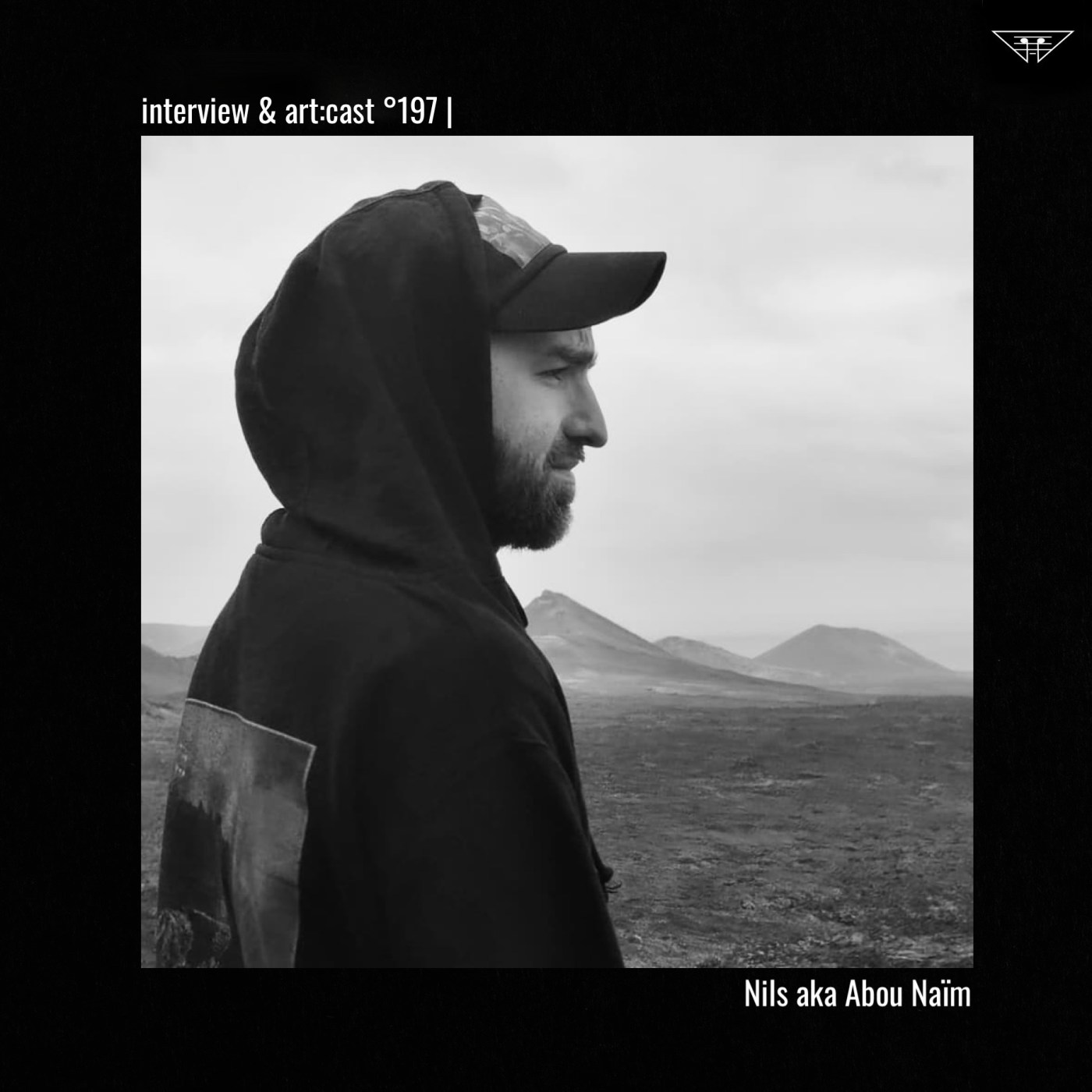
Some artists arrive at House music through House music itself. Others take a far less predictable route. For Nils, better known these days under his solo alias Abou Naïm, the path runs through Hip-Hop, Parisian suburbia, Berlin’s golden-era minimal scene, underground warehouse parties, and a deep-rooted belief that music should always carry personality, groove, and meaning. As a member of the Ghost Club collective and one of the minds behind Les Disques de la Jungle, he has quietly developed a sound that refuses easy categorisation — drawing equally from House, Hip-Hop, Electro, and the raw energy of dancefloors built far away from commercial trends.
While many producers simply sample rap vocals over House grooves, Abou Naïm approaches things differently. His productions feel less like edits and more like conversations between musical worlds, shaped by decades of listening, digging, clubbing, and human encounters. From formative years spent in Berlin during the rise of Bar25 and the German minimal movement to his current life in Ivry-sur-Seine on the outskirts of Paris, every chapter has left its mark on his artistic identity.
Recently featured on Dawidu’s debut Attention Spin! various artist release and currently preparing the launch of his new imprint, Abou Naïm Records, Nils continues to follow his own path — one driven by friendship, authenticity, and a genuine love for culture rather than career plans or industry expectations.
Following his contribution to our latest art, Torture the Artist caught up with Nils aka Abou Naïm to discuss Paris and Berlin, gentrification, Hip-Hop, House music, record labels, social issues, underground culture, and why some of the most meaningful musical journeys happen far away from the spotlight.
Torture the Artist: Hello Nils, tell us something about your day.
Nils: Sunny day in Ivry. I’m not working, so I just spent some time with my son and played some music.
The place that shaped me as a teenager doesn’t exist anymore.
Torture the Artist: You are currently living in the suburbs of Paris. Why do you prefer the suburbs over the city, and where did you grow up?
Nils: I have been living in Ivry-sur-Seine, in the suburbs of Paris, for nearly a decade now. I grew up in the city centre, but just like in many cities around the world, gentrification is crazy in Paris. So basically, living in the suburbs is a lot cheaper nowadays, especially since I live in a housing project. Gentrification is killing the vibe of Paris. For example, you have a lot of amazing restaurants with great wines (and I do love great wines), but it seems you can’t afford those on a regular basis if you’re a working man like me. Prices in the city centre are crazy and no longer correlated with the reality of what you can earn simply from your salary. This is getting a little political, but work doesn’t pay anymore in France, so to be able to enjoy the real Parisian life downtown, you likely need capital (like inheriting an apartment) or simply to be born wealthy. Anyway, most of my friends I grew up with downtown now live in the suburbs, just like me. That’s the reality of gentrification.
Torture the Artist: What’s a place you would recommend people visit that isn’t much of a tourist attraction in your hometown?
Nils: Grab a bottle of wine at La Cave de Belleville (great selection) and go drink it at Grand Bol Restaurant (amazing food). You can also go chill at Parc de Belleville, which has a beautiful view. This is our Chinatown and it’s not fully gentrified yet. I’m actually doing that tonight. But I have to say, everything is slowly becoming a tourist attraction in Paris — that’s why I live in the suburbs. <smiles>
“There is no business plan, no career plan, and no release plan.”
Torture the Artist: What’s an artist, event, or club in Paris people should hear or visit?
Nils: If we organise anything with my crew Ghost Club, you should of course come, and you should definitely check us all out as artists: Marabou, Gaga, Félix Dulac, Kristo, Solal Reyes, and Gyuza (self-promotion ahahah).
I generally hate these kinds of questions because I’m sure I’m going to forget a lot of great Parisian artists. But outside of my Ghost crew, there’s of course my Sensei Chris Carrier; my close friend Taïeb Chekir, the label head of Mahres; my bro Dawidu, who needs no introduction here; Pagenty, who’s going to release some beautiful music on my new label Abou Naïm Records and with whom I share a great EP on Durite this summer; and a ton of equally amazing artists like Le Loup, who has always been a big inspiration for me.
There are not enough women at the forefront of the scene in Paris, but in addition to the girls from my crew, Gaga and Marabou, I must also mention IAMBP, who has just launched her label and is an amazing DJ. To summarize: the best parties for me are organised by different collectives and are mostly held in warehouses in the suburbs during winter. Then you’ve got more open-air gatherings, still in the suburbs or in the woods near Paris during summer. When I go out during the day, I really like the vibe and the new location of Café Croissant, and you’ve got, of course, the now infamous Radio Pirate.
Regarding the club scene, it’s been awful for years. Nouveau Casino has a proper sound system, and my friend Anthony is doing his best to create a special vibe there. In the meantime, the only club doing a really good job in Paris is Essaim, so if you like the artists playing there, you’ll definitely have a good time for sure (and they do have amazing artists playing quite often).
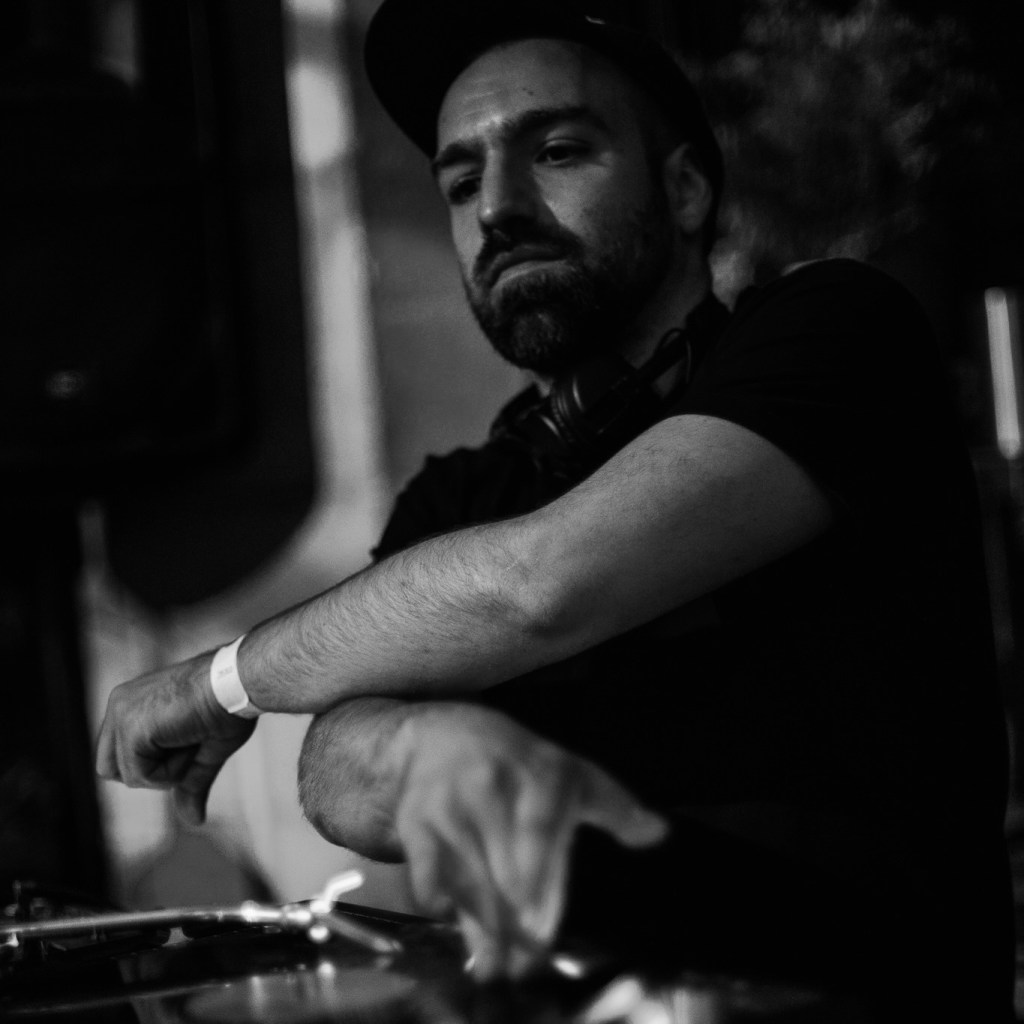
Torture the Artist: From 2005 to 2015 you were a Berlin regular, also living there for a period. What’s your story with the German capital, and was it also the place where you got involved with electronic music?
Nils: I never really settled in the city, but I was definitely a Berlin regular for a few years. I think I was quite obsessed. It started with a school exchange in 2005, and I ended up staying with a wonderful family in the suburbs near Steglitz. The mother was a visual artist, and the father was a horn player for the Berlin Philharmonic who grew weed on his balcony… Their home vibe was amazing, and my exchange partners were super chill, playing rock music in the basement and so on. They actually ended up becoming quite famous in Germany with their band, Von Wegen Lisbeth. Berlin is also the place where I really fell in love with electronic music and got involved with club culture. It might be hard to imagine today, but being French and underage was not a problem around 2006. I started going out with my German friends to clubs like Watergate and, more importantly for me, places like 103 Club. That’s how I discovered German Minimal, and it had a huge impact on me. I have strong memories of Tuesday nights at Cookies and, of course, the sunrises and unstoppable afterparties at Bar25. I have crazy memories there, like having a friend who didn’t want to wait for hours at the door during a club’s birthday celebration. He ended up swimming across the Spree with all his clothes in a plastic bag just to get in (they still made him pay, ahaha).
Torture the Artist: How did Berlin impact your artistic being?
Nils: Berlin had a huge impact on my artistic development, mostly because of the encounters I had there. Back in 2005, I met Michel Niknafs, who would later become one of the owners of Prince Charles. I don’t see him as much as I should nowadays because he’s a recovering workaholic, but he’s still one of my best friends to this day, and he’s my deepest connection to the city. If you read this, love you bro. Then I met Elbee Bad, the Prince of Dance Music (RIP), who became one of my major inspirations as an artist. I still miss him a lot. He was a true legend of our scene who sadly didn’t get the respect he deserved. A huge part of the underground history of electronic music died with him. Another major encounter for me was Michael Everett, aka Mike (RIP), one of the original bouncers at Ostgut and later Berghain/Panorama Bar. He told me a lot about the underground history of Berlin (and plenty of crazy New York stories from his early days, ahahah). Our friendship allowed me to go there very easily and as often as I wanted. It clearly forged my musical identity.
You don’t find 50-cent Sternis in the Spätis anymore.
Torture the Artist: These days a lot of artists move to or live in Berlin. Why aren’t you one of them?
Nils: When I was 15 in Berlin, 20 years ago, the parents of my friends were basically telling them there were no jobs in Berlin and that after graduation they would likely have to move to another city to find good work. Then, when I was around 21, my friend Michel became one of the owners of a club in the city, and he’s still today my most successful friend business-wise. I think this illustrates how much the perspective on Berlin changed in just a few years after I first discovered the city. Then, losing Elbee and later Mike a couple of years afterwards made me very sad. I haven’t been back since their deaths. I know I will return one day, but it’s still emotional for me. Of course, I thought a lot about moving to Berlin throughout my life. But the truth is that the place that shaped me as a teenager doesn’t exist anymore. Most of my favourite clubs are now closed or about to close. You don’t find 50-cent Sternis in the Spätis anymore. I was talking about gentrification in Paris earlier, but I think the gentrification in Berlin has been even more extreme. Life goes on. I’m happy with my kid in Ivry now, and I don’t feel like moving to Berlin anymore today.
Torture the Artist: Your music and productions fuse Hip-Hop and House. How did you come up with that approach? Do you have any role models producing this kind of music, or is it something you do naturally?
Nils: I’m not a traditional Hip-House fan, even though as a DJ I do play a couple of Hip-House records. Growing up, I was always listening to a lot of Hip-Hop on a daily basis. So the approach came quite naturally. I just make music the way I feel it. I don’t really have a role model producing this kind of music, but Elbee Bad is a major inspiration for me. He released some Techno-inspired Reggae music with John Holt back in 1990 and was putting out Hip-Hop records at the same time as he was releasing House music in New York during the 1980s. Talking about role models as a producer, not everybody knows this, but my Sensei Chris Carrier was a Hip-Hop DJ in the early ’90s before he fully switched to electronic music. I went crazy over his Hip-Hop vinyl collection the first time I visited his studio.
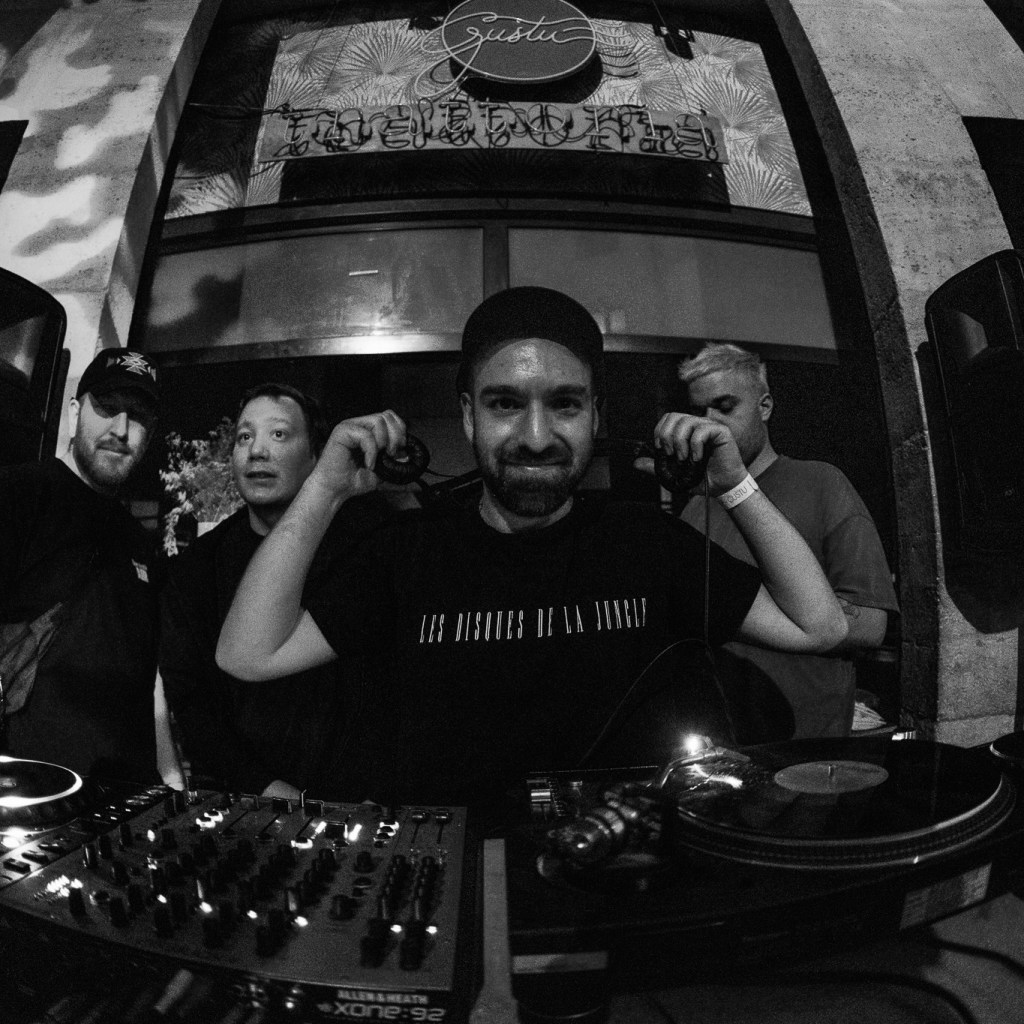
Torture the Artist: Hip-House is often used as a collective term for House music with a Hip-Hop note. However, it is often just a potpourri of tracks with a House bassline and vocals from the original version, whereas your music goes beyond that and actually creates something new. What approach do you follow when producing your own music, and where do you musically fit in?
Nils: As I just said, I’m not a traditional Hip-House fan and I simply make music the way I feel it. I’m never really trying to edit an existing Hip-Hop record into a “club version.” I might play that kind of music sometimes, but I don’t feel like producing it. Maybe you can simply describe my sound as some kind of sped-up Hip-Hop with a big focus on groove.
Torture the Artist: Hip-Hop in its purest form has always been the language of people trying to draw attention to their daily struggles and lives. What are three Hip-Hop records you personally relate to, and why?
Nils: There are so many great Hip-Hop records I grew up with. I’ll give you not three tracks but three LPs with strong messages that I’m still vibing with today:
Cipher Inside by Nato Caliph
Moment of Truth by Gang Starr
Revolutionary Vol. 2 by Immortal Technique
But you’ve also got the French scene:
J’éclaire ma ville by Flynt
Contenu sous pression by Karlito
Mauvais Œil by Lunatic
The rise of inequality and the accumulation of wealth by a very small minority are damaging our societies.
Torture the Artist: What societal problems would you like to draw attention to?
Nils: That’s a huge topic. <laughs> I’m lost and shocked by how easily our Western countries have accepted the ongoing genocide in Gaza. More generally, on a global scale, I’m condemning the ravages of neo-colonialism and the wars it generates. It’s time to bring back the real pacifism of the first part of the 20th century. War is simply profit for the military-industrial complex, but we’ll be the ones dying in the end. On another level, working no longer allows us to increase our standard of living. The rise of inequality and the accumulation of wealth by a very small minority are damaging our societies. But I’ll stop here because this could easily be an interview on its own.
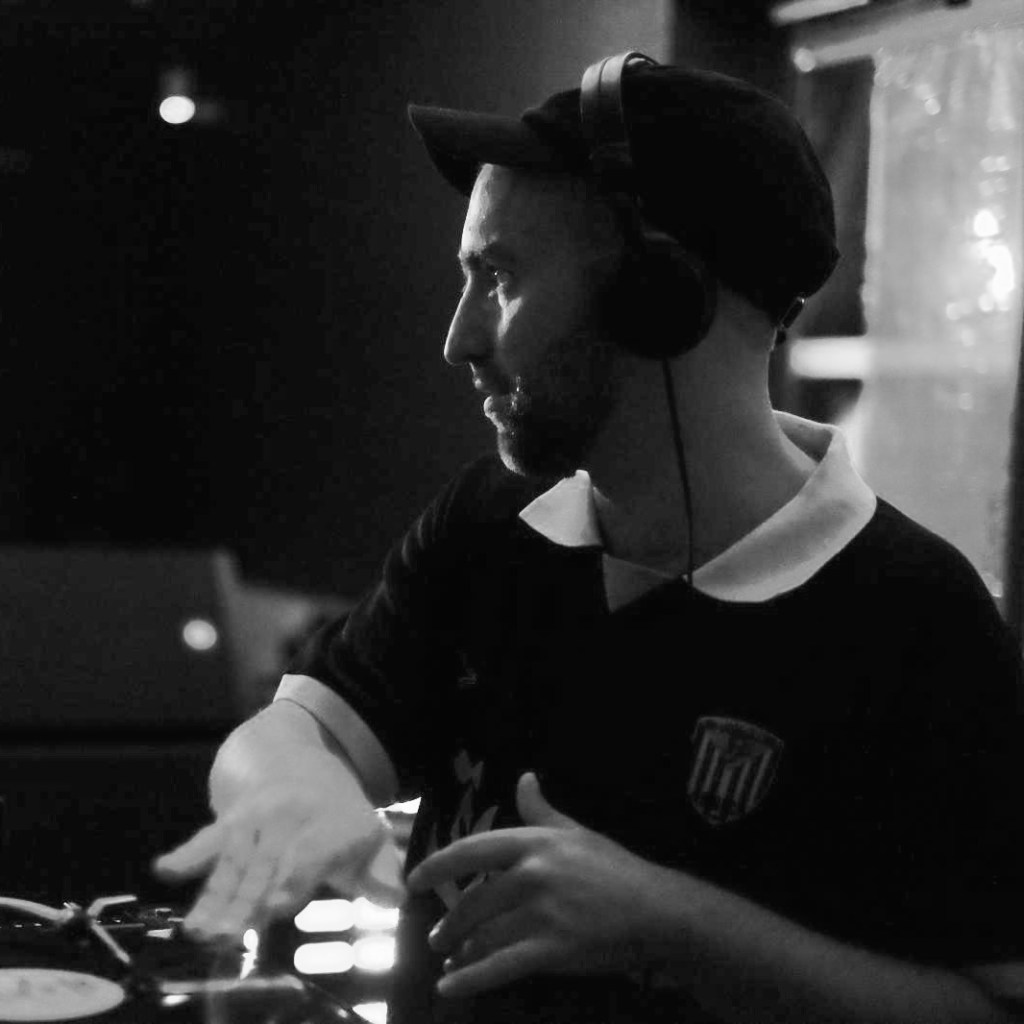
Torture the Artist: Your music is featured on your own label Les Disques de la Jungle, but you were also part of Dawidu’s label debut V/A on Attention Spin! Would you like to continue mostly releasing on your own label and occasionally on other imprints, or do you have a broader plan regarding your music?
Nils: There is no business plan, no career plan, and no release plan, ahaha. I’ve always liked doing things myself, but even more together with my crew. The whole Ghost collective is made up of people I love and grew up with. Dawidu is my bro. He was already the resident of our first project, Most Wanted, back in 2012, so releasing music on his imprint was kind of a natural thing. When you look at our label, Les Disques de la Jungle, it started with my childhood friend Félix Dulac, my Sensei Chris Carrier, and myself. Then Solal Reyes joined us, not only because he’s a great artist, but also because he’s one of our closest friends. Right now, I’m launching a solo project for the first time in almost 15 years in the music scene. The first release on my new label, Abou Naïm Records, will be out this summer.
Torture the Artist: What’s a label you would love to see your music on, and why?
Nils: I don’t really send demos. I’m kind of shy when it comes to the music I’m producing, and I don’t share it very much in general. Basically, I only share it with friends or people I connect with on a personal level. So if my music fits a friend’s project, that’s cool. Otherwise, I’ll just release it myself eventually.
Torture the Artist: Speaking of your music, what’s an artist you would love to share a studio with, and why?
Nils: I would love to share a studio with Elbee Bad, mostly because I can’t anymore. “No time for regrets / Pas le temps pour les regrets” is the mantra of a famous French Hip-Hop track by Lunatic, but I still wish I could have made more music with him before his passing. On a lighter note, I would love to share a studio again with my Sensei Chris Carrier because he’s the best, and it’s been a while.
Torture the Artist: The French Hip-Hop scene is just as vibrant as the electronic music scene. Would you like to work with a French Hip-Hop artist on one of your tracks, or would you rather collaborate with a luminary from the US Hip-Hop scene?
Nils: The situation has never really come up, but I guess if I like the way an artist raps, I’m down for it. I’d be just as happy collaborating with a French Hip-Hop artist as with someone from the US. It all depends on who’s rapping in the end, and you don’t need to be famous to be good.
Things need time. Life needs time. The world is already moving too fast.
Torture the Artist: The last release from you was your contribution to Attention Spin!’s V/A earlier this year. Aside from that, things have been relatively quiet on the release front. Do you lack time to produce music because of your day job and family life, or do you simply prefer to take things slowly?
Nils: I’m happily unemployed since quite recently, but I worked as a social worker in a medical centre for migrants for a decade. I’m also a dad of an almost two-year-old, so of course I’ve had a bit less time for myself and for music. Anyway, I feel like releasing a couple of records a year is enough. On a personal level, I don’t feel like I should rush things. Things need time. Life needs time. The world is already moving too fast.
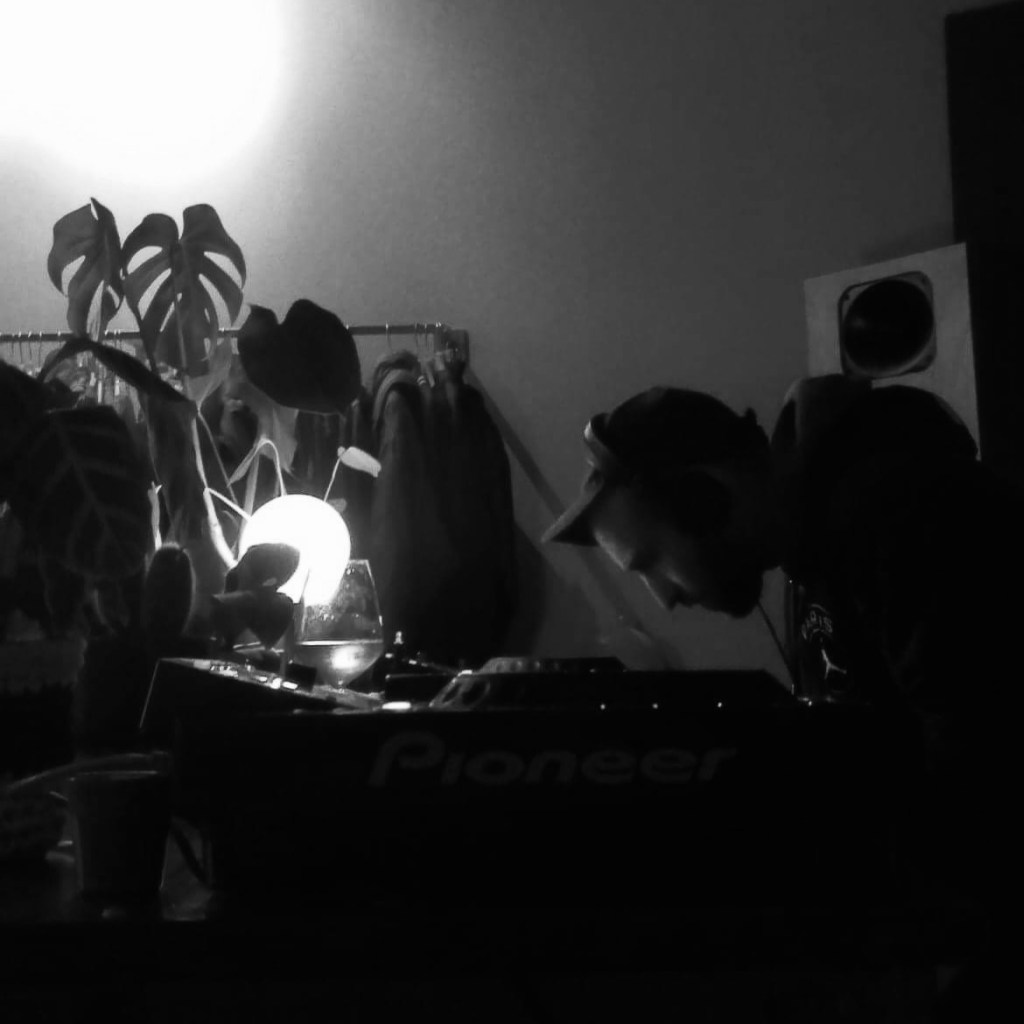
Torture the Artist: What’s a Hip-Hop sample you would love to use in one of your tracks but haven’t yet?
Nils: I really want to do something serious with the vocals from one of my favourite Hip-Hop records: “Yen a pour les oreilles“, released in 2006 by Garba 50, a crazy band from Ivory Coast. I’ve been listening to that LP with one of my best friends, Cheick, almost since its release. I already sampled their voices for an interlude on my new label Abou Naïm Records, but I still want to do something proper with it.
Torture the Artist: You are responsible for the latest edition of our art:cast series. What was your approach when recording the mix, and where is it best listened to?
Nils: House, Electro, UKG, and Techno music with a Hip-Hop twist.
Best listened to on a good sound system. This is party music with heavy bass.
Torture the Artist: What’s the Hip-Hop lyric that describes your life best?
Nils: Hopefully: “La Fin de leur Monde“ by IAM.
Words by Holger Breuer

