
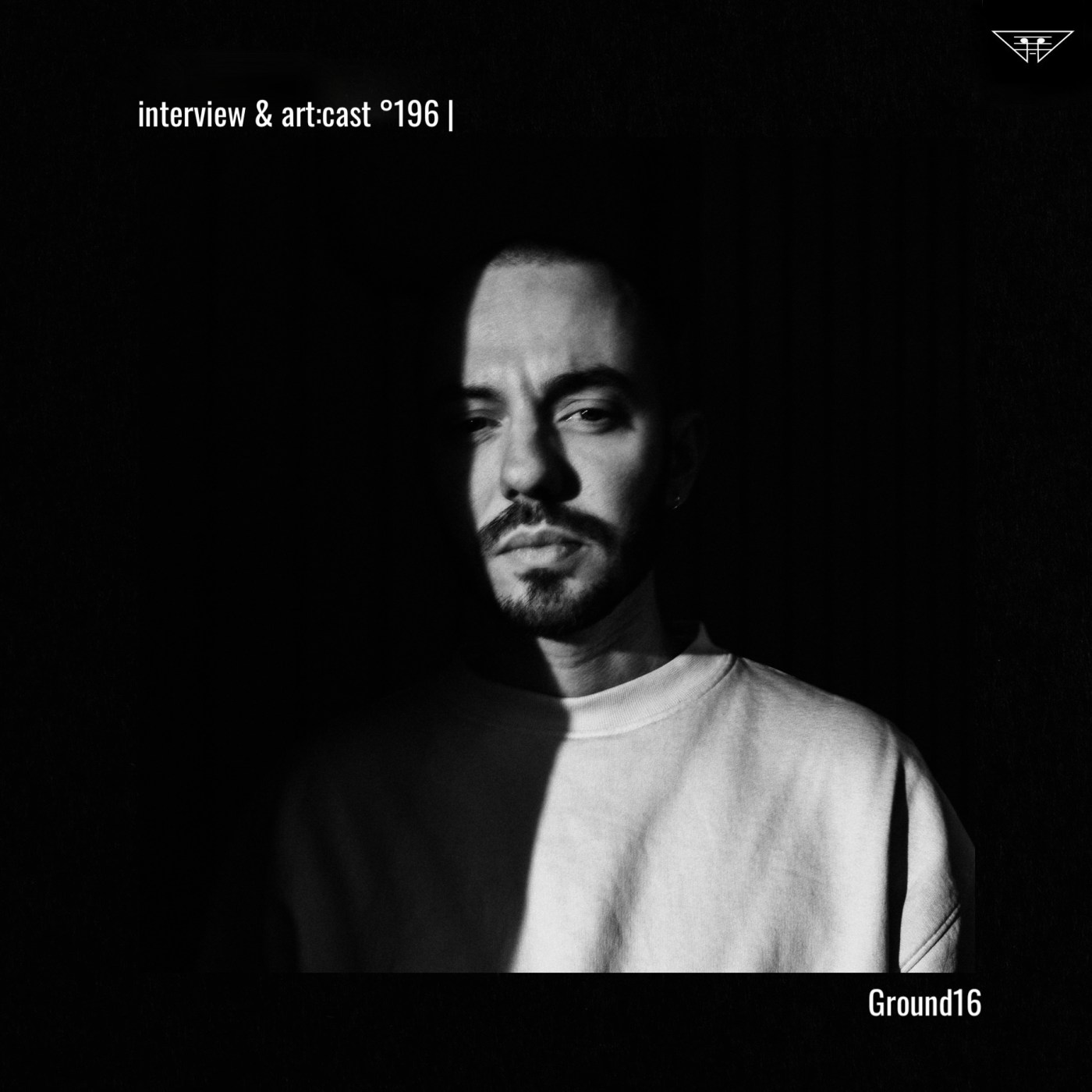
Some artists build their identity around a single sound. Ground16 has spent years doing the opposite. From deep House and broken beats to dubwise excursions, Electro influences, and richly textured club music, the Lausanne-based producer has quietly developed a catalogue defined not by genre boundaries but by curiosity. His productions often feel like snapshots from different corners of his musical universe — shaped by late nights in clubs, countless hours in the studio, jazz influences, soundsystem culture, and an ever-present desire to keep exploring new territory. Rather than settling into a comfortable formula, Ground16 continues to follow instinct wherever it leads, resulting in a body of work that remains both unpredictable and unmistakably his own.
Hailing from Lausanne, Ground16 has steadily established himself as one of the most intriguing voices within contemporary underground electronic music. Through releases on labels such as Sofa Movements, Gestalt Records, Neo Violence, A.2AUM, and now Growing Pleasures, he has developed a sound that resists easy categorisation. Drawing inspiration from House, Electro, Breaks, Ambient, Jazz, HipHop, and soundsystem culture alike, his productions move freely between genres while maintaining a distinct sense of atmosphere, groove, and musical depth. Whether exploring broken rhythms, deep House textures, or dub-infused club music, his work consistently reflects a producer more interested in exploration than repetition.
His latest EP, “Excuse Me“, arrives on Filippo’s Growing Pleasures imprint after a lengthy and at times frustrating delay. Originally scheduled for release months earlier, the record eventually reached listeners only after several rounds of test pressings, a process that underlined the label’s commitment to quality rather than convenience. The result is a deeply dancefloor-oriented collection of tracks that showcases a slightly different side of Ground16 — more House-focused, playful, and direct, while retaining the textured production and attention to detail that have become hallmarks of his work.
Away from the studio, Ground16’s musical journey has been shaped by experiences far beyond his hometown. From countless hours spent at the Montreux Jazz Festival to formative periods in Bristol and regular pilgrimages to Berlin’s club landscape, his influences stretch across scenes, cities, and cultures. That broad perspective is reflected equally in his productions and DJ sets, which have taken him to venues such as HÖR Berlin, Paloma Bar, and Folklor, while continuously reinforcing his reputation as an artist who follows instinct rather than formulas.
Following the release of “Excuse Me” on Growing Pleasures and his recent contribution to our art series, Torture the Artist caught up with Ground16 to discuss delayed vinyl releases, Lausanne and Bristol, club music versus emotion, record digging, UK Jazz, and why curiosity remains one of the most important tools a producer can possess.
Torture the Artist: Hey David, tell us something about your day. Where are you answering us from right now — studio, record shop, airport, or somewhere overlooking Lausanne?
Ground16: Right now I’m just at home in Lausanne, on my couch. It’s pretty stormy out today, so it’s a good day to stay in. Nothing glamorous, no airport or studio, just a quiet moment answering these.
There’s always a strange gap between finishing tracks and people actually hearing them, and this time that gap was extra long.
Torture the Artist: You’ve just released your long-awaited “Excuse Me” EP on Growing Pleasures. How does it feel to finally have the record out in the world after such a long wait?
Ground16: Mostly relief. It was meant to come out back in April, so finally having it out in the world feels a bit surreal, in a good way. There’s always a strange gap between finishing tracks and people actually hearing them, and this time that gap was extra long, so it’s nice to finally close it.
Torture the Artist: The release experienced a significant delay before reaching listeners. Was that frustrating at times, or did the extra time allow you to see the music differently once it was finally released?
Ground16: A bit of both. It’s frustrating in the moment, you’re sitting on finished music wanting it out there. The delay also meant this one landed almost at the same time as my other EP, Breaking Through, so the promo for the two ended up overlapping, which isn’t ideal. It came down to the vinyl, we went through three rounds of test presses to get it right, which isn’t the most visible part of the process but really matters for how a record sounds. So looking back I’m glad we took the time. Rushing out a pressing I wasn’t happy with would have bugged me way more than waiting.
Torture the Artist: Looking back now, do you hear “Excuse Me” differently than when you originally finished the tracks?
Ground16: A little. When you finish something you’re too close to it to really hear it. With the months that have passed I’ve got some distance, and now I can enjoy it more like a listener than a producer picking at details. And I’m still really happy with how it sounds, which isn’t always a given once you’ve sat with something for a while.
Torture the Artist: Growing Pleasures has quietly built a strong identity through carefully selected releases and a close-knit community around the label. What made Filippo and Growing Pleasures the right home for this EP?
Ground16: Growing Pleasures has a real identity. It’s carefully curated, with an actual community around it. I’d been sending Filippo demos pretty regularly, and he really latched onto “Uplifted”, the A1. From there he offered me a whole EP, and I ended up writing these tracks specifically for the label. So it wasn’t a case of shopping a finished record around, it grew out of an ongoing relationship, which made it the natural home for it.
Torture the Artist: We know Filippo quite well through his visit to Hamburg and his appearance for Torture the Artist. How did your connection with him begin?
Ground16: It goes back a long way, six or seven years now. We first connected online, I think around my release on Gestalt Records. After that he helped me out with the PR for Ground16 for a while, so we’d built up a real relationship over the years. Doing a release together on his own label felt like the natural next step after all that.
Torture the Artist: The title “Excuse Me” immediately stands out. What’s the story behind the name? Was there a particular idea or moment that inspired it?
Ground16: It comes straight from the vocal sample in the track “Excuse Me,” this guy saying “excuuuuse me” in a really sarcastic way. It made me laugh, and it fit the slightly offbeat character of the label, so it stuck.
Torture the Artist: Compared to some of your previous work, where do you see “Excuse Me” sitting within your musical journey so far?
Ground16: This one’s a properly House-leaning EP, dancey and fun, even a little cheesy in places, and I mean that in a good way. I’ve made a lot of music over the past couple of years, and this one stands out a bit because it’s less broken and dub-leaning than most of my recent stuff.
Torture the Artist: Your productions often draw from House, Electro, Breaks, Ambient, Jazz, and even HipHop influences. Which inspirations were most present while creating this EP?
Ground16: Clearly House on this one. Beyond that I don’t really have specific influences I was chasing for this EP. My whole musical culture feeds into everything I make, consciously and unconsciously, so it’s less about pulling from one particular thing and more about everything I’ve absorbed over the years coming out in its own way.
Torture the Artist: Lausanne isn’t necessarily the first city people think of when discussing underground electronic music. How has growing up and working there influenced your sound?
Ground16: Lausanne itself maybe shaped my sound less than the places I travelled to, but there’s one big local thing: the Montreux Jazz Festival. I spent a lot of time there between 2015 and 2019, between the concerts and the club nights, and it fed me a huge amount. Beyond that, it’s a small scene, so there was never one dominant local sound pulling me in a particular direction, which left me free to look outward. Clubs like Berghain and OHM in Berlin really shaped how I think about club music. And I spent a few months in Bristol in 2018, which brought in the more UK, breaks side of what I do. There were the Rave on Avon events around Stokes Croft, and loads of one-off parties thrown by local collectives. I still remember a brilliant DJ Fett Burger set in a warehouse out in some industrial estate. That whole period left a real mark.
I don’t think much about genre boundaries when I’m making something, I just follow what excites me at that moment.
Torture the Artist: Your recent “Breaking Through” EP on A.2AUM showcased a very broad palette, moving from broken beats to 4×4 territory. Do you consciously try to avoid being tied to one genre?
Ground16: It’s not really a conscious strategy, more just how I am. I don’t think much about genre boundaries when I’m making something, I just follow what excites me at that moment. Breaking Through happened to swing from broken beats to 4×4 because that’s genuinely what I was into across those tracks. If I forced myself to stay in one box, I think the music would suffer for it.
Torture the Artist: Many producers eventually settle into a recognizable formula. You seem to do the opposite and continuously explore different directions. Is that curiosity intentional?
Ground16: The curiosity is real, but it’s not a plan or a branding thing. I’d just get bored making the same record over and over. Settling into one formula might be smarter career-wise, people know what to expect from you, but it would kill the fun for me. I make music first because I enjoy the process, and chasing different directions is a big part of that. And I think that’s part of what makes my music interesting too. Each EP ends up being a bit of a surprise.
Torture the Artist: You’ve released music on labels such as Sofa Movements, Gestalt Records, Neo Violence, A.2AUM, and now Growing Pleasures. Do you approach tracks differently depending on the label, or do labels simply find their place naturally afterwards?
Ground16: It’s usually the second, the tracks come first and the labels find their place afterwards. I just make what I make, and then we see later if an opportunity comes up for it. This EP was actually the exception, I wrote it specifically for Growing Pleasures once Filippo had offered it, so I had the label in mind the whole time. But that’s not how it normally goes for me.
A really good club track can be fairly emotionless and still completely work. But emotion is often what takes a good club track and makes it a memorable one, the kind that stays with you.
Torture the Artist: Your music often feels deeply textured and atmospheric while still remaining highly functional on the dancefloor. What’s more important to you when producing: emotion or functionality?
Ground16: I’m a bit torn, because I think both matter. A really good club track can be fairly emotionless and still completely work. But emotion is often what takes a good club track and makes it a memorable one, the kind that stays with you. So you need a bit of both, really. If anything, the music I make is essentially club-oriented, which is kind of inevitable, and sometimes I catch myself wishing it had a bit more emotional depth. Sometimes I wish I was a jazz keyboardist, I just don’t have the skills for it. <smiles>
Torture the Artist: Venues such as HÖR Berlin, Paloma Bar, and Folklor have hosted your sets over the years. Have there been particular dancefloors that helped shape your identity as a DJ?
Ground16: There isn’t really one single dancefloor that defines me. It’s more about the range of my sets than any particular venue. When I play on my own I usually lean closer to my dub influences, and when I go back to back with friends like Basile or Fred it depends on the room and the mood, but we’ll often wander off into Disco, Boogie and House. I don’t have one fixed set style, same as with my productions, and I think that variety says more about me than any single place would.
Torture the Artist: How closely connected are your DJ sets and your productions? Do ideas from the club often find their way back into the studio?
Ground16: They’re connected, but maybe less than for people who play out every weekend. I don’t gig a huge amount, so for me the studio tends to lead rather than the club. I do imagine the floor when I’m producing, how a track would land, where it would sit in a set, but it’s more that the studio feeds potential sets than the other way around. And that suits me fine, the studio is where I’m happiest and where most of my ideas actually come to life.
Torture the Artist: You also contributed an art:cast for Torture the Artist. How did you approach that mix, and what story were you trying to tell through it?
Ground16: I started with a deep, housey selection, slid in three tracks from the “Excuse Me EP“ along the way, and then gradually pushed it into headier, more blown-out territory with some dub house towards the end. So the arc goes from warm and deep to a bit wilder. Working my own tracks in among records I love felt like a natural way to present them.
At home you have people’s attention in a different way, so you can take more time, let things breathe, build an arc.
Torture the Artist: When putting together a mix like the art:cast, are you thinking more about creating a journey for listeners at home or recreating a club experience?
Ground16: With something like the art:cast, I’m thinking more about a journey for someone listening at home than trying to recreate a club set. At home you have people’s attention in a different way, so you can take more time, let things breathe, build an arc. That said, I still play club-oriented tracks, that’s always the main thread for me. I’m not dropping jazz or soul the way I might in a pure listening set. So it’s a journey, but a club-rooted one, more about taking the listener somewhere than smashing a peak-time floor.
Torture the Artist: Digging culture seems to play an important role in your musical identity. What does discovering music mean to you today compared to when you first started DJing?
Ground16: When I started, discovering music took more effort. I had less knowledge back then, so I was actively hunting for labels and artists, trying to map it all out. These days digging feels much more natural. I know what I’m after, and I’ve got my sources pretty well identified, a few Instagram accounts I trust, the right people to follow. So I try to slow down and go deeper into things rather than just skimming endless new releases. The flip side is there’s so much music coming out every day that it can get a bit overwhelming. And these last couple of years I’ve actually spent more time in the studio than digging.
Torture the Artist: Is there a record you’ve discovered recently that reminded you why you fell in love with electronic music in the first place?
Ground16: Yeah, “Glare” by Fireground on Ilian Tape. That track has everything I love, it’s really rhythmic, with these dub stabs and a slightly hazy, floating atmosphere, but it stays super dynamic the whole way through.
Torture the Artist: Beyond electronic music, where do you currently find inspiration? Nature, architecture, films, travel, conversations, books?
Ground16: A few places, really. Nature, for one. Living in Lausanne, you’ve got Lake Léman, the mountains and the forest right there, and even if I don’t get out into it as often as I should, just having it around does something for me. Traveling too, of course. And lately, the socio-political moment we’re living through. There’s this feeling that something is shifting, a kind of wind of revolt rising against capitalist forces, and at the same time, sadly, fascism gaining ground again. That tension is very present for me. I actually just finished a track about it, still unsigned, that I’ve called “Muted Riot.”
Torture the Artist: Switzerland has produced a fascinating generation of underground artists over the past decade. How do you view the current Swiss scene from the inside?
Ground16: There’s some really strong talent here. Producers and DJs like DJ Laxxiste A., NVST or Chlär are people I rate a lot, and it sometimes surprises me that a country like ours turns out artists of that level. There are sharp labels too, like Flight Mode, run by Jeremy and Mehdi, who have a really discerning ear. What’s missing, in Lausanne at least, is a proper club culture, genuinely alternative spaces with big soundsystems and crowds who come out to dance with real curiosity about the music and the party. I think the very rigid framework here, all the laws and rules, makes it hard for a scene like that to emerge. But there’s real potential, and I hope it keeps growing.
Torture the Artist: What excites you most about electronic music in 2026? Are there particular artists, labels, or movements that have your attention right now?
Ground16: Quite a few things. Objekt’s label Kapsela is putting out really interesting stuff at the moment. I’ve also been into the “Sub Science” EP by Hyas on Nerve Collect, proper bass-heavy, soundsystem-leaning music with that grime and dubstep energy. And I’m really looking forward to Dekmantel this summer. I went in 2017 and 2022, always as a listener, and I’m heading back this year. The lineup is always interesting. Beyond strictly electronic, the UK jazz scene is exciting me a lot right now, people like Yussef Dayes, Joe Armon-Jones, Nubya Garcia, Alfa Mist. It’s a big influence on me.
Torture the Artist: Finally, after all the waiting, when somebody drops a track from “Excuse Me” at 4AM and the dancefloor locks in, what do you hope people feel in that moment?
Ground16: This EP is fun and dancey, so if a track comes on at 4AM and the room locks in, I’d love for people to feel that bit of release. Mostly I just want it to make them dance, and maybe put a little smile on their face from the fun side of the track.
Words by Holger Breuer
Pictures by Grain
 Torture the Artist