
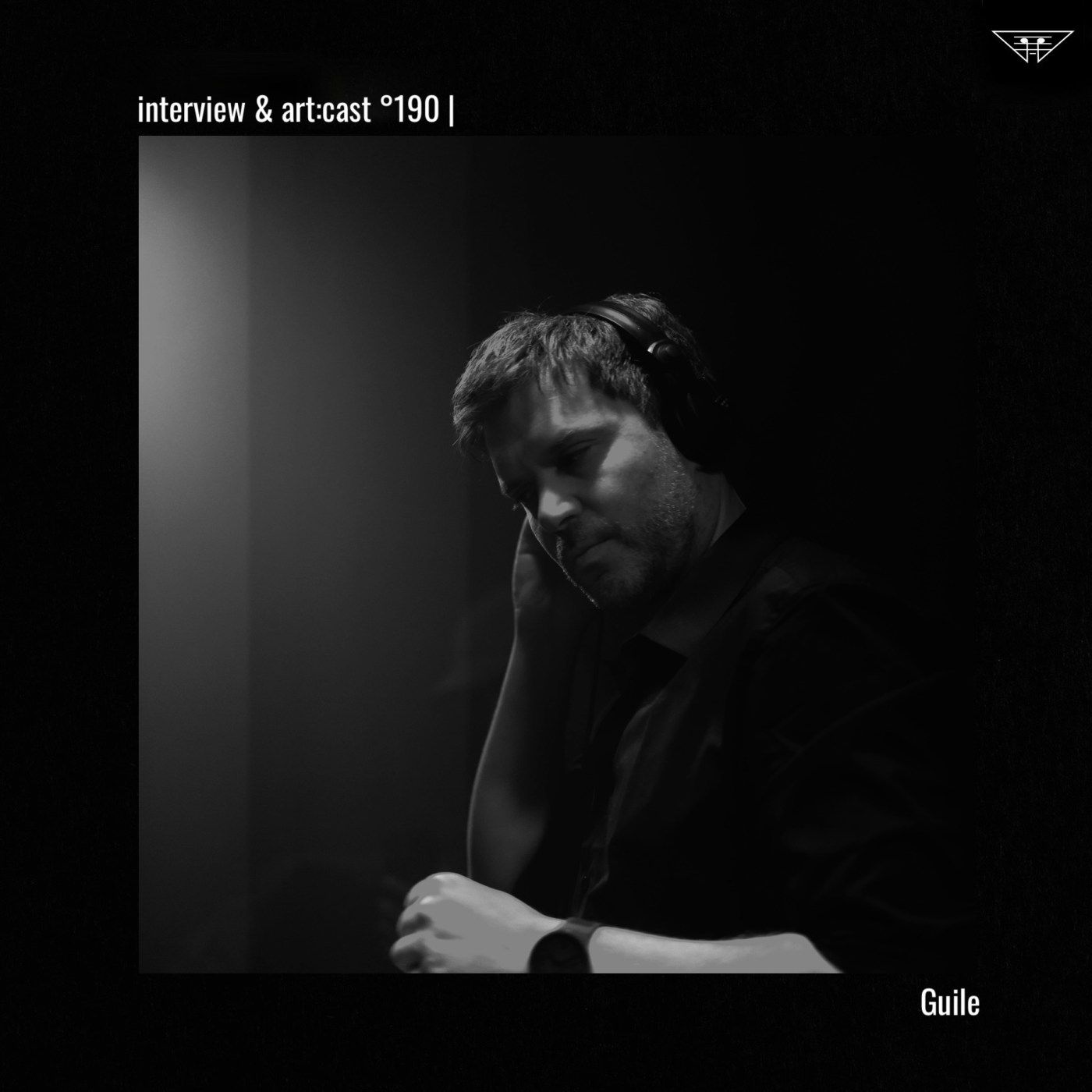
Emerging from the pulse and pressure of Buenos Aires’ restless underground, Guile is steadily becoming one of the most distinctive voices shaping the contemporary club landscape. With a sound that threads Minimal precision through rolling groove, melodic spark, and a UKG-informed shuffle that refuses to stand still, he’s building a catalogue defined by character rather than genre – music that carries both emotional weight and dancefloor bite.
Over the past years, Guile’s trajectory has traced an upward line powered by curiosity, deep digging, and relentless studio refinement, resulting in releases for respected labels such as The Sound of Limo, Immer Feierabend, and X-Kalay. Each step has sharpened his stylistic identity, but his newest project marks a particularly confident leap: the freshly released “The Crack EP” on Spaghetti Club. The four-tracker condenses everything that makes Guile compelling – Acid flashes woven into warm, housy textures, pads glowing with ‘90s nostalgia, and grooves built with the precision of someone obsessed with both detail and impact. It’s a playful yet focused statement, a snapshot of an artist finding clarity in his voice while refusing to play safe.
To extend the EP’s world beyond the studio, Guile delivers the latest edition of our art:cast mix series—a recording shaped by the energy of new record-digging, fresh influences from his recent European tour, and the intensity that defines South American dancefloors. It flows with intention: deep, elastic, and constantly shifting, mirroring the same tension-and-release architecture that runs through his productions.
Returning home after months on the move, Guile stands at a point where experience, instinct, and momentum align. With new releases lined up and a studio full of unfinished tracks already building pressure, the next chapter is clearly about to accelerate. With “The Crack EP“ now out in the world and the art:cast offering a window into Guile’s musical universe in motion, we sat down to talk origins, Buenos Aires’ evolving underground, influences, gear obsessions, and the philosophy that drives both his productions and DJ sets.
Torture the Artist: Hey Guile, welcome to Torture the Artist. How’s life treating you these days – more time in the studio or more time on the move? Bonus points if you’re answering this surrounded by cables, coffee, and chaos.
Guile: Hey! Thanks for having me. Lately, life’s been a mix of both – I’ve been spending a lot of time in the studio, working on new material and refining my sound, but also moving quite a bit between gigs and short trips. August and September were especially busy since I was touring around Europe – a lot of traveling, playing, and meeting people from the scene. Now I’m back home, recharging and spending more time in the studio again. And yes, right now I’m literally surrounded by cables, coffee, and half-finished tracks… the usual chaos.
Torture the Artist: You’re based in Buenos Aires – a city that seems to breathe rhythm and energy. How did you first fall in love with electronic music, and what were your earliest memories of the local scene that pulled you in?
Guile: Yeah, Buenos Aires definitely has that energy – it’s a city that never really stops. I first got into electronic music back in the early 2000s, when I started going out as a raver. My first real experiences were at events like Southfest and the first Creamfields that came to Argentina – those massive nights with huge sound systems totally blew my mind. Around the same time, I was also going every Friday to Buenos Aires News (which is now Crobar), Pacha down by Costanera, and a bunch of local parties. A few years later, I started playing by myself – first at a small club called Un Jefe in Quilmes, then Bahrein, and later at house parties with friends. Around 2008, I actually won a DJ contest at Bahrain, and the prize was an Ableton Live course at Sonica. That moment was a real turning point – it pushed me to take music production seriously and start building my own path in the scene.
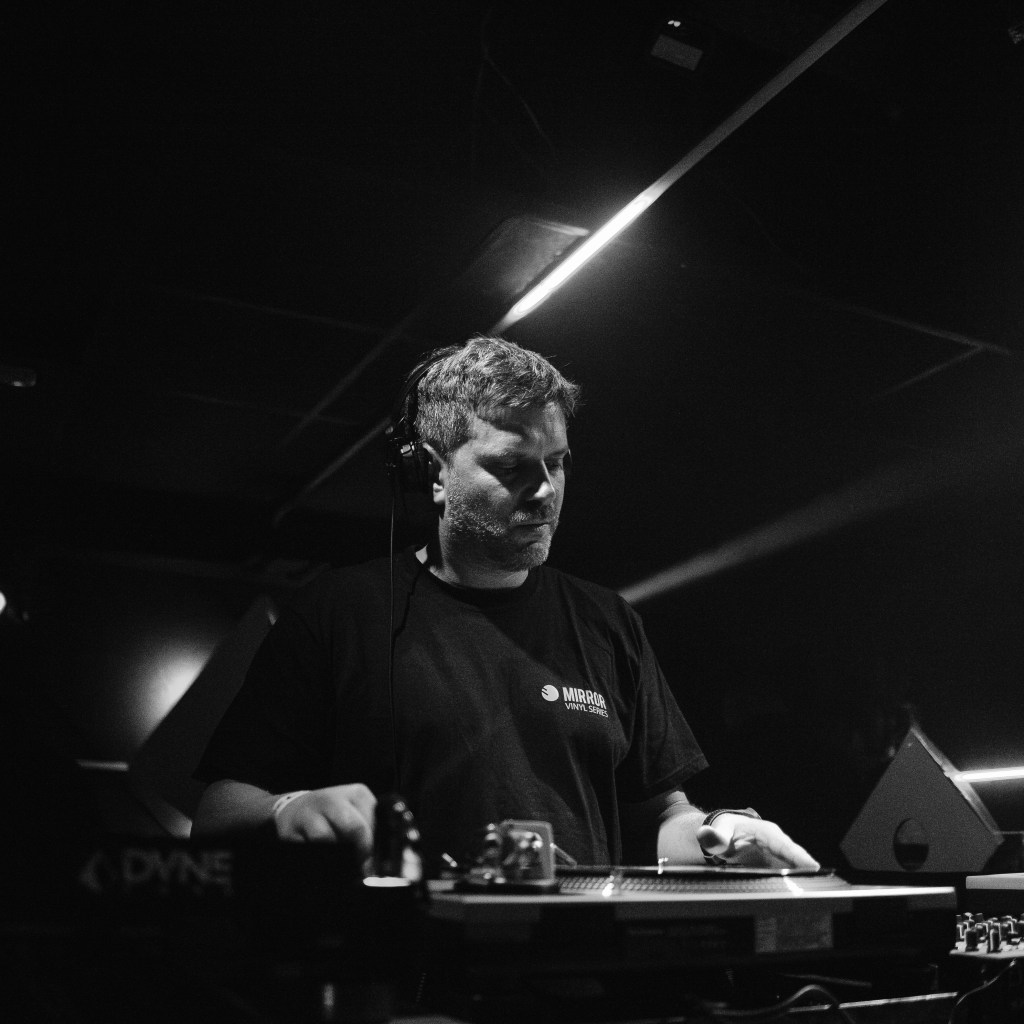
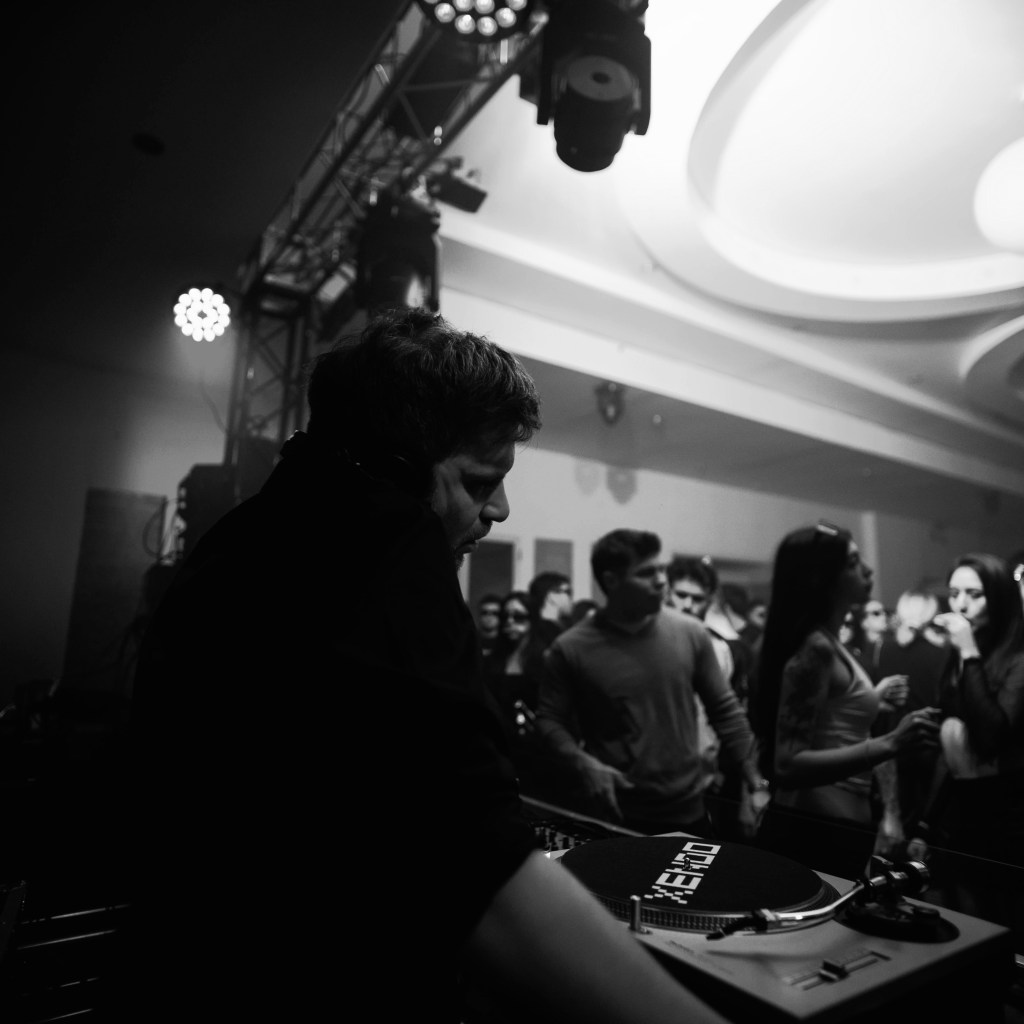
picture by German Reidel
Torture the Artist: How would you describe the underground scene in Buenos Aires today? There’s such a unique intensity in South American crowds – do you feel that energy influencing your sound or how you play?
Guile: The underground scene in Buenos Aires is very intense – it’s full of energy and passion. There aren’t as many spaces as we’d like, but over time new places have started to appear and shape their own identity. Right now, spots like Dune Park and Avant Garten are definitely key references for the local underground community. As for the crowd, the energy here is on another level. You can really feel the difference – people connect with the music in a visceral way, it’s raw and emotional. After coming back from my last European tour, that contrast hit me hard; crowds in South America have this intensity and warmth that always push you to play differently and feed off that vibe.
Torture the Artist: The name Guile – where does it come from? Is it a reference to the programming language, which is designed to help programmers create flexible applications that can be extended by users or other programmers with plug-ins, modules, or scripts or is it just the English word?
Guile: The name actually comes from my real name – Guillermo. My friends started calling me Guile a long time ago, just as a nickname, and it kind of stuck over the years. It’s not related to the Street Fighter character or the programming language – although I’ve heard both references a few times. I honestly had no idea about the programming language until someone mentioned it to me recently, but I think it’s super cool – I might take it as inspiration from now on!
Torture the Artist: Your sound balances Minimal precision with groove, melody, and that UKG shuffle that always keeps things moving. How did that blend evolve – was it intentional or just the product of endless studio exploration?
Guile: I’ve always felt that melodies play an important role in my music – not in every track, but most of the time there’s some melodic element that becomes central. It’s something I naturally gravitate toward. My sound is really the result of a mix between exploration and years of absorbing different influences. I love to blend styles and textures, always trying to make something that feels fresh and personal. In the studio, I like bringing back instruments and sounds from the past – especially from the ‘90s – like the E-MU Orbit, Roland SRX expansions, Korg Polysix, and even some classic rave-style tones inspired by synths like the SH-101 or Juno-106. I think those machines had a special character raw but emotional – and I enjoy reinterpreting that vibe in a modern context through Ableton and digital tools. Whether it’s groove, melody, or that UKG shuffle, it’s all about keeping the music alive and evolving.
Torture the Artist: Let’s talk gear and workflow – are you more of a hardware romantic or an in-the-box perfectionist? And what’s one piece of gear or plugin that’s been shaping your recent productions?
Guile: I’ve always been somewhere in between – I’ve had and still have quite a bit of hardware over the years: things like the Waldorf Blofeld, Microkorg, Novation Peak, Korg MS-20, and Digitone. But little by little, my workflow has shifted more into the box. At some point I realized that what really matters is the flow and not so much whether the sound comes from a synth or a plugin. Still, I definitely have a soft spot for physical gear – there’s something inspiring about turning real knobs and getting lost in the process, even though I wouldn’t call myself a big collector. Lately, I’ve been working mostly in Ableton with some of my favorite plugins, combining that flexibility with the occasional hardware jam when I need to break the routine or spark ideas.
Torture the Artist: When you sit down to produce, where does a track usually begin? A bassline? A sample you stumbled upon at 3 AM? Or just a feeling you can’t quite shake?
Guile: These days, a new track usually starts when I hear something that completely blows my mind – a DJ set, a record, or just a random track that makes me think “I want to do something like this, but in my own way.” That spark usually pushes me straight into the studio. Sometimes it’s about capturing that mood or groove I just heard, but the real trigger is always that feeling of excitement from discovering new music. In terms of workflow, I almost always start with the bass and drums – probably 80% of the time. That foundation sets the energy and groove, and once that part feels right, everything else falls naturally into place. Also, a new sample pack, VST, or synth can be a huge trigger for me. I always say that if you’re feeling creatively stuck, just get a new sound pack or instrument – it never fails to unlock new ideas.
I try not to force it too much – when there’s a good match between the music and the label’s energy, it’s obvious.
Torture the Artist: You’ve released on some strong labels already – The Sound of Limo, Immer Feierabend, X-Kalay – and now Spaghetti Club with your upcoming “The Crack EP”. How do you decide where your tracks belong? Is it about the people, the aesthetic, or the atmosphere each label creates?
Guile: Yeah, I think it’s all about finding the right fit – understanding where your music will naturally sit better. Every label has its own identity and atmosphere, and when the sound matches, everything flows more organically. Sometimes it happens by coincidence – someone from a label might discover your music through another release or a mutual connection, and things just click. Other times, it’s a more conscious choice, sending tracks to places that feel close to your sound or share a similar vision. I try not to force it too much – when there’s a good match between the music and the label’s energy, it’s obvious, and that’s usually where I want my tracks to live.
Torture the Artist: Tell us more about “The Crack EP“. What’s the story behind the name, and what kind of vibe runs through the tracks? Any little production secrets or easter eggs hidden in there?
Guile: Honestly, I never really know where track names come from – they usually just appear out of nowhere. Sometimes it’s a word from a vocal, other times it’s something that happened that day while I was working on the project. In the case of “The Crack EP”, I think I had the TV on mute in the background, and suddenly Messi showed up on the screen – I laughed, closed the project, and said to myself, “el crack”. It just felt right, so the name stuck.
In terms of production, this project has that mix I really enjoy – pads made with VSTs that emulate ‘90s synths like the Roland SRX Dance Trax, combined with acid-leaning sounds and a housy touch. There aren’t many secrets behind it – just housey vibes with some acid flavor and a playful attitude that ties everything together.
That’s also part of the process – trusting someone else’s vision and how your music connects within a broader context.
Torture the Artist: “Access”, your track on X-Kalay’s latest VA, feels both slick and spontaneous. Do you approach VA contributions differently from solo EPs – more about capturing a mood than building a full narrative?
Guile: When I work on a track for a VA, I usually approach it in a more spontaneous way. It’s not so much about building a full narrative like in an EP, but about capturing a moment – a vibe that fits the compilation’s energy. In the case of “Access”, it actually came together quite naturally. I had sent a few tracks to the label, and the owner picked that one for the VA. I think that’s also part of the process – trusting someone else’s vision and how your music connects within a broader context. It ended up fitting really well with X-Kalay’s aesthetic, which has that mix of groove and emotion that I relate to a lot.
Torture the Artist: Last year you released “Joe’s Garage” on Gene On Earth’s label The Sound of Limo. How did that connection with Gene come about, and how did it feel to join a label that’s built such a tight creative family?
Guile: That connection with Gene came about gradually – it was a process that took some time. We exchanged several tracks over a period, and little by little the idea for the EP started to take shape. It was something we built together until we finally found the right combination of tracks that felt solid for the label. The whole experience taught me a lot – about patience, curation, and trusting the process. Releasing on The Sound of Limo was definitely an important step for me, not only because of the exposure, but also because of how much I grew during that collaboration.
In Europe there’s often more room for introspection – the scenes are incredibly diverse and well established, and people tend to explore music in a deeper, more detailed way.
Torture the Artist: Do you notice a difference between European and South American dancefloors – not just in how people dance, but in how they listen?
Guile: I think the main difference lies in the intensity. In Europe there’s often more room for introspection – the scenes are incredibly diverse and well established, and people tend to explore music in a deeper, more detailed way. In South America, the scene has grown exponentially in the last few years. The crowd has become much more musically educated and curious, and there are so many talented DJs and producers emerging, which naturally pushes everyone to keep exploring new sounds. They’re both amazing in their own way – one more consolidated, the other still expanding and full of raw energy. I feel lucky to be able to experience both.
Torture the Artist: Touring often brings unexpected inspiration. Did you find yourself making sketches or track ideas while on the road, maybe something we’ll hear soon?
Guile: Touring definitely gave me a lot of inspiration. Every place, every crowd, every moment on the road leaves something behind. Since coming back home, it’s all been pouring out cathartically in my Buenos Aires studio – I’ve made a lot of new tracks lately. One of them has already turned into a new EP that I just finished and signed with a label I’ve been wanting to release on for a long time. You’ll start hearing the results of all that energy very soon.
Torture the Artist: Who are some artists – past or present – that have quietly influenced your sound? Maybe producers you dig deep for, or DJs whose sets you’d never skip?
Guile: I think there are two clear stages in terms of influences. When I first started getting into DJing in the mid-2000s, I was really drawn to artists like Sasha, Lee Burridge, Clive Henry, Craig Richards, and the whole Circo Loco crew – that era of deep, trippy grooves and the wave of Minimal that defined those years had a huge impact on me.
Nowadays, I find a lot of inspiration in DJs like Nicolas Lutz, Vass, Unai Trotti, and Christian AB – people who dig incredibly deep and create those unpredictable journeys on the dancefloor.
As a producer, my sound has also been shaped by classic influences such as Alex Neri, John Tejada, Plump DJs and Peace Division, but also by newer names who bring a modern twist like Anderson, Jex Opolis, Voodoos and Taboos, all Slow Life crew, Prince de Takicardie…. etc. It’s a mix of old-school roots and current energy – both ends of that spectrum constantly feed what I do in the studio.
Torture the Artist: If you could choose one dream back-to-back, who would it be with – and what track would you open with to set the tone?
Guile: That’s a tough one! There are so many artists I’d love to share the booth with, but if I had to choose one, it would probably be Craig Richards. He’s someone I’ve admired since the early days – his selections, the way he builds tension and flow, it’s something unique. I’d open with something deep and trippy to set the mood, maybe an unreleased track of mine or an old UK Tech-House record from the 2000s – something that instantly connects but still leaves room to explore like John Tejada – Planes And Trains.
I much prefer long sets – three hours or more – because that’s when I can truly tell a story from beginning to end.
Torture the Artist: What’s your philosophy when playing a set – do you prefer to tell a long story that slowly unfolds, or to move through quick shifts and keep people guessing?
Guile: Honestly, it really depends on the length of the set. I much prefer long sets – three hours or more – because that’s when I can truly tell a story from beginning to end. I like building tension, creating moments of surprise, and letting things unfold naturally. When the set is shorter, like two hours or less, I just compress that story – the transitions are quicker, the energy shifts happen faster, but I still try to make it feel like a journey. For me, no matter the duration, the goal is always the same: to tell a story and keep people connected from the first track to the last.
Torture the Artist: When people listen to a Guile track or see you play, what do you hope they take away – a feeling, a groove, maybe a bit of both?
Guile: I’d say a bit of both. I want people to leave with a groove in their bodies but also with some kind of aesthetic experience – something that stays with them beyond the dancefloor. Ideally, I’d love if my music or my sets could spark something in people who have artistic curiosity, maybe even inspire them to create or explore something on their own. I know that sounds ambitious, but it’s what I wish for. But at the same time, if someone just comes to dance, have fun, and disconnect for a while – that’s perfectly fine too. Music should be inclusive in that sense. Above all, I just want the experience to be fun and a little bit introspective, not too much.
Torture the Artist: You are responsible for the latest art:cast (our mix series), where do you best listen to this mix and how did you curate the music for it?
Guile: This one came together really naturally. I had just bought a new batch of records – some from my local record shop here in Buenos Aires (Cyberwax, as always) and a few that had just arrived from Europe – so the timing was perfect. I was super excited to put them together and record this mix while everything still felt fresh. It’s a proper snapshot of what I’ve been listening to and playing lately – full of groove, energy, and that balance between new finds and timeless sounds.
Torture the Artist: And finally, what’s next for you – new releases, more touring, or time to lock yourself back in the studio and experiment again?
Guile: There’s a really nice batch of releases coming – both collaborations on VAs and full EPs for Seguim Records, Dias De Campo, and Hoarder. 2026 is already looking great! We’re also starting to plan a new European tour, and I’ll be playing through the summer here in South America as well – so stay tuned, lots of good things ahead.
Words by Holger Breuer
 Torture the Artist