
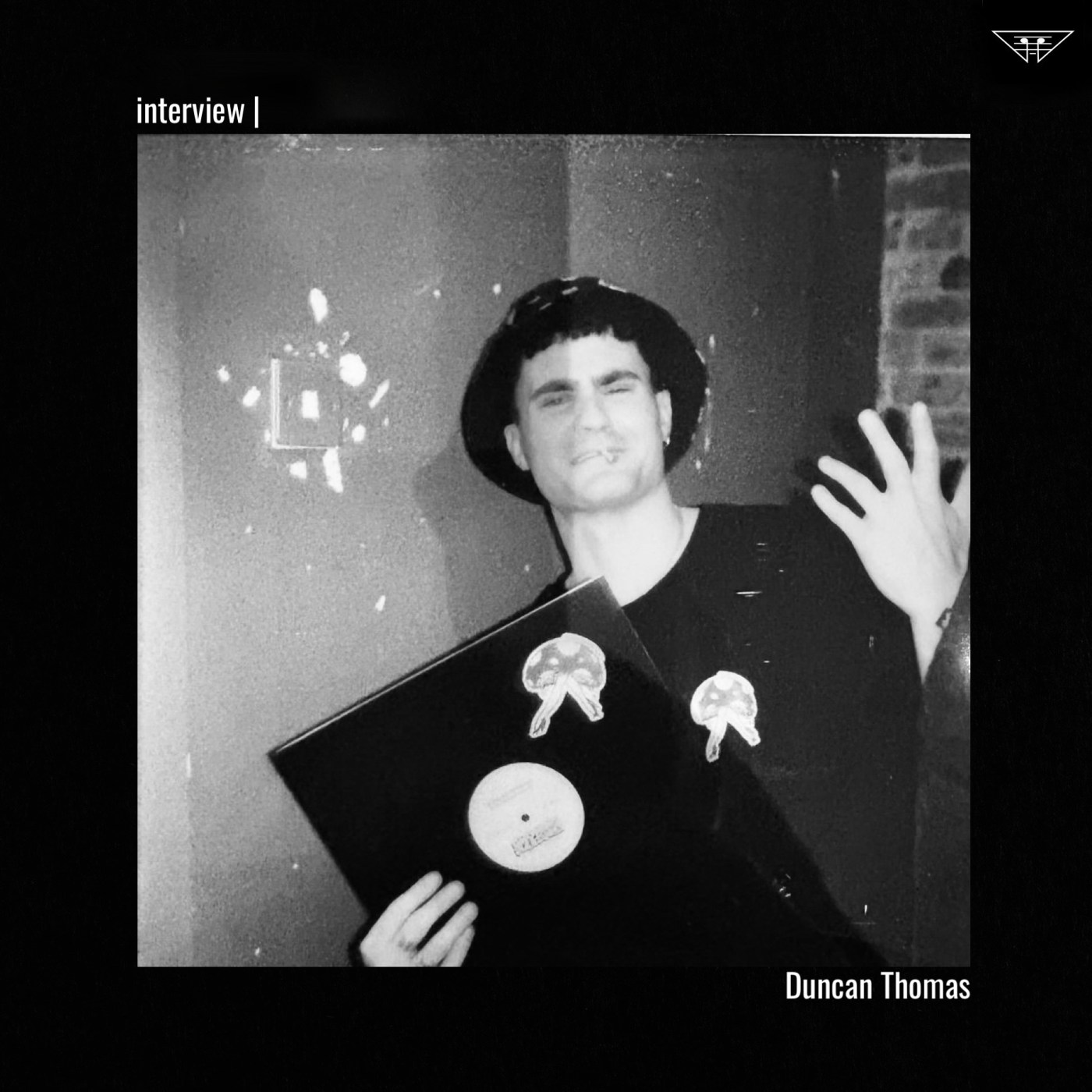
Some artists emerge quietly from the underground. Others arrive with the soft force of inevitability – the kind that feels less like an introduction and more like the moment when several paths finally converge. Duncan Thomas belongs to the latter. A trained Jazz pianist with hands shaped by harmony and a mind sharpened by engineering precision, he’s long occupied a curious space between worlds: the improvisational freedom of the Jazz bar and the hypnotic repetition of the dance floor, the intimacy of the studio and the collective electricity of a rave. His sound doesn’t sit comfortably within one lane because he isn’t trying to. Instead, he builds bridges between them, allowing serenity and chaos, warmth and rigor, curiosity and discipline to lean on one another until they dance.
Across projects and aliases – TR, Size 8, Jazz ensembles, and now his own name – Duncan has spent years learning when to guide the sound and when to let the machines take over; when to sculpt and when to surrender. It’s the same tension that defines his relationship to London, his home and creative battleground, where speed and pressure meet introspection and escape. The result: tracks that groove hard but glow emotionally, productions that think with the body and feel with the heart. Music built for that moment when strangers stop being strangers.
His new EP, “Celebration”, on Filippo MSM’s already widely-respected Growing Pleasure imprint, is both a personal milestone and a communal offering – born from a weekend of family, friends and unfiltered joy, where everything aligned and the only fitting word for the experience became its title. It’s a record formed by happy accidents, obsessive drum programming, and the kind of harmonic instinct you just can’t fake.
Duncan is also a teacher – of DAWs, of piano, of hardware – and a believer that the best progress comes from letting go of the fear of getting it wrong. Maybe that’s why nothing about his journey feels rushed: craft over noise, connection over convenience, intention over hype.
So before we talk about transcendence through repetition, secret weapons in the USB, the philosophy of a badly rolled cigarette in East London, and that EP that sounds like sunrise and early-evening shuffle alike, we start with something simple.
Torture the Artist: Hey Duncan, tell us something about your day.
Duncan Thomas: I jumped in the shower this morning on a Tuesday morning post my last festival of the summer to find out the boiler seems to be broken, so no hot water for me. An unexpected frosty start to autumn, so clutching a hot coffee whilst writing this. <laughs>
Torture the Artist: Your new EP is titled “Celebration”. What exactly are we celebrating – a moment in your own journey, the dance floor itself, or something a little more hidden?
Duncan Thomas: The best weekend of my summer 2024 I went to a festival with my brother and sisters and a gang of friends. It was my brother’s 30th, and the weekend was full beautiful tunes, love, huge vibrations and everything in-between. On the way back my sister said, “now that was a celebration”. The timing and delivery was so apt and encapsulated the weekend perfectly, so it stuck with me. When it came to naming the EP, I thought “yeah, ‘Celebration’ it is.”
No matter how hard I try to make straight up grooves with bass and drums, harmony almost always finds its way into my music.
Torture the Artist: From the Jazz bar to the club – two worlds with very different energy. What does the club give you that jazz never could, and what do you still carry with you from your Jazz background when you sit at the piano or behind the decks?
Duncan Thomas: Repetition. <laughs>. Repetition is a key ingredient for transcendence on the dance floor, and creates this amazing freedom for sound design. As for Jazz, harmony and melody. No matter how hard I try to make straight up grooves with bass and drums, harmony almost always finds its way into my music, whether it’s chords, pads, stabs or whatever, harmony is where the soul is for me. Jazz taught me how to understand it, and electronic music is a canvas where I can use it.
Torture the Artist: You’re a trained Jazz keyboard player and professional audio engineer. When you’re making a track, do you start with harmony and chord progressions or with frequencies and groove?
Duncan Thomas: It depends, but unless I am inspired by some specific chords I’ve written on the piano or a melody thats stuck in my head etc, I’ll start by cutting up grooves on the grooves boxes and sampling drums really. If I am writing for the dance floor the drums need to groove hard, so I will spend as long on them as my patience allows me. That aside though, I try to change my workflow all the time, so I don’t get stuck in writing the same kind of ideas.
Torture the Artist: How much of “Celebration” is you being the meticulous craftsman, and how much is happy accidents, letting the machines lead the way?
Duncan Thomas: <laughs> Yeah good question, chicken and the egg. The less I focus on making music the easier it is to make music and I find machines are great for that, they take the pressure off. You can make most of an idea without have to stop a loop and your not looking at a screen so when something happens and it feels good, you are fully reliable on your ears, not a screen. It is also like collaborating because things happen you don’t expect.
I would say that almost every track I’ve made was not the original intention of that particular studio session, its more like I’m messing around and then when something sick happens I’m trying grab it and follow it.
People seem to by in such a hurry now, they want to bang average stuff out as long as it comes out quick and gets mastered loudly.
Torture the Artist: Growing Pleasure has quickly become an exciting label, and Filippo MSM has a reputation for curating with care. How did this release come together, and what felt right aboutjoining the Growing Pleasure?
Duncan Thomas: Filippo got in touch maybe three years ago commenting on music of mine and jams I posted on Intsta etc, and has always been super supportive. He asked about releasing and I was pretty resistant at first as its so hard to tell how well your music is going to be supported by a new label. Although, it didn’t take long for me to notice Filipo’s genuine passion, which I really respected, and when he signed up Natebytheway for the first release which is a stunner, he put it out patiently with loads of care and thoughtful promo etc.
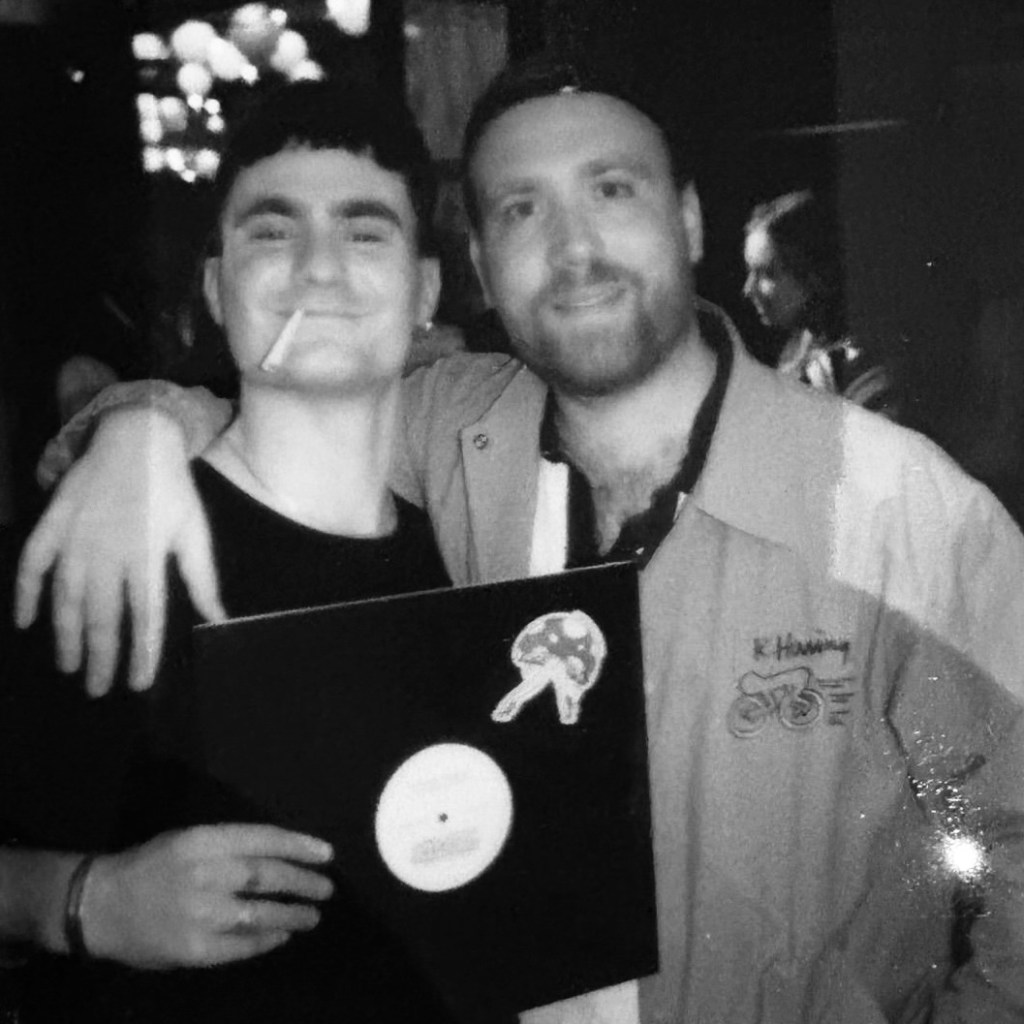
People seem to by in such a hurry now, they want to bang average stuff out as long as it comes out quick and gets mastered loudly, so it’s refreshing to work with someone with a focus on quality. Plus he’s a great crack too!
Torture the Artist: You’re based in London, which has its own unruly underground heartbeat. Howdoes the city shape your sound – in the chaos of the night, the quiet moments, or the strange spaces in between?
Duncan Thomas: I think there is always a subconscious reaction to your environment going on. The obvious thing to notice is Londons pace and kind of general angst, I love the city but it can be hard to relax. Sometimes the studio is where I relax, thats why I make kind of lush sounds, and pads, and squiggles as it’s sort of soothing. Not necessarily because I’m feeling that way. Other times, it’s a place to fully express the undercurrent, pace and relentlessness and of course the music comes out tougher.
The less you’re afraid to make something sh*t the quicker you learn, and the quicker you notice that you like, and that you don’t.
Torture the Artist: On Instagram you call yourself a teacher of DAWs, piano, and hardware. What’s the most common mistake you see from your students – and which “mistake” do you secretly love because it sometimes sounds amazing?
Duncan Thomas: Ahh man, I feel like each of my students find some things difficult that others take naturally too and vice versa. I think the most common mistake though is that people are almost scared they are going to get it wrong, and don’t want to mess their tracks up, but it takes a while for them to realize that “wrong” isn’t really a thing, the less you’re afraid to make something sh*t the quicker you learn, and the quicker you notice that you like, and that you don’t.
Technically I would say the classic is just overusing loads of fancy plugins and having chains and chains of effects on each channel. Over processing I think makes people feel like they have more control, but more often than not getting the level of the sound right and choosing elements that fit together is enough. On the flip, loading up chains and chains of effects can spit out some fruity results, and kinda lead you into the IDM world or generative beeps and bloops which I am super into.
Torture the Artist: Let’s talk about digging. Where do you usually look for gems – Discogs wormholes, dusty record bins, Bandcamp late nights – and what’s the last track you found that made you think, “How did I miss this?”
Duncan Thomas: I got to admit I am usually in Discogs and Youtube. If I have time to go to stores it’s usually, reckless or Kristina’s and Atlantic. I came across Brett Johnson for the first time the other day, and I was like where have I been. Someone played his track “Sign of relief” at Dimensions and it blow my birkies off.
Torture the Artist: Imagine someone opening your USB stick or record bag without asking. What’s the one secret weapon track in there that always destroys the dance floor – but never makes it to Instagram stories?
Duncan Thomas: Ahh hard to choose, at the moment there’s a track by Scope called “Fruit” which is like Electro Rock & Roll, and it’s mental. I love it, it has taken me a little bit of confidence to start spinning it, because it’s rare, but now it’s a set staple.
Torture the Artist: If “Celebration” had a visual twin, would it be a sunrise after a long night, a rooftop toast, or a dance circle breaking out at 5am in a warehouse?
Duncan Thomas: I think the B-side is end of set stuff, early morning sunrise feelers, no doubt about it. The A-side is just funky, fun and groover, great stuff for getting people to start shaking a leg in the early evening. I don’t think we will find many people shelling these in a warehouse. <laughs>
Torture the Artist: You’ve performed under different names – Size 8, TR, with your Jazz band, and now as Duncan Thomas. What can you express with this alias that you couldn’t before?
Duncan Thomas: TR was super versatile, and kinda attached to that jazz scene, Size 8 I began as a home for Minimal House stuff, and it was never my intention to change my name, unfortunately I had to change it due to some trademark issues, which is a story for another day. It was never the plan to do another rebrand, but you know what it’s worked out for the best as I feel like the name is strong and my sound seems to be getting more and more of its own character attached to that name. It also lends itself to my new label Slam Dunc so well, the riff and puns incoming on Slam Duncs are going to be silly.
London or no London it often involves a badly rolled cigarette.
Torture the Artist: What’s your most “London moment” from the last year – bonus points if it involves a basement club, a badly rolled cigarette, and a conversation about philosophy at 6am?
Duncan Thomas: Ahaha, I think London or no London it often involves a badly rolled cigarette. Perhaps, telling my mate as we wonder around East London we should go to another pub because “this one’s full is freelancers and musicians”. Takes one to know one right.
Torture the Artist: If we step away from House for a moment – what’s a track from outside the electronic world that always grounds you, inspires you, or sneaks its way into your studio process?
Duncan Thomas: I come back to ambience and piano music all the time. Picking individual tracks it almost impossible. If I’m looking for grounding though, albums by Guassian Curve, or the ambient Huerta stuff. Mildlife I think are so clever in there fusion of sounds, they have really inspired me over the year, and I guess I am never far from Bill Evans. All sorts though, I’m falling in love with music I haven’t heard new and old all the time.
Torture the Artist: You co-run Hyperchill Festival. What’s one memory from the festival that really captures what you want music to do for people?
Duncan Thomas: Those days are gone now but if there was something I can take from putting on that party, its just connection. Perhaps a story as old as time, but if you can create an environment where people feel invited, welcome and able to be themselves then the music can just bring this all together in the most beautiful way.
Torture the Artist: Last one – when “Celebration” finally dropped, how did you celebrate?
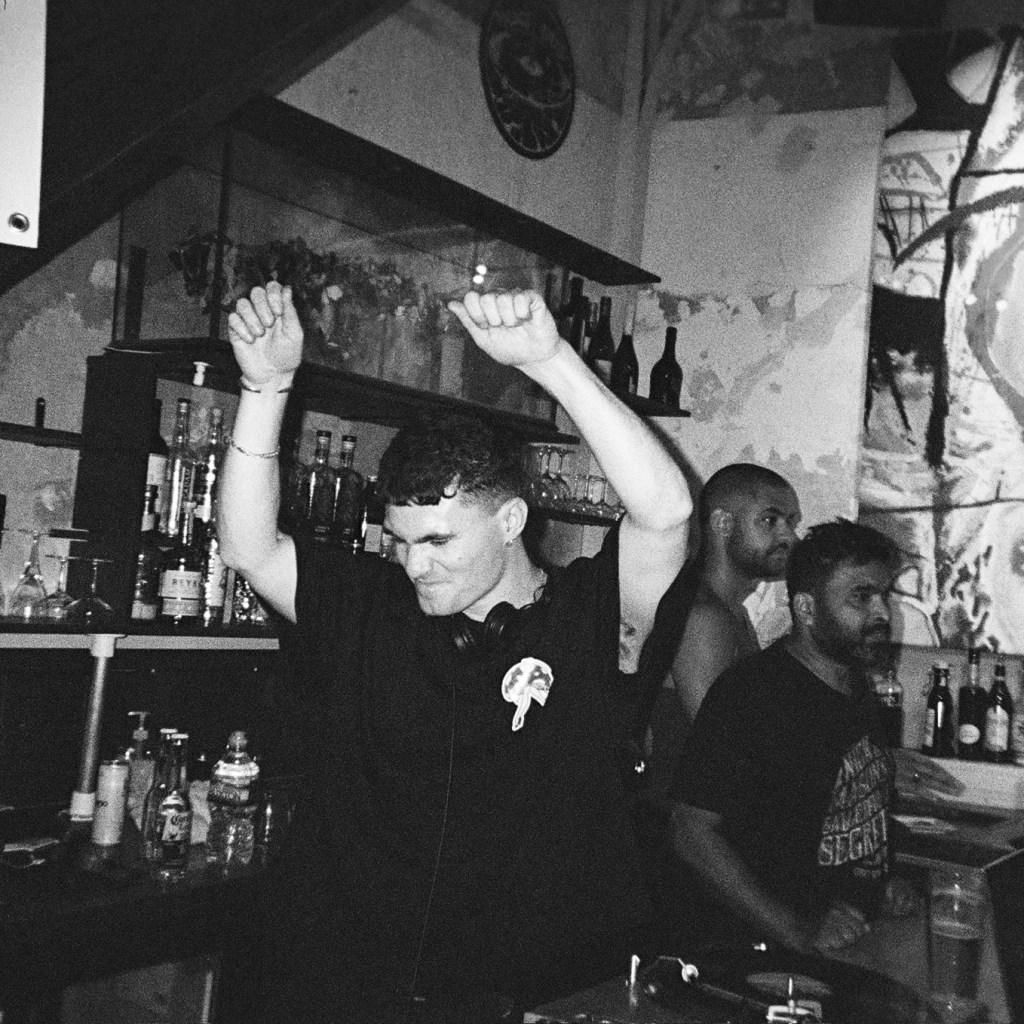
Duncan Thomas: Release party was at Palace Vinyl on the 20th September, with friends and fam, and some big bags of wax!
Words by Holger Breuer
 Torture the Artist