

Two cities, one sound, and a name borrowed from a cartoon horse – Horsemen are a transnational House duo whose grooves gallop between Berlin grit and Amsterdam swing. Christoph and Morrison may not share a postal code, but they share an instinct for the kind of “no-bullshit House music” that skips hype in favor of groove, soul, and a certain unshakable floor-focus. Their partnership thrives on contrasts: Christoph’s precision-engineering meets Morrison’s musician’s ear, and somewhere in the middle, they land on tracks that feel at once familiar and fresh.
Their story runs from pandemic-era Patreon producer competitions – where a push to make peak-time Dungeon Meat weapons first brought them onto Brawther and Tristan da Cunha’s radar – to a string of releases that have steadily expanded their reach. “Buddy” made it onto Dungeon Meat’s “Weapons of Ass Destruction IV”, “Work It Out” and “The Strip Down” became SLABS003, and their lo-fi breakout years still echo in the emotional undercurrent of their sets.
But the Horsemen sound isn’t just nostalgia dressed in 4/4. It’s a deliberate blend of ‘90s and early 2000s influences with the awareness that club music has to keep moving forward. That means chunky basslines with a wink, subtle nods to UK and US West Coast House history, and the kind of swing that makes you forget what time it is.
What follows is more than an interview – it’s a ride through their creative process, from boat gigs with Prunk to telepathic production sessions, from heartbreak-era deep cuts to floor-filling modernism. As always with Horsemen, expect honesty, detours, and the occasional hoofprint on your mental dancefloor.
Torture the Artist: Hey guys, tell us something about your day – bonus points if horses were involved.
Christoph: I just arrived in Amsterdam yesterday evening and have been preparing a bit for our gig tonight, which is on a boat cruise. So it’s gonna be a special one.
Morrison: Horses today? Well, no – but last week I was in Sweden working on a big project for the music industry. The estate I was staying at had horses in the backyard, pretty neat. But that’s about it. Last night – and as I’m replying to this the next morning – we had a gig on a boat together with Prunk, Kreutziger, ModaVinyl, and Red87. So today we just slowly woke up, made a nice Spanish egg breakfast, and turned on the Torture the Artist mixtape for Chris to check. Chris is working on some mixdowns for our buddy Cemmo, and I’ve been going through this interview.
Torture the Artist: First things first – who are Horsemen? And while we’re at it, are you in any way related to the 2009 psychological thriller Horsemen, or are your weapons of destruction strictly House-flavored?
Christoph: We’re a House music duo based in two different cities – Amsterdam and Berlin. Morrison is based in Amsterdam, while I’m living in Berlin.
Morrison: If anything, we were watching “Bojack Horseman” after studio sessions, which sparked the idea for the name. Personally, I like to make loads of (audio) weapons for the dance floor or radio, but Horsemen is more than just heavy, stripped-back bassline tunes.
Torture the Artist: Your track “Buddy” landed on Dungeon Meat’s “Weapons Of Ass Destruction IV” – a name that politely kicks down the door. How did that release come together, and how did you two first cross paths with Tristan da Cunha and Brawther?
Christoph: This all began during the pandemic, when Brawther launched his Interweaved Community on Patreon. They regularly hold producer competitions there, including ones for Dungeon Meat. That pushed us to experiment with a more dancefloor-focused sound. The great thing about these competitions is that they can have a lot of value for producers even if you’re not picked as a winner. In our case, it meant we got in touch and could send demos any time.
I remember we made “Buddy” because we knew Brawther was playing in Berlin at Heide that weekend with a peak-time slot. The day before, we wanted to create something dungeony and dancefloor-heavy-something made to be played out. I believe “Work It Out” had already been signed by then, and we were still looking for a B-side for it.
Morrison: Pretty interesting development, this one. I mean, we were keen on being in the competitions, but when Chris had sent the demos, it opened the doors to releases with “Buddy” on the WOAD VA which kind of made us not enter this specific competition, for “Buddy“. In that same promo pack we had “Work It Out“, and eventually “The Strip Down“. The last two became the SLABS release over time.
The last Dungeon Meat competition this month we entered super last-minute, more or less as a way to participate in the community, and to our surprise, we hit the top 10 – quite a relief considering how little time and attention we were able to give the track. We messed up some balancing, but we still received great feedback to work with.
Torture the Artist: Releasing SLABS003 is no small thing. What’s the story behind that (basically a follow-up) release – was it a slow burn or an instant ‘this is it’ moment?
Morrison: Some years ago, as I still do today, I took a week where I made around 10 demos using the same setup — meaning the same samples, drum kits, synths, racks, FX, all that. One of those demos was “Work It Out.” Back then, it had chord progressions, stabs, and loads of musical elements. At first, we liked it, but it felt a bit forced – like it was still searching for what it should be.
Chris suggested stripping it down and building it back up: “Find your essentials and kill your darlings.” That stripped-down edit ended up in the promo pack we sent to Brawther. In the meantime, Chris and I had pretty much forgotten about the track, until one day Brawther messaged Chris saying, “Yoo, this ‘Work It Out’ track — is that you guys?”
The lads played it at Unum, and it was a big winner during the set – straight-up sweet spot. Some time later, I went to Berlin for a gig with Chris. One morning, I was jamming alone and came up with “The Strip Down,” inspired by Chris’ minimal approach on “Work It Out.” Chris took my rough demo, worked his magic, and together we finished it off nicely.
Chris won’t admit it, but I have been sending telepathic messages for years now.
Morrison
Torture the Artist: You don’t live in the same city – one of you’s in Amsterdam, the other in Berlin. How does the creative process work across countries? Frequent flyer miles, telepathy, or late-night Dropbox roulette?
Christoph: Good question – and definitely a bit of everything you mentioned. There’s no fixed workflow; we like to mix it up. That means sending projects back and forth as well as the occasional Zoom call. Sometimes I’ll start a beat, show it to Morrison, and he’ll say, “That’s dope, send it over.” Other times it’s Morrison showing me some loops that inspire me, and I’m like, “Send it over immediately.” And of course, when we have a gig somewhere, we make sure to hit the studio together.
Morrison: Chris won’t admit it, but I’ve been sending telepathic messages for years now. But yeah – after years of working together in the same room, then through traveling and sending projects back and forth, we know each other so well that we can work on each other’s tracks blindly, understanding and anticipating what the other would want. For instance, I have loads of demos titled “for Chris” or “Chris will like,” which is just me trying to embody Chris’s production mindset and style while adding my own flavor and needs.
Torture the Artist: What does your collaboration process actually look like? Do you start with an idea, a vibe, a kick drum, or just mutual caffeine-fueled chaos?
Morrison: When we’re together, we make the most of that time. It’s something we both crave, and working side by side always brings a whole new level to the tracks. I think our best work comes from those in-the-room sessions, although some of our early, top-performing releases started as solo builds and were later finished together.
Christoph: I also like to mix things up to stay inspired. Most of the time, projects start with a solid kick drum, but I’ll also begin with chords or a sample. Sometimes I work entirely “in the box,” and other times I bring hardware into the process. There’s no right or wrong way — but I think it’s always worth trying different approaches.
I’ve been hearing the term “no bullshit House music”, which pretty much sums up what we’re going for in both our productions and DJ sets – but it’s also kind of a cheeky nod to the industry.
Christoph
Torture the Artist: Within the House community, what’s your vision as Horsemen? Why do you make what you make — and who do you imagine dancing to it?
Morrison: Good one – we always struggle to truly define this ourselves. I think a couple of things happen: First, we’re drawn to a certain sound quality, mostly associated with tracks from the ’90s and their extensions into the early Y2K period. Even some modern tracks we like carry that same legacy forward. Second, I often start making tracks in a particular direction simply because I can’t find the kind of tracks I want to play in my sets – or the ones I want to hear in my friends’ sets. There’s a bit of that delusion: “I know better.” But honestly, that’s super necessary as an artist. Don’t be afraid to think you’re better than “X,” because without that mindset, progression – or even just a correction of the language and expression – doesn’t stand a chance. So yeah, be delusional, haha. And third, there’s the desire to keep this sound – the origins of House – alive. After all, it laid the groundwork for most of the other genres in the electronic music sphere.
Christoph: Lately I’ve been hearing the term “no bullshit House music”, which pretty much sums up what we’re going for in both our productions and DJ sets – but it’s also kind of a cheeky nod to the industry.
Torture the Artist: Your sound has a strong connection to the ’90s – yet it doesn’t feel stuck there. How do you keep one foot in the foundation and the other toeing the edge?
Christoph: Yes, our inspiration definitely lies in the past, but we’re always trying to bring our own ideas to it. What’s the purpose of imitating something that’s already there?
Morrison: Like I said in my previous answer – “maintain and progress” – I think pure progress is absolutely worthless without respect for the foundations. It’s the same across many areas: culture, politics, economics. Progress and learning are great — from tolerance to inclusion to exclusion – but none of these movements are truly useful if they discard the fundamentals. Those foundational elements give us knowledge, privilege, and therefore the space to reflect – and perhaps think we know better, could do better, or just do things differently.
Torture the Artist: Inspiration time: Which masters of yesteryear do you nod to in the studio, and what’s one record that never leaves your mental rotation?
Christoph: At the moment, I’m into the deeper sounds of the early 2000s from the UK or US West Coast House. A few producers keep coming back for me — for example, Lance DeSardi, Chris Lum, and Joshua.
Morrison: I’ll stick to House for this one <laughs> — otherwise I’ll be here all day. Josh Wink, Terry Francis, Nathan Cole, Get Fucked, Big Hair, TrackHeadz, D’Julz (more as a collector than a producer), Jay Tripwire, The Coastal Commission, Champagne Bubbler (Rump Funk), Urban Myths… and many, many more. Low-key, I rarely just listen to House. I’m very focused on the why and how behind my digging for House music – it’s for Horsemen, and Horsemen alone. In my free time, I mostly listen to Jazz, Beats, and light Classical music, which I also produce under my solo alias Mor.lov.
Torture the Artist: Let’s talk studio setups – who’s the gearhead in the duo, and who’s the one who ends up saying “stop tweaking the resonance and just hit record”?
Christoph: I’d say Morrison is definitely more the musician and instrumentalist, and I’m more the engineer. I also work part-time as a mixing and mastering engineer for other artists on the side.
Morrison: Yeah, you could say that. What’s nice is that I’m learning more and more about the engineering side – I’m hoping to give Chris less work <laughs>. On his end, Chris is also becoming more of a musician, which has really improved our communication over the years. It’s helping us grow together, better understand each other’s needs and choices, and ultimately become stronger as a team.
Torture the Artist: What’s a piece of gear or software you swear by — and what’s one you secretly hate but keep using out of guilt, habit, or superstition?
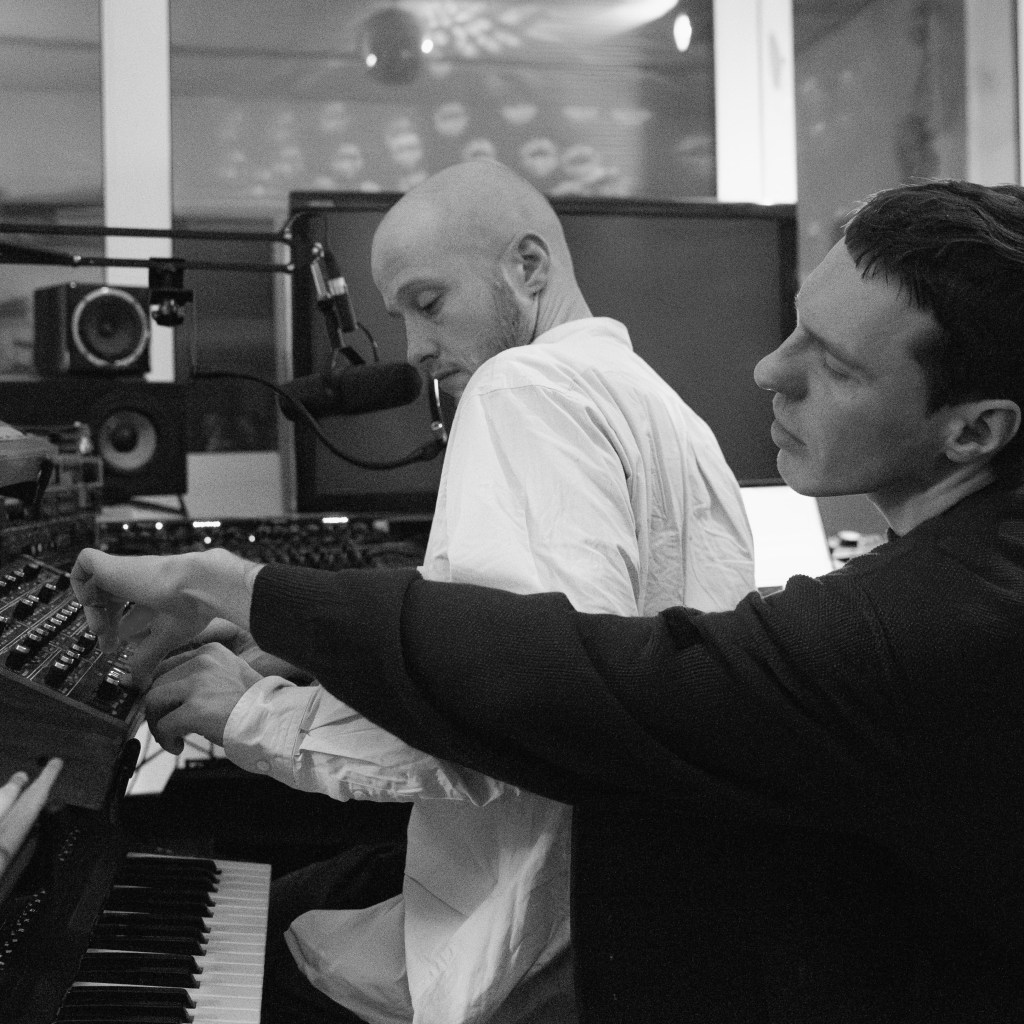
Morrison: The Microkorg for bass and Splice — I rarely use loops or full cuts of a sample, but man, it’s so easy to find good one-shots, vocals, chords, and drum sounds that you can quickly make your own. It just works.
Christoph: My Alpha Juno 2 synth and my Mac. <winks> Otherwise, I’m more guilty of having gear around that I should use more often.
Torture the Artist: How do you approach digging – are you both vinyl fiends, or does one of you get lost in Discogs while the other hoards forgotten Bandcamp gems?
Christoph: I’m definitely more of a Discogs head, but I try to dig everywhere – YouTube, Bandcamp, and current releases in online shops. Visiting record stores and sharing music with like-minded friends is also always great.
Morrison: Bandcamp and friends, to be fair. In the past few years, it’s mostly been Chris and me sending each other playlists with new finds – he grabs them via Discogs, I grab them via Bandcamp. I also sometimes do this show on my Instagram called “Bandcamp Discoveries”. I stopped for a month, but I’ll pick it up again – work has just been too heavy lately.
We literally helped tens of thousands of people through heartbreak, depression, family losses, and more.
Morrison
Torture the Artist: When people hear a Horsemen set or record, what feeling or memory do you hope it triggers – euphoria, nostalgia, or the urgent need to dance on unstable surfaces?
Morrison: Explaining the vibezzz… Back in the lo-fi days (when we had our breakthrough), it was all about tear-jerking, heartbreaking vibes. Both of us knew those tracks wouldn’t play in clubs nine times out of ten, but we can genuinely be proud of that period. We literally helped tens of thousands of people through heartbreak, depression, family losses, and more – with tracks like Voltaire, I Am Not for the World, Early Morning Goodbye, L01, and L02. Those were emotionally heavy, deeply driven tracks. Chris and I weren’t in the best mental space back then either, but the music helped both us and the listeners move forward in life.
These days, we’re much more focused on being active participants in the scene – performing and making records that define dance floors for generations (or at least that’s the goal and the drive). It would be dope to be part of a group of peers committed to keeping the sound we love alive. Now, we try to merge that emotional depth we’ve developed with simple, grooving basslines and chunky beats — music that makes people move, that gets hips shaking on the dance floor.
Torture the Artist: What’s next for you – any releases on the horizon, collaborations, remixes, or, dare we say, your own “Weapons Of Ass Construction”?
Christoph: Yes, we’ve got two EPs ready – one for Traxx Underground and one for Small Great Things, where we also have our residency in Berlin. On top of that, we’re planning to start something of our own.
Morrison: Vinyl-wise, we’re on the SlothBoogie 15 Years VA. Digitally, we’re releasing with GABU – a new Saudi label from Baloo and Carlo (Aterral). For vinyl, aside from what Chris mentioned, we currently have a few requests pending. In terms of our own release plans, we’re in the process of transforming our label into more of a publishing platform. Tlkbx Rcrds → becoming Tlkbx Publishing. The curators are becoming the label, meaning Horsemen will now have its own dedicated line of releases – focused on our distinct sound, published through our trusted back-end.
The traditional concept of a “label” feels outdated. To be honest, what a label should be is a publishing system – one that focuses entirely on the artist and on the people who discover and guide them from A to B. So yeah, that’s what we’ve got on the agenda. It also allows us to shape Horsemen into a curation/label identity – expanding the sound we wish to promote.
Torture the Artist: You are responsible for the latest art:cast (our mix series). Where is the mix best listened to, and how did you select the tracks for it?
Morrison: This is a great set for home – during work, to close yourself off and be in the midst of it all — but it’s also a big vibe for getting ready for the weekend at home with the homies or fam, creating that energy that makes you move and get excited.
Christoph: Yeah, absolutely, and I think this one would also work for the occasional afterhour. <winks> How we create these mixtapes usually involves regularly exchanging tracks we’re digging and often having a small Zoom session to discuss the general selection and vibe. Since we’re not in the same city, only one of us handles the recording.
I’d make them write an essay on how their music influences people’s daily lives and narrative perception.
Morrison
Torture the Artist: Finally, if the Horsemen had their own cult, what would the initiation ritual involve — and would there be a sacred record that must be played backwards at midnight?
Morrison: Purely based on the idea of a cult run by us? The Horsemen Cult – a joke with a bit of truth, I guess. Let’s say if artists wanted to join us, I’d make them write an essay on how their music influences people’s daily lives and narrative perception – how their work, whether minimal or complex, stimulates the brain and the being, and in what way. I think music production is a huge responsibility, and we should be more mindful of the consequences that music, sound, and frequency have on human society and individual brain behavior.
Fans? I’d probably just say: “Be yourself, love music, be good to people.” I also think it’s healthy to have an opinion, so I’d enforce a weekly mandatory public opinion on something. The world should communicate more honestly and openly.
Words by Holger Breuer
Pictures by Selin Esterkin
 Torture the Artist