

From countryside calm to cosmic dancefloor calls, Manata digs for nuggets of gold – both musical and metaphysical. Having grown from small-town gigs in central Portugal to sunrise closings on Berlin’s Hoppetosse and label showcases in Brooklyn, João Manata’s journey is one shaped by persistence, dusty grooves, and a Fantom 06 that rarely leaves his side. The DJ/producer’s story isn’t one of overnight buzz, but of careful curation, endless digging, and a love for records that started with Stevie Wonder and unexpectedly found its way to ‘90s Trance gems.
Now with the launch of his new label Red Beryl Records – a spiritual successor to his Nugs On Board imprint – Manata revisits the past to shape the future, uncovering unheard treasures from decades gone by. “Since Nugs is all about precious gems, I got the idea for Red Beryl after doing a small research about rare stones… it’s one of the rarest minerals on Earth,” he explains.
In this candid and wide-ranging interview, Manata opens up about vinyl-fueled upbringings, the early Lisbon hustle, hazelnut cookies in the studio, and the joy of seeing a dancefloor respond to a long-forgotten Belgian trance record from 1995.
“For me, producing or playing music is like telling a story. I love to get vocal samples from old movies or NASA space journeys and build my tracks around that.”
Prepare to dig deep with Manata – because the gold’s always there for those willing to unearth it.
Torture the Artist: Hey João, tell us something about your day. Ideally something involving vinyl, coffee, or a last-minute airport sprint.
Manata: Hey guys, I hope you’re good and thank you for having me. Well, I am here on my balcony, in my house in the countryside, just chilling and enjoying a bit of sun and fresh air.
I think it wasn’t until I launched my label, Nugs On Board, in 2019 that people really started taking me seriously.
Torture the Artist: You’ve been building momentum both as a DJ and a producer – how would you describe the moment you realized this music thing wasn’t just a phase but the path?
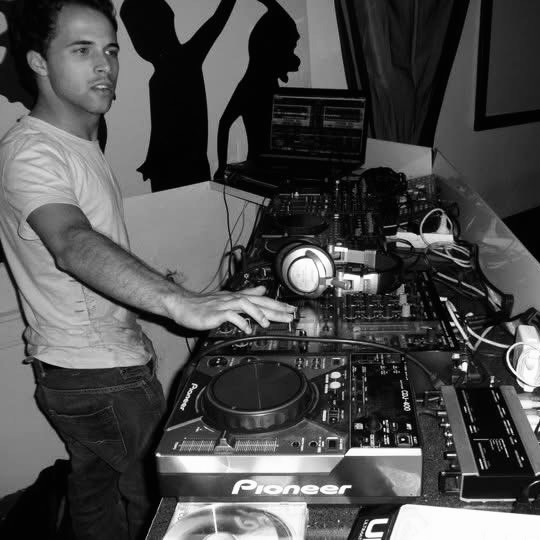
Manata: Starting with a tricky one. <laughs> So, I come from a small village in the center of Portugal. I started DJing at 18, just for fun, after my friend Tierri invited me to play at a small club in Rio Maior. We organized a few parties there, and later I joined a collective in the city of Santarém for a couple of years. I spent a lot of time going back and forth between both cities. But I think the real game-changer was when I moved to Lisbon in 2013 to study at university. I started reaching out to some clubs in Cais do Sodré and got my first gigs there, often playing for free. Back then, it was all about playing and partying, meeting new people in and around the scene – and trying to finish my degree at the same time (which I finally did years later <laughs>). Adapting to the big city wasn’t easy. I often struggled to find gigs and had to actively ask to play. Only rarely did people approach me with invitations. I think it wasn’t until I launched my label, Nugs On Board, in 2019 that people really started taking me seriously.
Torture the Artist: Let’s rewind. What were the early musical moments or artists that lit the first fuse for you – pre-Nugs, pre-Red Beryl, pre-everything?
Manata: I grew up surrounded by music – especially thanks to my father’s vinyl collection. I remember spending hours listening to his records. He has a sick collection (most of which I stole years later <laughs>), ranging from Stevie Wonder to Dire Straits, along with a bunch of electronic records I didn’t really understand at the time. My older cousins were also a big musical influence. They introduced me to electronic music and to DJ Vibe’s “Global Grooves Vol. 1”, which came out in 2000. I was only 10 years old back then, but that compilation was, without a doubt, my very first encounter with electronic music.
Torture the Artist: You’re launching Red Beryl Records soon. What’s the gem-like concept behind the name, and how does it differ from what you’ve built with Nugs On Board?
Manata: Red Beryl Records is the new face of Nugs On Board. Since Nugs has always been about precious gems, the idea for Red Beryl came to me after doing a bit of research on rare stones. That’s when I came across Red Beryl – one of the rarest minerals on Earth. The sub-label is focused on releasing music from the ’90s and early ’00s – not just reissues, but mostly unreleased material that’s never been heard before.
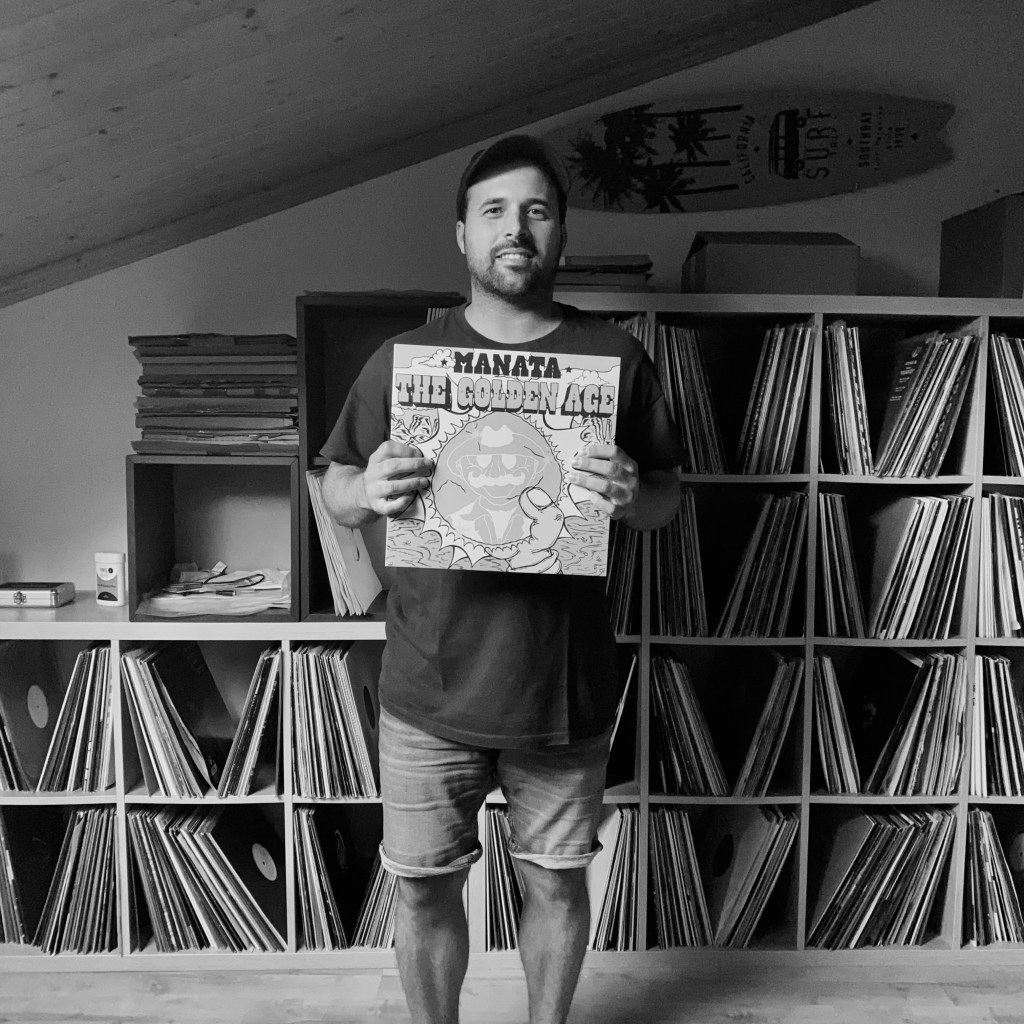
Torture the Artist: Speaking of Nugs On Board, what was the initial vision for the label – and has that vision evolved or mutated in interesting ways since “The Golden Age EP“?
Manata: I’ve always been a big fan of Western movies and old cartoons, so Nugs On Board is inspired by the golden nuggets people used to dig for in the Wild West. Here, “Nugs” refers to the records we dig through, while “On Board” represents bringing them all together – symbolizing the label’s catalog. Of course, this theme had a major influence on my album, which I wanted to be closely connected to the label’s universe.
Torture the Artist: Your “Final Frontier EP” on LowMoneyMusicLove added another solid chapter to your sound – how did that release come together, and what frontier were you pushing with it?
Manata: Actually, this EP was produced exactly the same way as my album, with all the machines I have in my home studio. Some of the tracks were meant to be part of the album, but I decided to leave them behind because I wasn’t happy on how they were fitting with the other tracks, so I ended up releasing them on LowMoneyMusicLove, thanks to brother Moses. <laughs>
Torture the Artist: What usually kicks off a Manata track – a drum pattern, a bassline, a dusty sample you forgot you had, or just the mood of the day?
Manata: It’s all about the mood and what I am feeling at the moment, but most of my tracks need to have a good bassline from my old Fantom 06.
Usually, I just do what I feel at the moment and I am happy to see it released.
Torture the Artist: Do you approach tracks differently when producing for your own label versus another label like LowMoneyMusicLove? Is there more pressure or more freedom?
Manata: It depends whether a label approaches me and asks for something in specific or not. Usually, I just do what I feel at the moment and I am happy to see it released.
Torture the Artist: What’s the most “un-musical” thing that’s influenced a track you made – like a sound outside your window, a weird dream, or a broken appliance with surprisingly good groove?
Manata: For me producing or playing music it’s like telling a story, I love to get vocal samples from old movies or NASA space journeys and build my tracks around that, creating like the environment of that journey.
Torture the Artist: You’re allowed to bring only three tools into your studio for a month: one synth, one effect, and one snack. What’s making the cut?
Manata: Definitely my Fantom 06 and the TR8-S, you can do a sick track with only just these two babies. Oh and of course my hazelnut Locker cookies and some water to keep the brain going. <laughs>
I never start a new project without finishing the old one first.
Torture the Artist: What’s your studio routine like – organized chaos, precise planning, or letting machines talk until they start making sense?
Manata: Definitely letting the machines talk until I get something I feel is right, I am not a very organized person when it comes to studio works, but I never start a new project without finishing the old one first. I think this is super important, because usually you get tired of hearing the same track day after day, so the faster you finish it the better.
Torture the Artist: Is there a piece of gear or plugin you overuse unapologetically – and do you ever secretly hope no one else finds out about it?
Manata: It’s super difficult to manage, but I use a lot of sounds from my old Emu-Orbit 9090.
Torture the Artist: What’s your balance when working on a label and your own music? Do you separate “artist mode” and “A&R mode” or is it all a controlled blur?
Manata: When I am planning stuff for the label I tend to give myself a break from the studio, when you’re making music, you’re making music… you can’t focus on anything else.

Torture the Artist: You’re contributing an art:cast to our mix series – what was your mindset going into the selection, and is there a particular mood you wanted to transmit?
Manata: I love to do podcasts, I think it’s a great way to show your music. Personally, it is never about being focused in just one particular mood, I just love to share what I feel or find at the moment.
Torture the Artist: Is there a track in the art:cast that you think people will either love or question your sanity over? Please explain in advance so we’re ready.
Manata: It’s difficult to choose just one <laughs>, but I think the ending of the set will be pretty sick.
Torture the Artist: Let’s talk gigs – what’s one you’ll never forget for all the right reasons, and one you’ll never forget for all the hilariously wrong ones?
Manata: My best experience as a DJ so far was in Berlin at Hoppetosse in 2022. It was a nonstop 12-hour party. I started off warming up the night and ended up closing the event with a b2b2b alongside DJ Tjizza and Tho at 11 a.m., playing to a full house. It was magical. One of the most peculiar moments I’ve had as a DJ happened nine or ten years ago, while I was playing at a small club in Caldas da Rainha, a city on the west coast of Portugal. I started my set at 3 a.m., and just 15 minutes later, the police came in and shut down the party. It turned out the owner hadn’t secured the necessary licenses to operate the venue. But the worst part was when a police officer stepped into the DJ booth and said, “Don’t move. Don’t touch anything. Everything here will be seized.” Bottom line: they wanted to take my record bag as evidence. After some tense discussions — and with help from my friends — they finally let me leave the club with my records, thank God.
Torture the Artist: What’s your favorite kind of set: warm-up, peak time, closing, or “surprise you’re playing sunrise on a boat with no monitors”?
Manata: I try my best to keep up with any kind of set, but I love the feeling of closing the night.
I just hope people keep coming up to me after my set to congratulate me and ask for track IDs. That’s the best sign that I did my job well.
Torture the Artist: When people describe a “Manata” set, what do you hope they say? And what do they usually say that secretly makes you laugh?
Manata: The best word to describe my set is energy. For me, music is about making people feel good. In my opinion, you don’t need to play too hard or too dark to grab the crowd’s attention – it all depends on the moment, the vibe you’re getting from the dancefloor, and the time slot you’re playing.
That’s why I never prepare anything in advance before a gig. It’s impossible to predict exactly what people will want to hear, so the ability to properly read a dancefloor is what makes this job so exciting.
In the end, it’s all about delivering the best experience possible. I don’t hope for anything specific – I just hope people keep coming up to me after my set to congratulate me and ask for track IDs. That’s the best sign that I did my job well. <laughs>
Torture the Artist: Do you remember the first time a crowd really locked into what you were playing—like properly felt it? What were you spinning and where were you?
Manata: I’ve had great moments over the years, but for me personally, one of my favorite moments was in 2022 at an open air rooftop party in the middle of Brooklyn. It was my first time DJing in New York and I played this record called “Over The Dream” by Marino Stephano and Meo Lorenzo as M – Zone for the first time. It’s a Belgium Trance record from 1995 and it’s one of my all-time favorites. Ever since it has been one of my secret weapons… kills it every time.
Torture the Artist: As someone digging constantly, what’s one record you’ve recently rediscovered that made you go, “How did I ever not play this every set?”
Manata: One of my favorite recent finds is Brain Crasher – Brainless. It had been actually in my wishlist for some years but I totally forgot about it, so I came across it while digging in a record shop in Belgium and since then I have been playing it a lot.
Torture the Artist: What about a secret weapon track that never leaves your USB or bag but also never leaves people standing?
Manata: The real secrets I can’t reveal. <laughs> But I can say one that I have played a lot and that will surely lift the dancefloor, a record from Random Access – Happy Inside from 1996.
Music should be about diversity and inclusion, not about stardom or egos.
Torture the Artist: The Portuguese scene seems to be quietly thriving – what’s your view on it from the inside, and what makes it unique compared to scenes elsewhere?
Manata: In my opinion, the Portuguese electronic music scene has improved a lot over the past few years, especially after the pandemic. New clubs have opened, new labels and collectives have emerged, and several festivals have launched their first editions – particularly in Lisbon. The arrival of people from abroad with different perspectives and mentalities has also brought a fresh energy to the scene. But I still believe we have a long way to go when it comes to building a real, connected community. From my experience – especially when comparing it to other European countries – we need to do a better job of musically educating the crowd. I also think it’s crucial to give more DJs the opportunity to showcase their talent with proper time slots at proper events, instead of constantly repeating the same names. Music should be about diversity and inclusion, not about stardom or egos. What I’ve seen over the years is a lack of support and collaboration between people working in the industry. It’s a small, closed circle with too much competition – and that’s the kind of mindset that needs to change.
Torture the Artist: If you could teleport one legendary artist into a small Portuguese club for an unannounced back-to-back with you, who would it be, and who’s opening?
Manata: I’m not sure if I’d categorize him as legendary, but Dyed Soundorom has definitely been a big influence on me – both for what he represented when I first started DJing and for what he still represents today, even if his style doesn’t fully match what I’m into right now. I’d love to play alongside him one day, and if I had the chance, I’d definitely invite a few friends to join as well: João Carvalho, Samuel Padden, and Marco Briosa.
I’ve been away from the DJ booth for a little while now.
Torture the Artist: Finally, what’s next for you – musically, mentally, and maybe geographically? New releases, new places, or new plateaus?
Manata: I’ve been away from the DJ booth for a little while now. Over the past few months, I’ve been completely focused on making music and building the new label — but I’m slowly getting back to reality. I’ll be returning next month for the release party of Red Beryl Records in the UK. It’s going to be a double celebration in Manchester and Liverpool, alongside Tommy Pickles, Dig This, Samuel Padden, and 4D. After that, I’ll be playing in Ibiza, Lisbon, and later Paris. As for personal releases, I’ve got a lot of new material finished — so hopefully I’ll have some exciting news to share soon.
Words by Holger Breuer
 Torture the Artist