
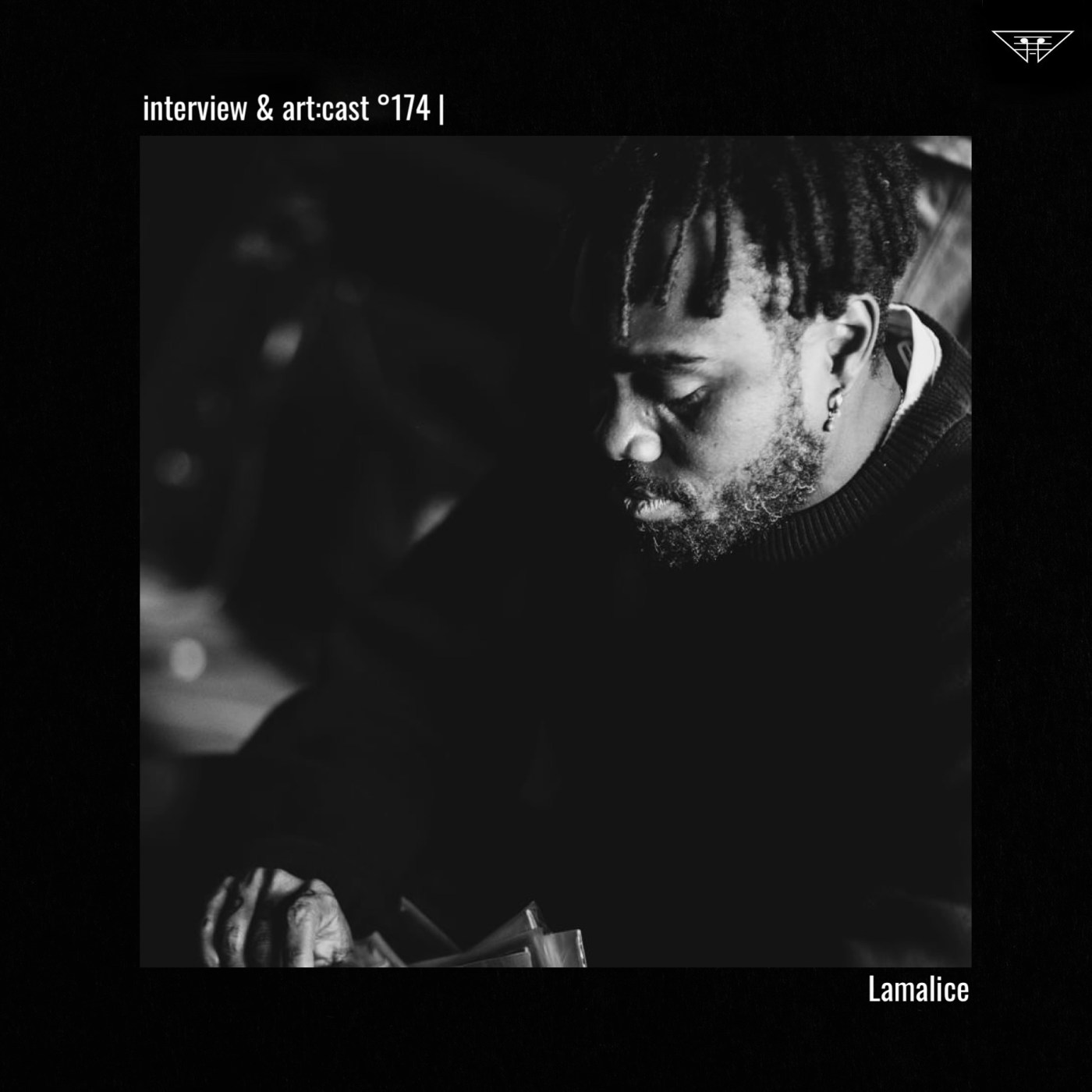
Lamalice is not just a DJ and producer; he’s a dynamic storyteller, blending the rhythms of Marseille with the energy of global dance floors. With roots as a drummer in a post-punk band and a HipHop dancer, his journey into electronic music is as eclectic as his sound. A key member of the Sentaku collective and a frequent collaborator with labels like Partisan, Positive Future, and Shotgun, Lamalice bridges cultures and genres to create deeply immersive musical experiences. Known for his groove-laden productions and keen artistic direction, he’s a name to watch in the evolving electronic music landscape.
In an interview with Torture the Artist, Lamalice opens up about his love for Marseille, the city’s underappreciated music scene, and his influences from the Parisian electronic wave of the 2010s. He also discusses his transition from Rock bands and HipHop dance to electronic music, the lessons electronic music could learn from hip-hop culture, and his creative role at Sentaku. Plus, he teases upcoming projects, shares advice on discovering new artists, and reflects on the enduring appeal of a classic track that changed his life.
My mom always encouraged my siblings and me not to limit ourselves, to try things until we find what feels most comfortable and where we can give our best, and most importantly, feel fulfilled.
Torture the Artist: Hello hello, tell us something about your day.
Lamalice: Hey there, I’m currently in Barcelona for vacation, my favorite city (after Marseille, of course). I just had an amazing homemade pan con tomate with jamón ibérico—I know, super cliché, but when it’s done right, it’s a total game changer—and now I’m chilling on the terrace of my best friend’s place here, which is my favorite spot.
Torture the Artist: What’s a usual routine you have each day, or are you rather a person who enjoys doing things differently as often as possible?
Lamalice: Uhhff, no way! It’s very rarely a routine—maybe I should force myself to have one…? I’ve always had trouble with consistency and focus during school, so I was never really friends with well-planned schedules. I prefer going with my own flow, except when I have work tasks—I’m a freelance sound technician in the entertainment industry. So, if I drink a glass of water when I wake up and before bed, and listen to music 17 hours a day, does that count as a routine? Or should we call it an unusual routine instead?
Marseille, it’s the smile, the accent, the sun, the beaches, “les peutchiku“.
Torture the Artist: Well, let’s call it an ordinary workday. You are originally from Marseille. What’s something you appreciate about your hometown that is mostly overlooked by others or the media?
Lamalice: Marseille, it’s the smile, the accent, the sun, the beaches, “les peutchiku”—those little things. It’s a city where people take their time, where they’re as relaxed as they are nervous when the sun gets really hot. There’s a vibe that’s hard to describe with words; you have to live there or spend time there to really feel it. There’s this big mix of cultures and ethnicities. It’s the definition of cosmopolitan.

Torture the Artist: Quite a few artists from the electronic music scene come from Marseille. However, Marseille is not Paris. Is the scene in Marseille a bit overlooked?
Lamalice: Overlooked? Noooo! Marseille has its own scene, and it’s well-established on the map, by the way. With all its collectives, especially after Covid, the new generation really took off! It’s just that, like I said earlier, we take our time here. I also think the lack of structures to host events with music like ours slows down the “Mars(eille) attack.” But if you come between May and September, there’s no time to get bored with all the open airs and parties on the beaches or in the forest.
Torture the Artist: As the French electronic music scene has produced some truly amazing artists for decades now, if you could pick three DJs/artists who you feel were the most influential to you, who would that be, and why?
Lamalice: Ohhh, the tricky question!! It’s always super hard to pick just three artists, especially when the influences are so many. But I’d say that the Minimal and Techno sound from the 2010s in Paris played a huge role in shaping my approach to composing. I used to sneak onto Ouigo trains back then just to spend Friday to Sunday on the Concrete boat. It’s thanks to those iconic Parisian parties and my residencies at Spartacus Club and Baby Club that I really shaped my sound over time.
Torture the Artist: Following on from the question before, what new/lesser-known French DJs/artists would you recommend that we check out?
Lamalice: I’d say all the male and female artists we invite to our showcases or let express themselves through our podcasts on our label Sentaku—a little promo—as well as our expat friends who are shaking up the scene in Europe. I encourage you to dig through social media—yes, everyone has to do a bit of work!! And it’s way more fun when you discover a gem after searching and listening for a while, innit?

Torture the Artist: Let’s speak about you and your musical roots. Originally, you were a drummer in a rock band when you were younger. Do you still get the sticks out and thrash the beats ‘live’ occasionally, be that on your own or with a band?
Lamalice: Unfortunately, it’s been a while since I’ve smashed some drums. I miss it… But I don’t have space at home to set one up, and honestly, I haven’t had the chance to play lately. By the way, if I can drop a little hint for my next birthday gift: Roland V-Drums TD-07DMK… it’s out there in any case. But yeah, I had a band in high school, and we even recorded a live album with a bunch of original tracks—I think I still have the recording somewhere on an HDD…
Torture the Artist: What role does the aforementioned play when producing electronic music?
Lamalice: Actually, I co-composed for our band under the guidance of my old friend Alexandre, aka Zak, an amazing pianist and singer. I still had bits and pieces from my guitar and piano lessons, so I could help the two guitarists and the bassist with the main flow and some additional parts. Our influences were very Post-Punk and Alternative, so the music was pretty structured, kind of like repetitive electronic music. So, I kind of transferred the approach I had had with the band into my own productions, but with a bit more ease in making different instruments sound good together in the same track. Plus, when you’re composing solo, it goes much faster than when there are two, three, or more people involved.
Torture the Artist: You were also involved in HipHop/street dance. Is this also something you maintain? And how much of a dancer is still in the DJ and producer Lamalice?
Lamalice: Yes, I still dance a bit at home or with friends at parties, but definitely not at the same level as before. Just for fun now. Right now, I’m on a quest to find my flexibility and my left kneecap.
I think we often forget the raw energy, the storytelling, and the sense of community that, on the contrary, make HipHop such a deeply rooted and universal movement.
Torture the Artist: What’s something from HipHop, musically as well as the subculture itself, that electronic music could learn by watching?
Lamalice: Authenticity; drawing inspiration from personal and social stories, like in street culture or hip-hop. Humility—sharing and fostering a more inclusive, accessible community dynamic, less elitist. The importance of freestyle, spontaneity in performances, and the direct connection with the audience. Getting rid of the outdated, too-traditional “clubbing” codes that have been pushed today. Why does HipHop reach more people than electronic music? Because I think we often forget the raw energy, the storytelling, and the sense of community that, on the contrary, make hip-hop such a deeply rooted and universal movement.

Torture the Artist: How did you make the transition from playing in a band to being a dancer and now being part of electronic music? And what made you want to become involved with the latter?
Lamalice: It happened naturally, honestly. Plus, I love doing all sorts of different things. My mom always encouraged my siblings and me not to limit ourselves, to try things until we find what feels most comfortable and where we can give our best, and most importantly, feel fulfilled. As long as it’s got sound, groove, and makes the human body move, I’m in. I think those are the three things they all have in common.
Torture the Artist: What was the track that opened this “new world” to you and made you become an active part of it? Where did you listen to it?
Lamalice: It might sound cliché, but it was “Can You Feel It” by Mr. Fingers aka Larry Heard. I discovered that track at the same time I discovered House dance, which is a branch of hip-hop dance that I practiced and taught for a long time. It was my go-to track for training. Deep, smooth, low tempo… I still get the chills every time I hear it.
Torture the Artist: You’ve had your music released on Partisan, Positive Future, Sentaku, Shotgun, and Sticky Plastik. What’s a label you would love to have your music released on, and what can we expect from you in terms of releases in the future?
Lamalice: I don’t really have any particular desire when it comes to labels. I’m used to working with people I have a strong connection with, who understand my music and are motivated to share it, and with whom I can bring out the best in my ideas. In 2025, I should be dropping three solo EPs, each with pretty different vibes. A few collaborations, too. And there’s also a live album project coming by the end of this year or early next year.
These two [Massaï and Josh Rawl] created something real that, for me, brings together all the codes of street culture
Lamalice: Ahh, let’s not forget Massaï and Josh Rawl. These two created something real that, for me, brings together all the codes of street culture, as we talked about earlier, combined with their unmatched passion for Japanese culture. I was the first outside artist they invited to their first events; then I became a resident, regularly releasing music on their platform. Today, I feel like a fully active member, and I am lucky to have a decision making role.

Torture the Artist: You are responsible for the latest art:cast. Where and when is your mix best listened to, and why?
Lamalice: Honestly, you can listen to it anywhere but in a club! Because it’s definitely not peak-time music, and you shouldn’t expect to reach that ultimate level of sweating after some intense body movements. It’s more like welcome music, the kind that sets the vibe. It’s a recording of my set from our last Sentaku showcase of the year. I had the honor of kicking things off at our pre-party, and what better place to do it than the A-Side pop-up by A-One right in the heart of Paris. For those who don’t know yet, A-One Paris is the extension of the legendary A-One record shop from New York, a true institution for vinyl lovers and music culture enthusiasts—big shoutout to the whole A-One team, by the way. I went through my records that I usually only listen to at home for this one.
Torture the Artist: Why is it Lamalice.wav and not .aiff?
Lamalice: WAV is flexible; it lets you choose whether or not to apply compression. It’s a very high-quality format, but it’s not great for listening on smartphones because of the large file size. AIFF is Apple’s version of WAV, so it’s only compatible with Apple devices. Whoever gets it, gets it.
Words by Holger Breuer
 Torture the Artist