
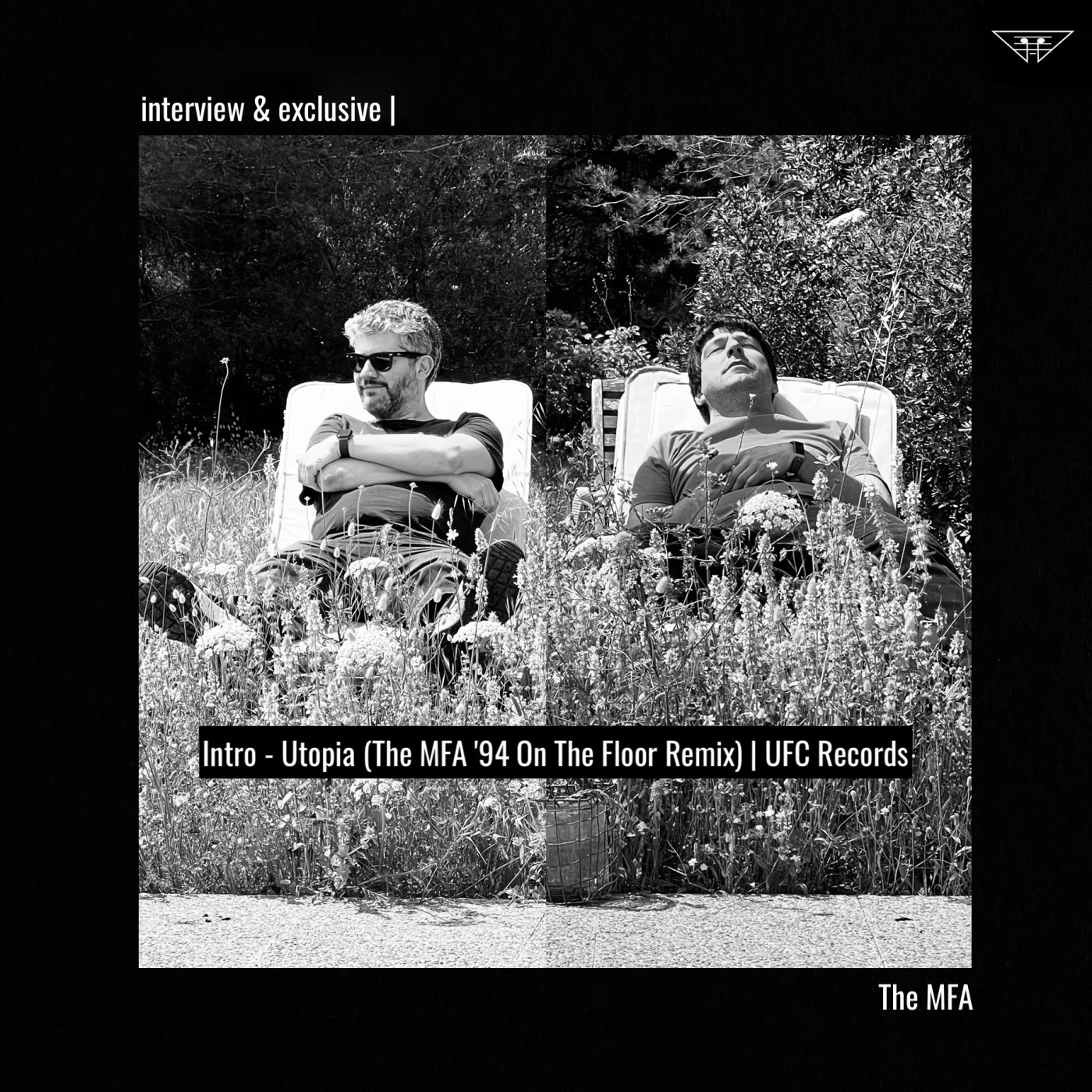
Amid the pulsating universe of electronic music, few duos return with as much charm, wit, and sheer musical mischief as The MFA. Composed of Alastair Douglas and Rhys Evans, the British duo broke ground in the early 2000s with their eclectic blend of Indie House, IDM, and genre-bending electronic sounds. After a lengthy hiatus, they made a triumphant return to the scene in 2021, much to the delight of long-time fans and a fresh wave of listeners. Known for their playful yet thought-provoking take on music and life, Alastair and Rhys have resumed creating tracks that reflect their roots in ’90s and early ’00s electronic music, all while pushing toward new, forward-thinking territory.
Their latest work, a remix of Utopia on UFC Records, encapsulates this philosophy perfectly. Dubbed the “‘94 On The Floor Remix”, it’s a nostalgic reimagining that pays homage to the golden era of rave while recharging a classic track for modern audiences. By blending the raw energy of ‘90s rave with contemporary production techniques, they’ve crafted a track that bridges eras, serving as both a dance floor hit and a love letter to the sounds that shaped their musical identity.
We caught up with The MFA to discuss their creative process, reflections on electronic music’s evolution, and thoughts on the current club scene. True to form, they infused each answer with humor, humility, and a perspective that’s uniquely theirs—proving once again why their comeback is exactly what the electronic world needs.
Torture the Artist: Hey Alastair and Rhys, tell us something about your day.
The MFA: Hello guys, Thank you for having us. It is The MFA calling here from London.Ali has finally found an adapter for his garden hose. The plants will live! Rhys has found a way to make his tea taste slightly worse.
Torture the Artist: 2021 saw you guys returning to the electronic music scene after a hiatus of 15 years. What did you do in the meantime and what was it that you missed and made you want to produce music again?
The MFA: Like the ‘Tortured Artist’ stock character we separated in 2009 due to “musical differences”. Not very original of us. Ali entered the world of technology and business. Rhys kept the limelight by working in Formula One but doesn’t own a car. Corona brought us together again. At some point in the lockdown we realized that arguing a lot whilst fiddling around with music was more fun than staring out of the window.
Torture the Artist: What’s everyone’s task in the studio and what’s typical for each of you when working on a track?
The MFA: Here at MFA HQ we have a series of principles that we live by. One of them is that The MFA is Ali and Rhys and that something done by one or both at MFA HQ is automatically the MFA. That is a fancy way of saying that the process cannot be discussed. But the reality is that we don’t have a process or a typical way of working. Trial and error is the process. We have a simple rotation system. The studio has one chair and one blue couch. One MFA sits on the couch, perhaps with a cup of tea or a beer. The other sits in the chair and presses the buttons. Then we rotate. We argue about which pizza to order. We stuck to the process very tightly when writing our album “Lights Out“.

Torture the Artist: Your productions are not bound to genres really, but seize influences from various ones to work them into your music or combine them. What’s a period of time or era in music and influences you love to implement in your music and what role does sampling play for you?
The MFA: We met in the late 90s so a lot of our references and favorite music is from the 90s and early 00s. I think that it’s natural that the music you hear when you are very young is what you often gravitate back towards. When we met Ali loved clubbing, rave, drum and bass and happy hardcore. Rhys loved the Pet Shop Boys and Super Furry Animals. We both liked 80s synthesizers and speed garage.
The main thing that influences us from that era now is the “DIY spirit”. It was the dawn of being able to write music without blagging “proper” studio time. You only needed a computer, and not even a good one. “The Difference It Makes”, our first track, was written on a PC with Windows Millenium Edition. Sampling is an important part of the roots of dance music. We like sampling, we like recycling, we like doing things quickly and trying ideas. We don’t like figuring out how to configure a synth so that it sounds exactly like it would have done in the 1970s.
Torture the Artist: What’s a sample you would love to use in on of your tracks but haven’t, and why?
The MFA: The “eh” sound from Oi by More Fire Crew. We had first dibs on the doom rave stabs from Frequency by Altern-8 but Charli XCX got there first on her Brat remix album.
Being organized is the enemy to getting anything done and therefore the enemy of The MFA.
Torture the Artist: Do you happen to have a library or list with possible samples to use or how do you make your choice which one to use?
The MFA: It is more like a mental post-it note of “cool sounds we heard once”. No, we don’t have any system. We just do what we like in the moment. Being organized is the enemy to getting anything done and therefore the enemy of The MFA. You just spend your time doing organiszng, not doing music.
Torture the Artist: What do you do when you are creatively stuck in the studio and how do you overcome this creative block?
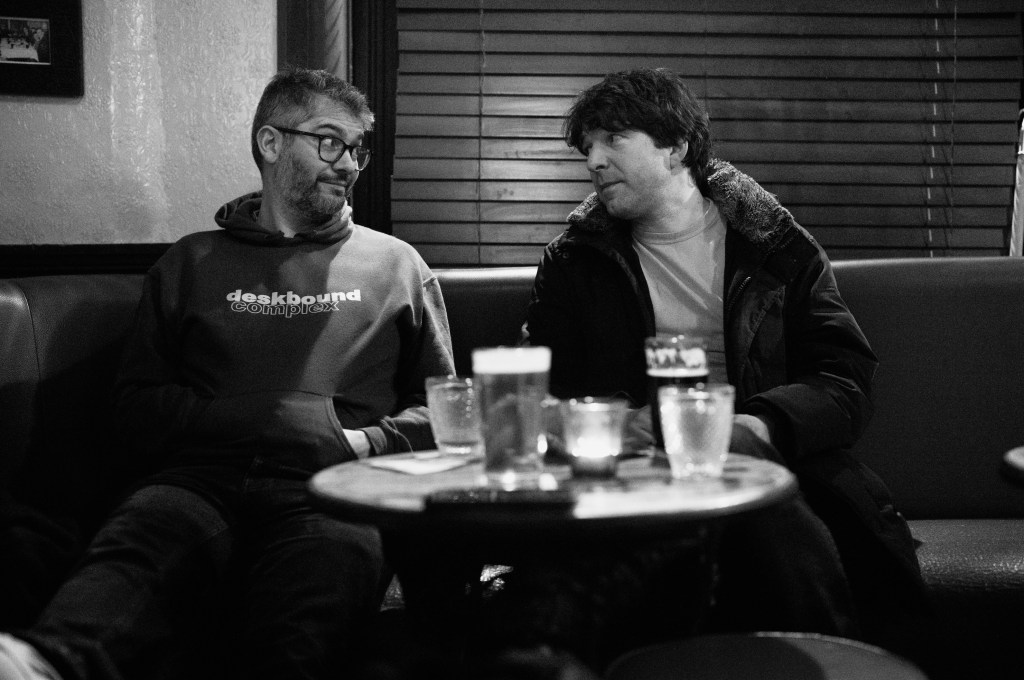
The MFA: We stare at the ceiling, eat snacks and argue about whether the big light should be on or off. And if that doesn’t work we go to the pub.
We start again from nothing with each production.
Torture the Artist: What’s the current synthesizer of your choice, which always does the trick?
The MFA: The one that doesn’t crash the DAW. <smiles> We don’t really have a standard list of kit, synths, plugins that we use. We start again from nothing with each production. We wake up forgetting everything we ever knew. ‘He who knows that he knows nothing is the wisest man of them all’ as Socrates said. Well, that is the official “MFA principle” answer. But just between you and us we sometimes like to use the Z3ta+ by Cakewalk and Absynth by Native Instruments.
The truth though is that we don’t think the kit matters. We are not interested in fiddling around with kit for the sake of it, we like writing music.
Torture the Artist: What’s a musical extravaganza you’d pay for, if you were super wealthy?
The MFA: A few minutes in an anechoic chamber so we can hear the blood rushing through our ears. Or maybe we would just hear our tinnitus louder.
Torture the Artist: Do you see yourselves more as a band or producers, and why? And following the question, what difference does that make in the approach to your music as well as in your personal perception of it?
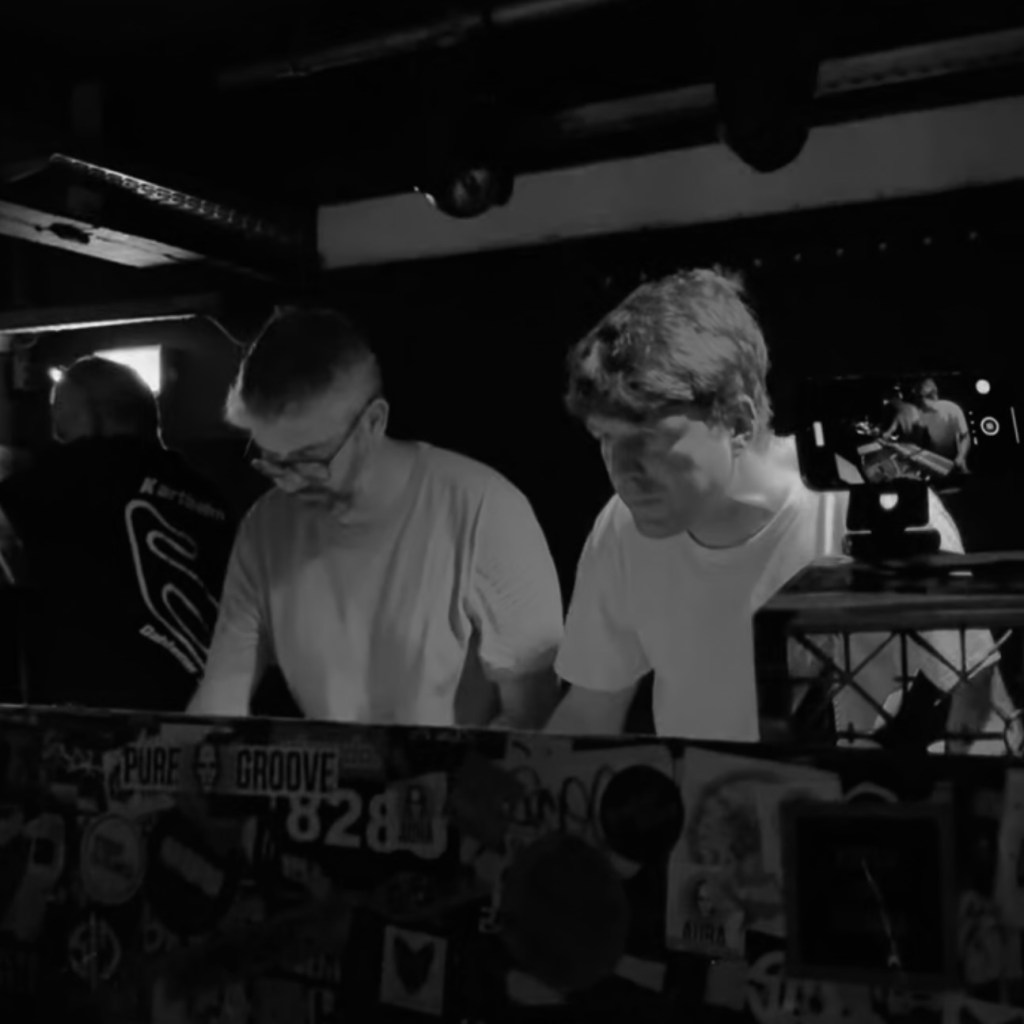
The MFA: We are a band that writes electronic music. Playing live is the thing that we like the most. The approach is that we do everything together. We don’t particularly like being in the studio – the music writing process is a means to an end being the performing of the music.
Torture the Artist: What are or were musical role models for The MFA?
The MFA: The KLF are a big inspiration. We read ‘The Manual’ “Give up your job!“ it says on page one – easy to do when we first met as student. We liked the idea of principles.One of their ones that we took and reversed is ‘we only spend money on kit that we already made from music’ Otherwise you are just funding your expensive kit habit. James Holden and Nathan Fake were big inspirations to us when we first started. We all met at around the same time and it was a fantastic period. Mr Oizo too – particularly his statement on his track “Untitled’ “This is computer music’’ and Rex The Dog, too. Rex is interesting, he is fiddling around with a lot of gear and is clearly into it. But he is obviously having a lot of fun with it!
Torture the Artist: You are responsible for a remix on UFC’s latest release, a 90s gem called “Utopia“. What made you want to remix the track in the first place and secondly how did working with the label come about?
The MFA: We loved the track and we loved the idea of literally going back to the 90s. That’s why we called our remix “‘94 On The Floor Remix“ as the track was released in 1994 and we love puns / dad jokes. Plus the opportunity of messing with a 90s classic was like remixing our youth, but with better gear.
No era is better than any other. It is just what you personally know.
Torture the Artist: The original of “Utopia“ dates back, as before-mentioned, to the 90s, a period in electronic music that you were not necessarily an active part of as your first productions/ release were out in the mid 2000s. However, how did and do the 90 socialize you musically and in retrospect would you say they are were most relevant period of time in terms of (electronic music) and rave culture?
The MFA: People love to look back and say ‘it was better then’. When we were very active in the mid 00s, playing all the big festivals, people used to tell us that electronic music was dead. When Ali was clubbing in the 90s people complained it had become too commercial and “it wasn’t about the music” anymore. When we were students all the clubs were playing Trance and people complained it had “sold the soul of dance music“. That all sounds quite familiar? In short, no era is better than any other. It is just what you personally know.
Torture the Artist: What are the electronic music tracks from each of you from each decade – 90s, 2000s, 2010s) you’ve gone through, and what do you connect with each track?
The MFA:
- 90s – 187 Lockdown – Gunman
- 2000s – James Holden – Idiot
- 2010s – JME – Calm
- 2020s – Breaka – Get Your Sweat On
People never used to drink in clubs in the 90s either so let’s not pretend that’s the issue!
Torture the Artist: Paradoxically, since your return to the scene in 2021 almost 1/3 of all nightclubs have closed its doors or one club closing every two days as – according to the media – Britain’s youth is unsociable after the pandemic and it is becoming more and more non-alcoholic. Paradoxically, because the places and spots you need for your music are disappearing. What does the scene have to do to prevent the “death of the clubs“ and maybe an entire subculture?
The MFA: I don’t think the scene can do anything 🙁 The trends are not caused by the music, they are caused (at least in the UK) by rental prices, council licensing restrictions and a higher standard of health and safety enforced. Starting a club or even a night is very very complicated and difficult these days. The era of DIY for club nights is well and truly over. Although people never used to drink in clubs in the 90s either so let’s not pretend that’s the issue!
Our track “Oranges and Lemons“ in 2021 highlighted this very problem in our video.
Torture the Artist: Have nightlife constitutions held on for too long to their glorious past and simply do not fulfill the demands of the youth in the 20s of the 21st century? Would could be an approach for a “brighter club future“?
The MFA: In the “old days“ in the UK once it got to 11PM the only place you could go on a night out was a nightclub. It was cheap and easy to open a nightclub. Hence the magic formula of the ‘glory days’. Was the music better? Probably not. Now there’s a lot more competition. Turns out that for some reason some people like sitting around in small groups drinking natural wine and eating charcuterie rather than standing in the basement getting cigarette burns on their arms. So yes, they need to try harder. But it is not easy when you are competing against Orange wine.
Torture the Artist: Do you see yourself as “fun ambassadors“ for the youth or people to come back to the clubs and enjoy the music, your music?
The MFA: We’re more like the “friendly uncles” of electronic music. We’ll show up to the party, play a few tunes, and then quietly leave before the kids start doing something embarrassing.
Torture the Artist: What’s a stereotype each of you fulfills in regards to your cultural background?
The MFA: Rhys has an unhealthy attachment to daffodils because he loves the color yellow and will make sure he incorporates at least 3 or 4 of his 20 Welsh words into most conversations. Ali has perfected the art of making tea using critical path analysis so that it can be made more quickly, unlocking the ability to drink even more cups than ever before. (key step is training yourself to dislike milk in tea)
Torture the Artist: What’s the title of your memoirs, and who should be the reader of your audiobook?
The MFA: “The Difference It Didn’t Make.” We’d like Alan Partridge to narrate. He’d capture the awkwardness just right.
“The MFA ’94 To The Floor Remix” is out on UFC Records.
Words by Holger Breuer
 Torture the Artist