
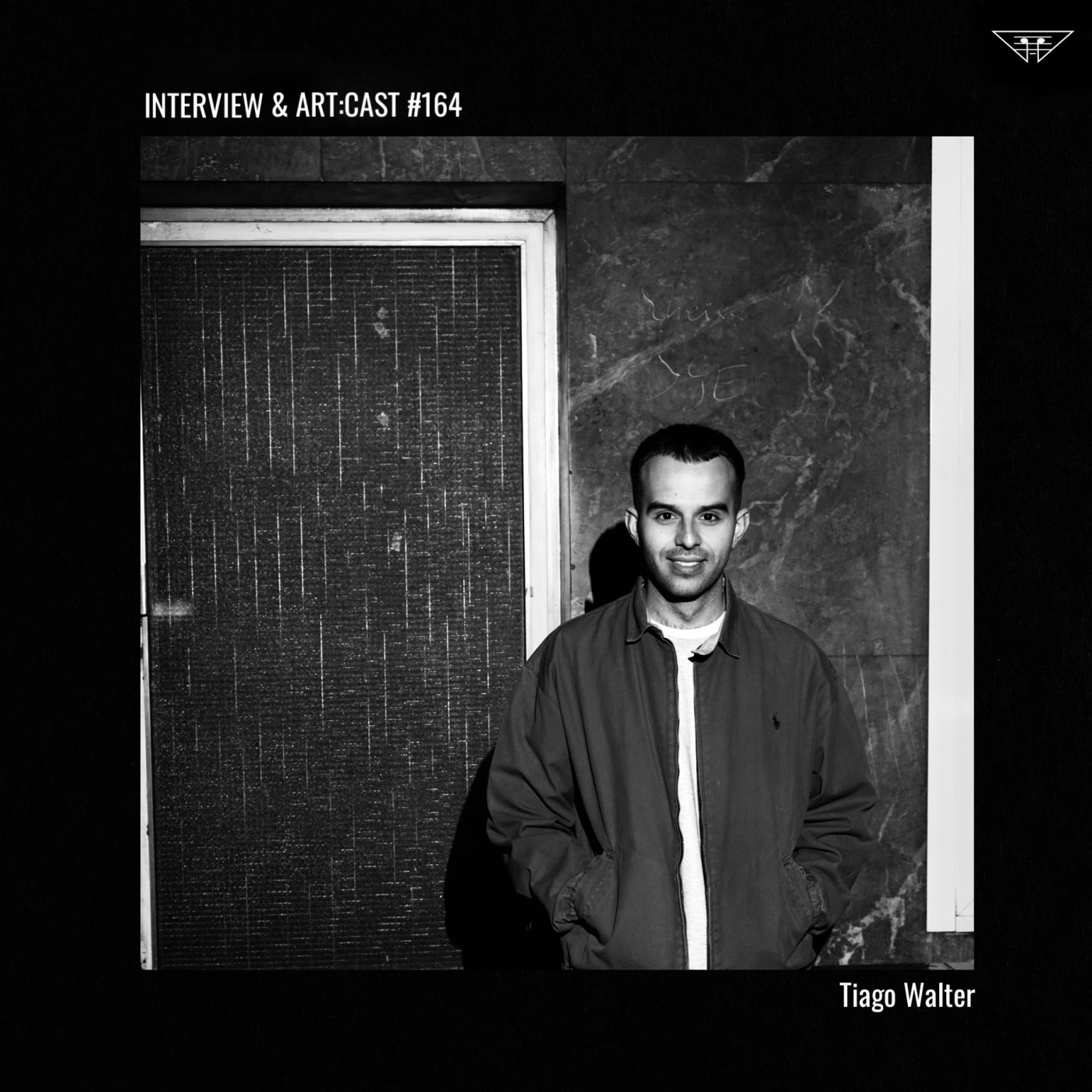
In the intricate tapestry of Frankfurt’s electronic music panorama, Tiago Walter stands as a luminary figure, weaving melodious metaphors that resonate with depth and innovation. Hailing from a city steeped in the rich heritage of Techno and House, Walter’s musical odyssey epitomizes a harmonious blend of tradition and avant-garde exploration. As the pulsating heart of Jisul Records, he orchestrates a symphony of sounds that transcends mere auditory experience, offering a gateway to a realm where creativity knows no bounds.
In this exclusive dialogue with Torture the Artist, Tiago Walter unveils the layers of his artistic journey, sharing insights into his multifaceted roles as a DJ, producer, and label-head. Delving into the intricacies of Frankfurt’s electronic music scene, Walter reflects on its ebbs and flows, tracing his evolution from a fledgling enthusiast to a revered maestro. Through introspective musings and profound revelations, he illuminates the symbiotic relationship between his creative endeavors and the vibrant cultural milieu that nurtures them.
Prepare to embark on a transcendental voyage through the corridors of sound, guided by the sage wisdom and boundless passion of Tiago Walter. As we unravel the enigma of his musical alchemy, we are beckoned to immerse ourselves in the kaleidoscopic tapestry of his audio universe, where each note resonates with the essence of a soulful journey.
Torture the Artist: Hello Tiago, could you share with us a bit about your day?
Tiago Walter: I just got back home from my part-time job in an office. Hopefully, I’ll find some energy later to work on music.
Torture the Artist: As a Frankfurt-based artist, a city renowned for its rich culture in electronic music, how do you perceive the scene in your hometown and where do you see yourself fitting into it?
Tiago Walter: Frankfurt indeed boasts a rich history in electronic music, particularly in the development of Techno and House in Germany. However, from my perspective, the scene has been diminishing over time. There was a resurgence around 2016/2017 with the ‘Gosu’ Project, fostering a productive environment with emerging artists, including myself. It was an invigorating period. Unfortunately, the project eventually disbanded, prompting many artists to relocate to Berlin. Consequently, I’ve lost touch with many acquaintances. Nonetheless, I still maintain strong friendships, notably with Phil Evans and Kuyateh. I continue to perform at local events, with the ‘Tanz in Frankfurt’ Collective being particularly noteworthy for their contributions.
Torture the Artist: Do you still find enjoyment in “Bockenheim Afternoons,” or have you shifted to another part of the city?
Tiago Walter: No, Bockenheim will always hold a special place for me. Nowhere else in the city do I feel as at home as I do here.
Torture the Artist: When and where did you first encounter electronic music, and which were your go-to clubs at that time?
Tiago Walter: My introduction to electronic music began in my hometown of Bad Homburg (approximately 20km north from Frankfurt), where I started DJing at school parties. A friend taught me the basics of DJing and shared some tracks for me to practice with. Subsequently, I began frequenting clubs in Frankfurt such as Robert Johnson, Tanzhaus West, Silbergold, Yachtclub, KoZ, and various off-locations.
Torture the Artist: Was there a particular track that inspired you to become actively involved in the music scene rather than remaining a passive listener?
Tiago Walter: I wouldn’t attribute my involvement to a single track. Since my teenage years, I’ve been drawn to creating my own music. Discovering Ableton was particularly exciting, offering me the freedom to produce independently. Although I enjoyed playing in bands, the autonomy of electronic music production captivated me. DJing further deepened my appreciation, exposing me to diverse electronic genres. Upon moving to Frankfurt, integrating into the scene was a gradual process requiring years of dedication and support from mentors like Phil Evans, Nils Diezel, and Manuel Schatz. Achieving recognition with my first record release and performance at Robert Johnson marked a significant milestone in my journey.
Establishing my label was driven by a desire for creative autonomy and the opportunity to support emerging artists.
Torture the Artist: As a DJ, producer, and label-head, which role do you cherish the most, and how do they complement each other?
Tiago Walter: I have a deep passion for both creating and performing music. Each role enriches the other; DJing enhances my understanding of what resonates with audiences and informs my production decisions. Conversely, producing music sharpens my auditory perception, aiding in tasks such as beatmatching. Establishing my label was driven by a desire for creative autonomy and the opportunity to support emerging artists. This venture has also broadened my understanding of the economic aspects of music production and distribution.
Torture the Artist: Could you elaborate on how Jisul Records came into existence, and what motivated you to start a label?
Tiago Walter: The inception of Jisul Records stemmed from collaborative efforts. Upon my move to Frankfurt, I connected with Nils Diezel, who was instrumental in shaping my musical journey. We envisioned a partnership where I’d oversee music production while he focused on visual aspects. Simultaneously, I was developing my album “Bouncing,” which garnered interest from Alec Falconer of Ba Dum Tish. Collaborating with Alec on distribution paved the way for his involvement in the label. With Alec handling the business side, I could concentrate on music production, ensuring a symbiotic partnership.
I only endorse music that resonates with me wholeheartedly.
Torture the Artist: Jisul Records has primarily featured your projects, along with releases from Alec Falconer and Walt Ever (with Phil Evans). Do you plan to expand the label’s roster beyond this circle?
Tiago Walter: While the label’s initial focus has been on our projects, I’m open to diversifying our roster. Last year was particularly hectic, making it challenging to organize new releases. Personal affinity remains a crucial factor in selecting artists, albeit I admit to being discerning about track selection. Nevertheless, authenticity is paramount, and I only endorse music that resonates with me wholeheartedly.
Torture the Artist: Regarding your involvement with Pager Records alongside Markus Sommer and Phil Evans, how did this collaboration come about?
Tiago Walter: My association with Pager Records stemmed from living with Nils, who introduced me to Phil Evans. Phil, Markus, and I developed a close-knit relationship, with Phil assuming the role of both mentor and confidant. Our collaboration organically evolved from these connections.
Torture the Artist: Do you consider Pager Records and Jisul Records as Frankfurt’s response to Berlin’s dominance in electronic music?
Tiago Walter: Interestingly, our initiatives were never conceived as a reaction to Berlin’s influence. Instead, our shared passion for US House music and Frankfurt’s rich musical history served as our primary motivation. Drawing inspiration from labels like Perlon and Playhouse, we sought to integrate diverse influences into our music. Our collaborations were driven by mutual inspiration and camaraderie rather than competitiveness with Berlin.
Torture the Artist: Let’s discuss your music. Your recent remix on Increase The Groove received acclaim, while your last full release on Jisul, “What’s More Special,” showcased your versatility. What can we expect in terms of new music from you?
Tiago Walter: Thank you for the appreciation. Balancing music with other commitments, such as my day job and legal studies, presents challenges. Perfectionism also plays a role, as I invest considerable time in refining each track. Despite these obstacles, I’m currently working on a new Jisul release scheduled for this year. Additionally, I have tracks and remixes lined up for other labels, including one on Velvet Velours’ Silkybeats.
Vocoder vocals hold a special allure for me, combining mechanical precision with human emotion.
Torture the Artist: Your music often features vocoder vocals, adding a unique dimension to your sound. Could you shed light on your affinity for vocoders and their role in your productions?
Tiago Walter: Vocoder vocals hold a special allure for me, combining mechanical precision with human emotion. They infuse my tracks with soul, as I strive to imbue each composition with a sense of humanity. While remixing Alyhas and Occibel’s “Emotional Damage,” incorporating vocoder vocals felt natural given their prominence in the original track. However, working with pre-recorded audio files presented its own challenges, requiring meticulous editing to integrate seamlessly into the remix.
Torture the Artist: Your musical style traverses various genres, from House to Minimal, often incorporating techy or deep elements. What fascinates you about these genres, and which of your tracks do you feel best represents your musical vision?
Tiago Walter: My musical preferences fluctuate, ranging from minimal to house and UK garage. However, I find common ground in their underlying groove, characterized by a skippy, bouncy rhythm with a distinctly human touch. “The Meaning” by Melchior Productions exemplifies this ethos, blending elements from diverse genres into a cohesive whole.
Torture the Artist: You’ve released music on several labels, including Einfach Hören, Sturo, and Pager Records. If you could choose one label to release on, which would it be, and why?
Tiago Walter: Playhouse holds a special significance for me, given its integral role in Frankfurt’s music history. However, the label’s cessation of record releases makes this aspiration unlikely.
Torture the Artist: As an avid record collector, where do you typically discover new music, and do you have any specific digging routines or techniques?
Tiago Walter: I derive inspiration from various sources, including record stores, Discogs, Bandcamp, and streaming platforms like Spotify and YouTube. Exploring an artist or label’s discography often leads to fascinating discoveries. When browsing in record stores, I gravitate towards visually intriguing releases, allowing serendipity to guide my selections.
Torture the Artist: Could you share some recent vinyl finds that have piqued your interest?
Tiago Walter: Recently, I stumbled upon some overlooked tracks by John Tejada and S-Max, rekindling my appreciation for their work.
Torture the Artist: You’re responsible for the latest art:cast. Where and when was it recorded, and when do you believe it is best enjoyed?
Tiago Walter: I believe the art:cast was recorded during a live set at Silbergold in Frankfurt. As for the optimal listening experience, feel free to enjoy it at your convenience.
I believe artists have a responsibility to leverage their platforms for social causes, drawing attention to pressing issues and advocating for positive change.
Torture the Artist: There’s been a growing trend of artists using their platforms to address political crises and global issues. What’s your perspective on this, and do you believe artists should leverage their influence for social causes?
Tiago Walter: I believe artists have a responsibility to leverage their platforms for social causes, drawing attention to pressing issues and advocating for positive change.
Torture the Artist: Finally, if you could possess any superpower, what would it be, and how would you use it?
Tiago Walter: Rather than a superpower, I’d wish for increased self-confidence, particularly when making decisions.
Torture the Artist: It was a pleasure speaking with you, Tiago. Thank you for your time.
Tiago Walter: The pleasure was all mine. Thank you for the insightful questions.
 Torture the Artist